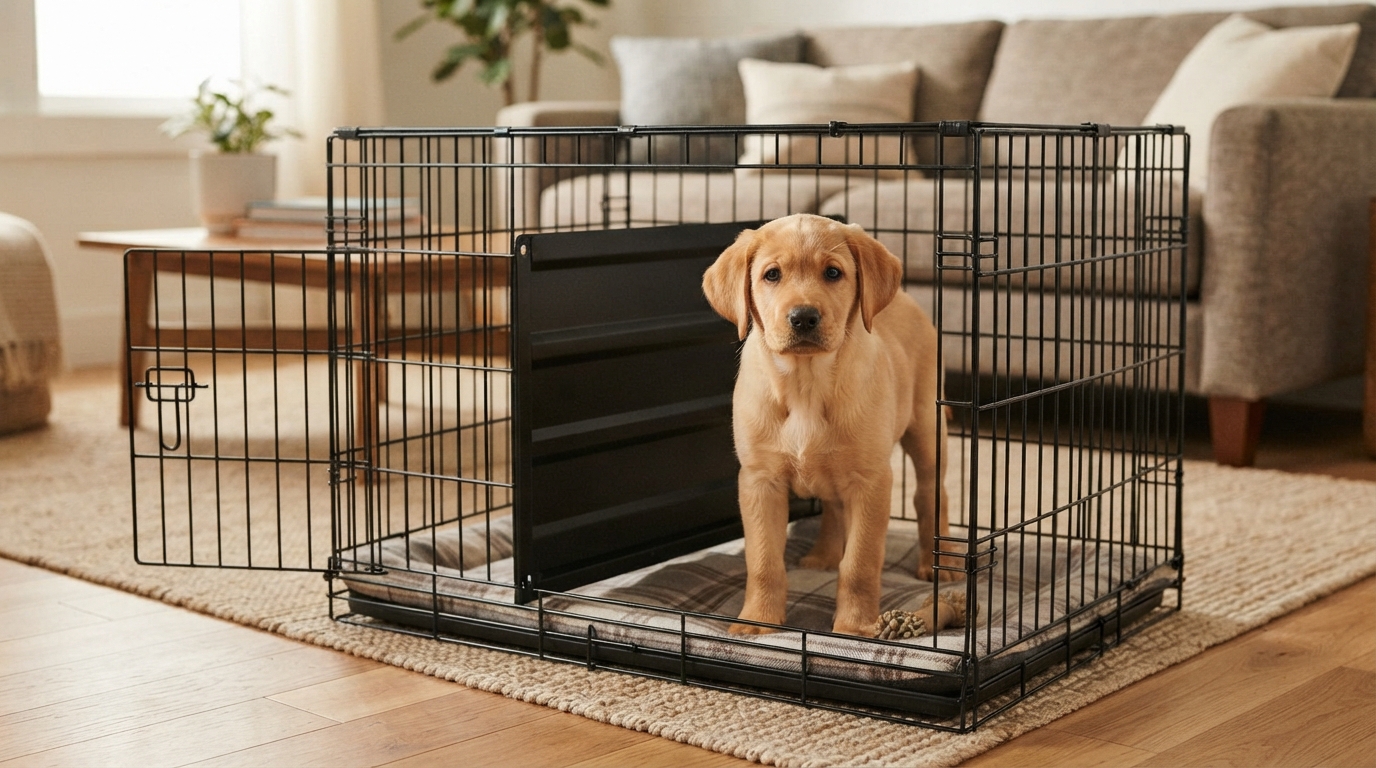
Wire or Furniture-Style Dog Crate: Which Fits Your Room? A wire crate often suits a home where visibility, airflow, or moving and storage matter most; a furniture-style crate often suits a fixed spot where blending with the room matters. Either way, prioritize your dog’s comfort and safety, then check the layout and usable space.
Key Takeaways
- Choose for your dog first. The right crate lets your dog stand, turn around, and lie down comfortably, with secure construction and adequate ventilation.
- Wire crates usually offer more visibility and airflow, and many are designed to fold for storage or transport.
- Furniture-style crates can blend with a room’s furnishings, but their panels, openings, access, and interior space need a close look.
- Measure the usable interior. Exterior dimensions and broad size labels don’t tell you how much room your dog actually has.
- Plan for everyday use. Include door swing, walking paths, cleaning access, and how often you’ll move the crate.
- Appearance doesn’t prove security. Consider your dog’s chewing, pushing, or escape behavior before choosing either style.
How the two crate styles look and feel
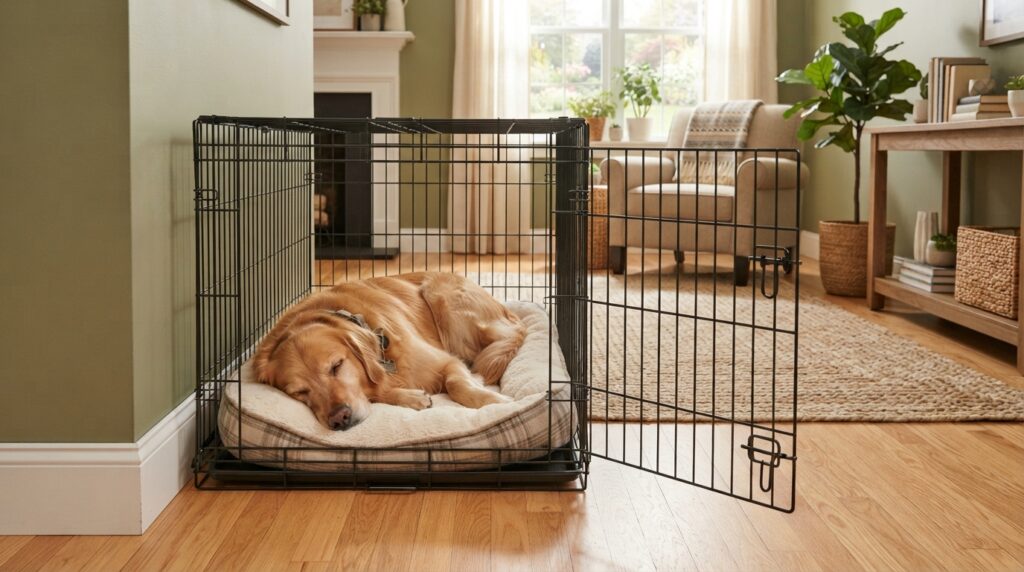
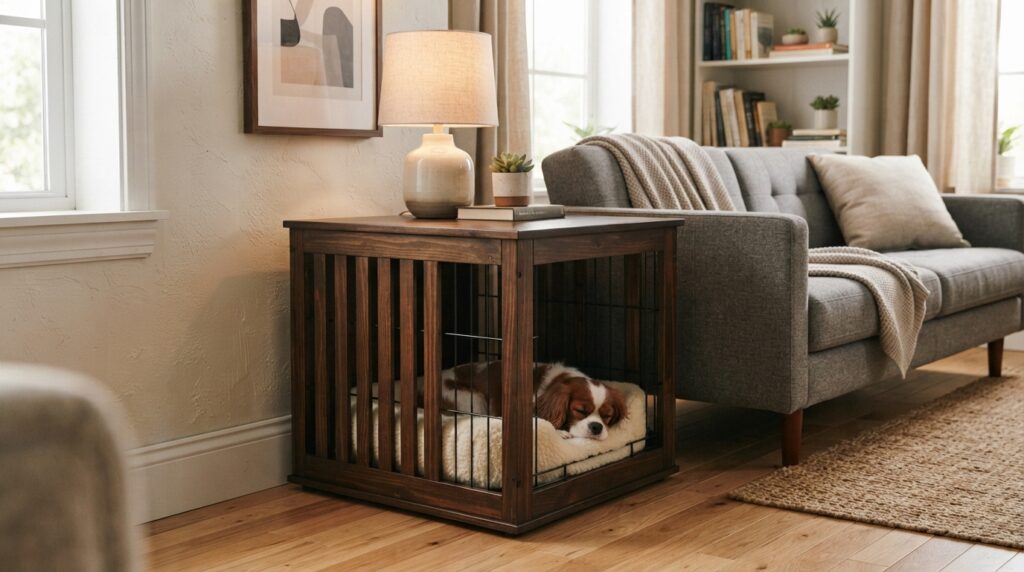
A wire dog crate has open metal panels, so your dog can usually see more of the room and air can pass through the sides. A furniture-style dog crate often uses wood or other solid panels, which can feel more enclosed; look for generous ventilation openings on multiple sides.
That difference in visibility matters. Some dogs settle more easily when visual activity is limited, while others seem more comfortable when they can see their people and surroundings. Watch how your dog responds; visual activity affects dogs differently.
Compare the crate’s shape, color, and finish with nearby furniture, but keep appearance in its proper place. Secure construction, airflow, and a comfortable interior matter more than a close match to your coffee table.
| What to compare | Wire crate | Furniture-style crate |
|---|---|---|
| Visibility and airflow | Open panels usually provide broad visibility and airflow. | Solid panels can feel more enclosed; openings on multiple sides help maintain ventilation. |
| Room appearance | Metal bars remain visible in the room. | May blend more readily with furnishings, depending on its shape and finish. |
| Moving and storage | Often designed to fold for storage or transport. | More often intended to stay in one place. |
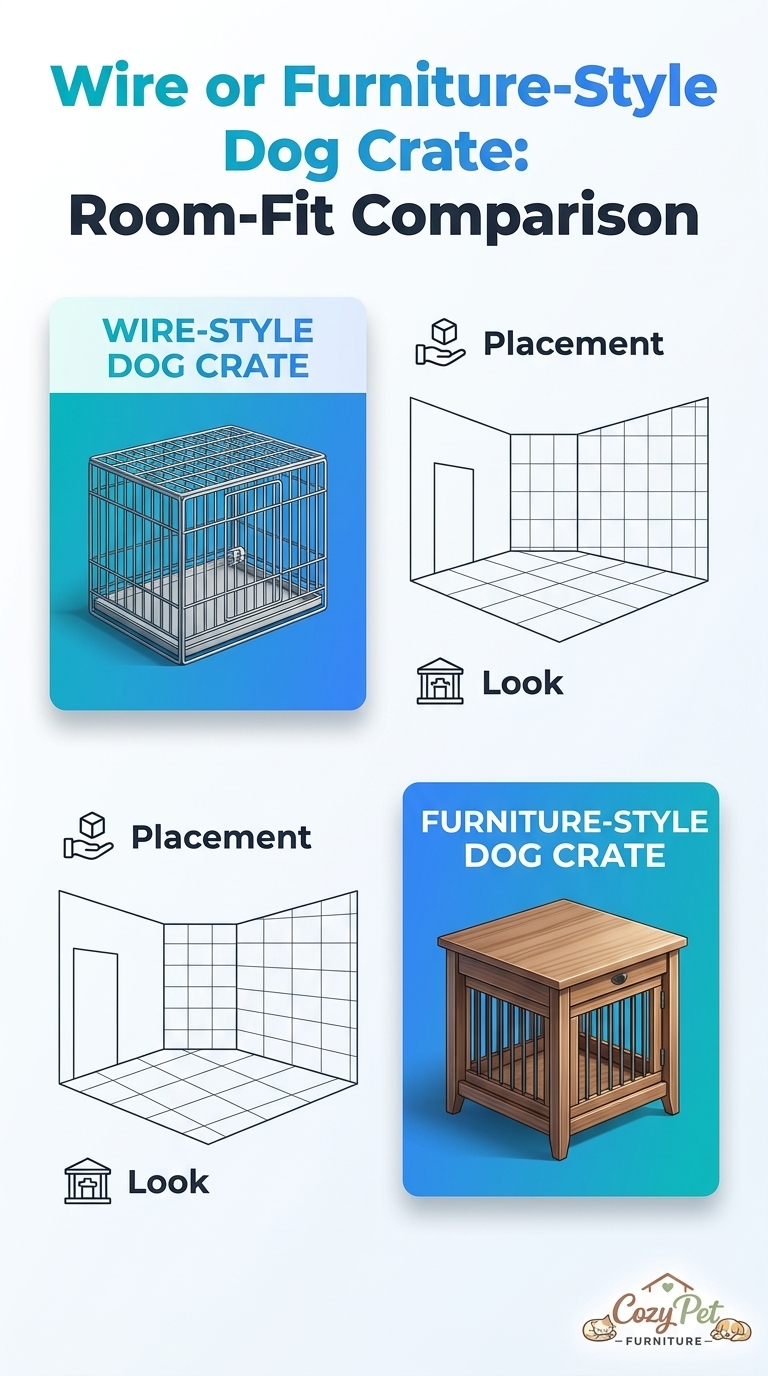
Compare wire and furniture-style dog crates to see which option best fits your room and home decor.
A wooden dog crate can look less like standard pet equipment, but a furniture-style design isn’t automatically safer or more durable. The construction has to suit the dog who will use it.
Measure your dog and check usable interior space
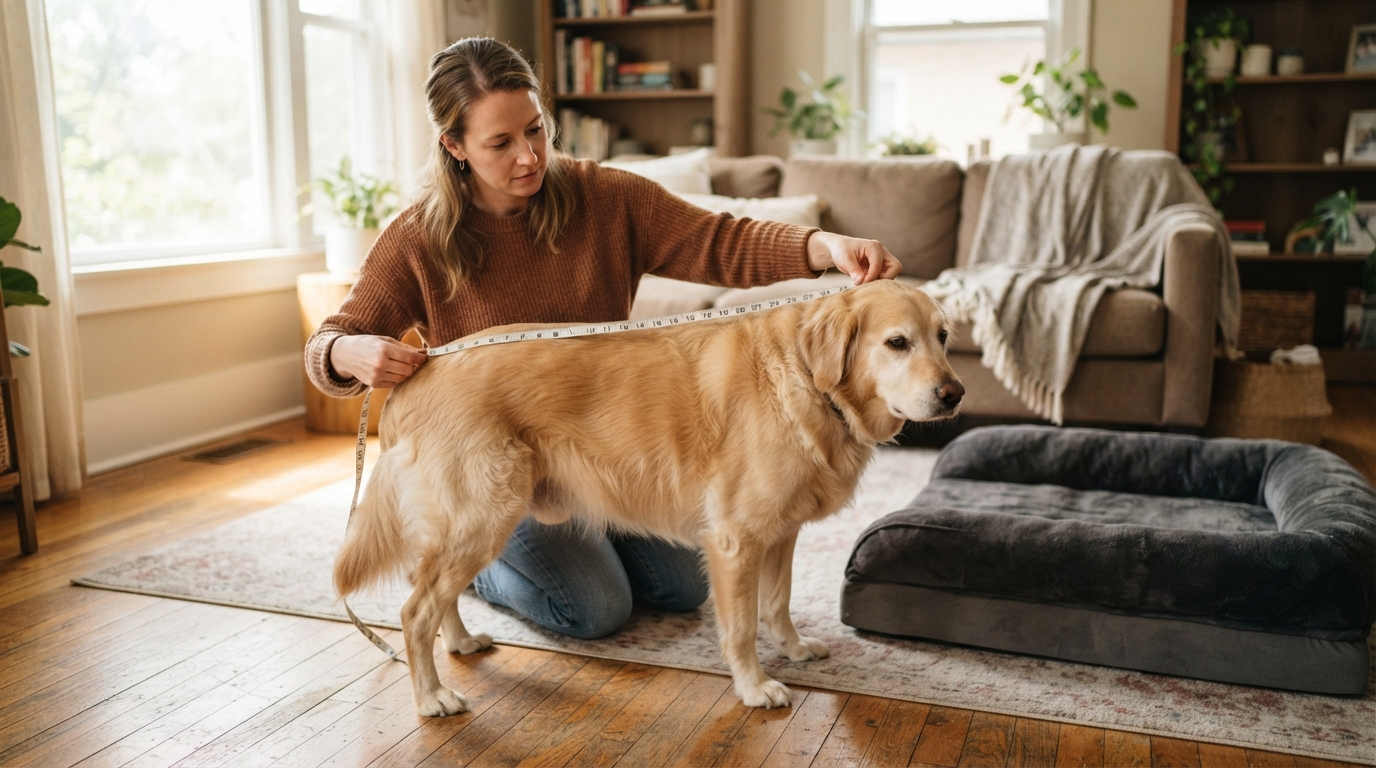
To measure your dog for a furniture-style crate, measure from the nose to the base of the tail while your dog stands, then measure from the floor to the top of the head. Compare those measurements with the crate’s usable interior dimensions, not just its outside footprint.
Your dog should be able to stand naturally without crouching, turn around, and lie down comfortably. There is no universal clearance allowance, so check those movements against the usable interior with any bed or divider in place. A cramped interior restricts movement, while excessive extra space can make house-training harder for some puppies.
Look beyond the advertised size label. A door frame, divider, or built-in structure can reduce the space your dog can actually use, so consider the interior at its narrowest or most restricted point.
If you have more than one dog, give each one a separate crate and resting space. Sharing a crate can leave dogs without room to settle comfortably and may create conflict around a confined area.
- Measure your dog standing, not curled up in a bed.
- Compare the measurements with the inside dimensions, including any fixed features.
- Picture your dog standing, turning, and lying down before settling on a size.
Map the crate onto your room before choosing
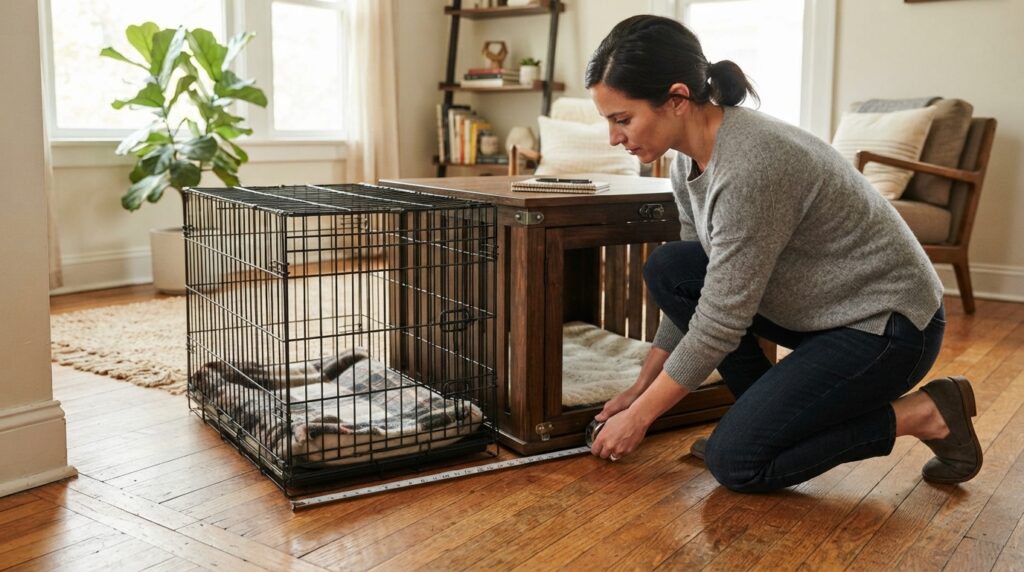
Measure the crate’s footprint and mark out where it would sit. Then account for the door opening fully, nearby furniture, walking paths, and enough clear space for your dog to enter and exit without squeezing past obstacles.
For a practical clearance check, trace the crate’s footprint with tape, then mark the full arc of each door and the space needed to reach the latch or remove a tray. Open nearby doors and drawers and walk the route while the outline is down. If a panel, door, or piece of furniture blocks routine access, shift the location or consider another configuration. A crate that technically fits but cannot be opened or cleaned in place is a poor fit.
Check the door configuration against the spot you have in mind. A door that swings into a wall or opens across a busy route can make a crate awkward to use, even when its footprint appears to fit.
Is it better to put a dog crate in the bedroom or living room? Either can work if the spot is comfortable and calm, close enough to household activity for your dog to feel included but out of a busy passage. Avoid drafts, direct heat, and strong sun.
In a bedroom, check that the crate won’t block the bedroom door, wardrobe, or your route around the bed; consider whether household movement or light from a window might disturb your dog. In a living room, keep it outside the main route between seating and exits, and notice whether television, visitors, or activity near windows keeps your dog alert. If the room gets busy, a quieter edge may work better than the center of the traffic.
To make a crate fit naturally into a living room or bedroom, coordinate its visual scale and finish with the surrounding furniture, then leave the access and walking space intact. Browse our ideas for a pet-friendly home when thinking about how a pet area can share space with the rest of the room.
Don’t push a crate into a cramped nook just to make it less noticeable. Your dog needs clear access, a comfortable interior, and enough ventilation wherever you place it.
Match construction to your dog’s behavior
Before choosing a crate, consider whether your dog has chewed barriers, pushed against them, or tried to escape when confined. A furniture-style appearance doesn’t show whether the construction can withstand those behaviors.
For a dog who is new to confinement, use gradual crate acclimation and positive associations. Start with supervised sessions and let your dog build comfort at a manageable pace rather than expecting a more enclosed design to resolve distress.
Don’t leave a dog unsupervised in a crate they are actively chewing or trying to escape. Either style can lead to injury or damage if a dog struggles against it.
Look for secure closures, stable construction, and adequate airflow before considering a crate top or a particular finish. If your dog panics or repeatedly attempts to escape, pause unsupervised crate use and speak with your veterinarian or a qualified behavior professional about a safe plan.
For a dog that chews, focus on the specific behavior and the crate’s construction, not its furniture-like appearance. No style should be treated as a solution to persistent chewing or escape attempts.
Compare cleaning, access, and moving it around
A removable tray can make routine accident cleanup easier because you can take it out and reach the base. Fixed panels, seams, and corners that are difficult to access can add cleaning work, so consider how easily you can reach the whole interior.
After spills or accidents, clean the affected surfaces and let them dry thoroughly. Moisture and waste left in joints or enclosed corners can create lingering odor and wear on materials.
Wire crates are often designed to fold for storage or transport, while furniture-style crates are more often intended to stay in one place. If you regularly rearrange rooms, put the crate away, or travel with it, portability may matter more than how well it blends into your decor.
Check that everyday door access works for both you and your dog. You should be able to open the door comfortably, help your dog in or out when needed, and reach the base for cleaning without moving several pieces of furniture.
Decide whether furniture-style function is worth it
Are furniture-style dog crates worth it? They may be a good fit when a fixed piece suits the room and its appearance matters to you, as long as it also provides the interior space, ventilation, access, and cleaning setup your dog needs.
Use a crate as a side table or TV stand only when its design is expressly intended for that purpose and stable under the expected load.
Keep heavy, fragile, or tempting objects off the top if they could fall, distract your dog, or interfere with ventilation and access. The room-saving appeal is useful only when it doesn’t compromise your dog’s resting space.
A folding crate may suit you better when you need to store it, move it often, or give your dog a clear view of the room. The best fit depends on your dog’s needs and how you use your home every day.
Frequently Asked Questions
Can a puppy use an adult-sized crate?
Yes, if you can make the usable area appropriate for the puppy’s current size, such as with a properly secured divider. As your puppy grows, adjust the space so they can rest comfortably without having a large unused area.
How long can a dog stay in a crate?
There isn’t one suitable duration for every dog; age, health, training, and individual needs all matter. Plan regular opportunities for bathroom breaks, movement, water, and interaction, and ask your veterinarian for guidance if your dog has health or mobility needs.
Can covering a wire crate make it more comfortable?
A light cover over part of a wire crate can reduce visual activity for some dogs. Keep ventilation openings clear, use a cover your dog won’t pull through the bars, and remove it if your dog chews or becomes too warm.
Is a crate a good solution for a dog with separation anxiety?
A crate doesn’t treat separation anxiety, and confinement can increase distress for some dogs. Ask your veterinarian or a qualified behavior professional to help identify an appropriate plan for your dog.
What should I put under a dog crate on a hard floor?
A properly sized, nonslip floor protector can help limit scratches and keep the crate from shifting. Choose one that lies flat and doesn’t block the crate door or trap dampness beneath the base.
Can I leave the crate door open when my dog is loose at home?
Yes, if the room is safe for your dog and the open door stays secured in place. Prevent it from swinging shut or creating a pinch point when your dog moves in and out.
Conclusion
When deciding, “Wire or Furniture-Style Dog Crate: Which Fits Your Room?”, start with your dog’s fit, behavior, and comfort, then map the crate onto the room. A wire crate may suit a household that values visibility, folding, and easy relocation, while a furniture-style crate may work when a fixed design fits the space without compromising ventilation, access, or security.