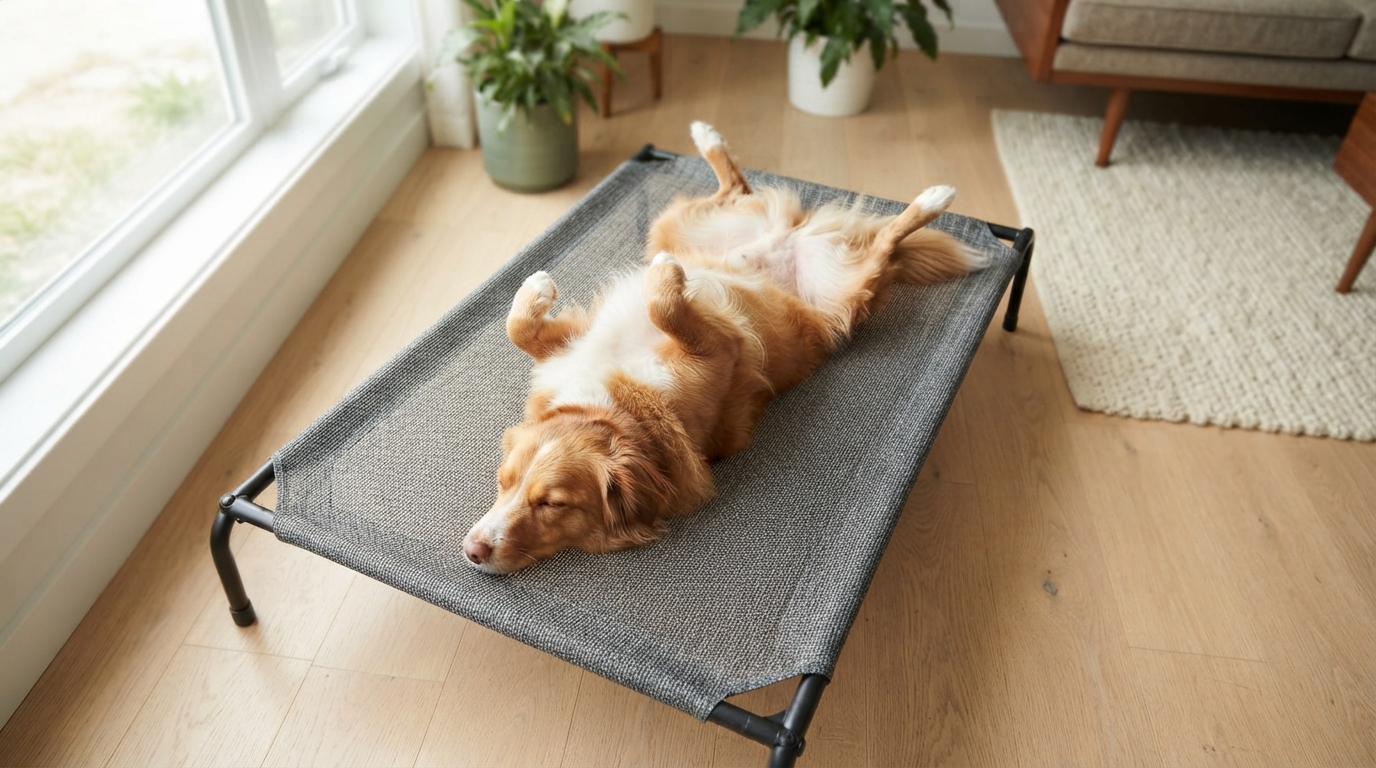
If you’re learning how to measure your dog for an orthopedic bed, start with your dog’s relaxed resting position rather than a breed chart or weight label. Then compare that footprint with the bed’s usable interior and assess its support as a separate part of the decision.
Key Takeaways
- Measure nose to tail base and across the widest part of your dog’s body while they’re lying naturally.
- Include the space your dog’s legs and paws occupy in regular sleeping positions, but leave the tail out of the body-length measurement.
- Compare your dog’s resting footprint with the bed’s usable interior, not its outside dimensions or size label.
- Account for bolsters and raised sides, which take up space inside the bed.
- Choose a shape and entry that suit your dog’s habits and mobility.
- Check orthopedic support separately from size: the core needs to cushion your dog without bottoming out.
Measure your dog’s body length and width
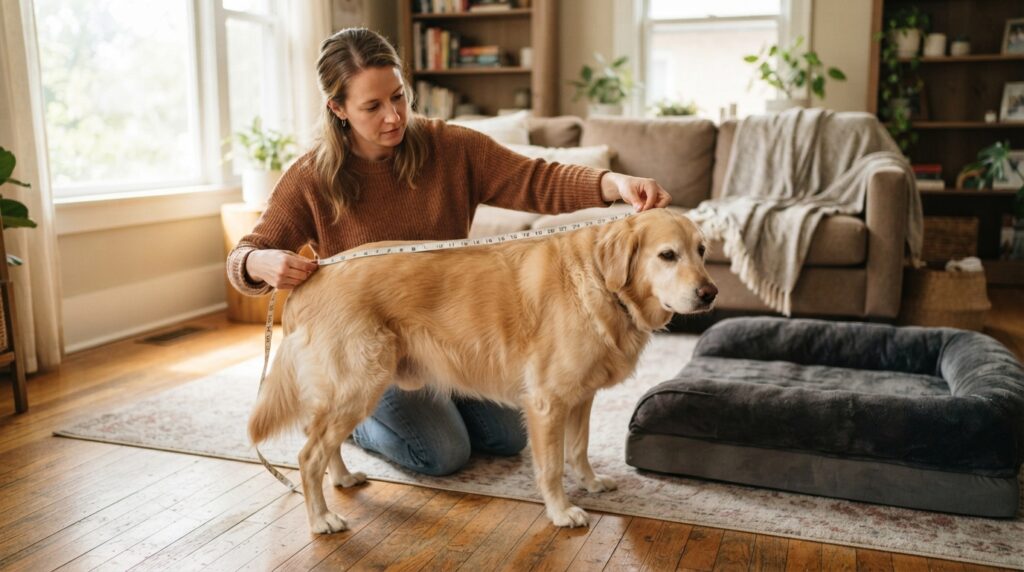
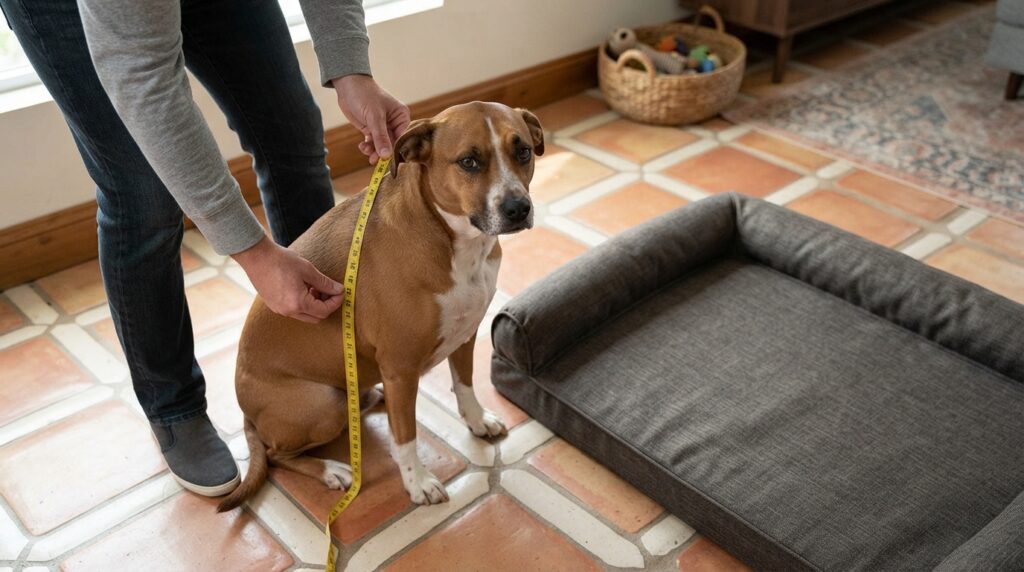
For a useful starting point, measure your dog from the nose to the base of the tail while they’re resting naturally. Leave the tail out, and don’t stretch or pull your dog into position: the goal is to record the space their body occupies when relaxed.
Measure across the widest part of the body to record shoulder width. A lying measurement is more useful for bed fit than a standing measurement because it reflects the width your dog needs on the resting surface.
Take these measurements during a calm rest. If your dog shifts, or the result seems inconsistent, repeat the measurement and use the reliable reading that best reflects their usual resting space.
Record the measurements along with your dog’s position. That makes it easier to compare the same dimensions with a bed’s usable interior, rather than relying on memory or a generic small, medium, or large label.
| Measurement | How to take it | Why it helps |
|---|---|---|
| Body length | Nose to the base of the tail while lying naturally | Shows the space needed along the length of the bed |
| Shoulder width | Across the widest part of the body while lying down | Helps check whether the resting area is wide enough |
| Sleeping footprint | Across the full space occupied in typical positions | Includes extended legs and paws that body measurements alone can miss |
A breed or weight chart can offer a starting point, but dogs of similar weight can have different body proportions and sleeping habits. If you want a consistent place to record measurements, use the Pet Furniture Fit Kit printable measuring and sizing worksheets.
To make the worksheet comparison easier to use, record the dog’s body length, widest sleeping footprint, and positions alongside the bed’s clear interior length and width. Note where bolsters reduce the flat area, too. A simple side-by-side record helps show whether the bed fits in both directions and leaves you space to note support and entry separately, rather than treating a size label as the result.
There isn’t one universal dog bed size chart that replaces measuring your own dog. A size label can differ from one bed design to another, so compare your notes with the bed’s actual interior dimensions.
Account for curled, stretched, and changing sleep positions
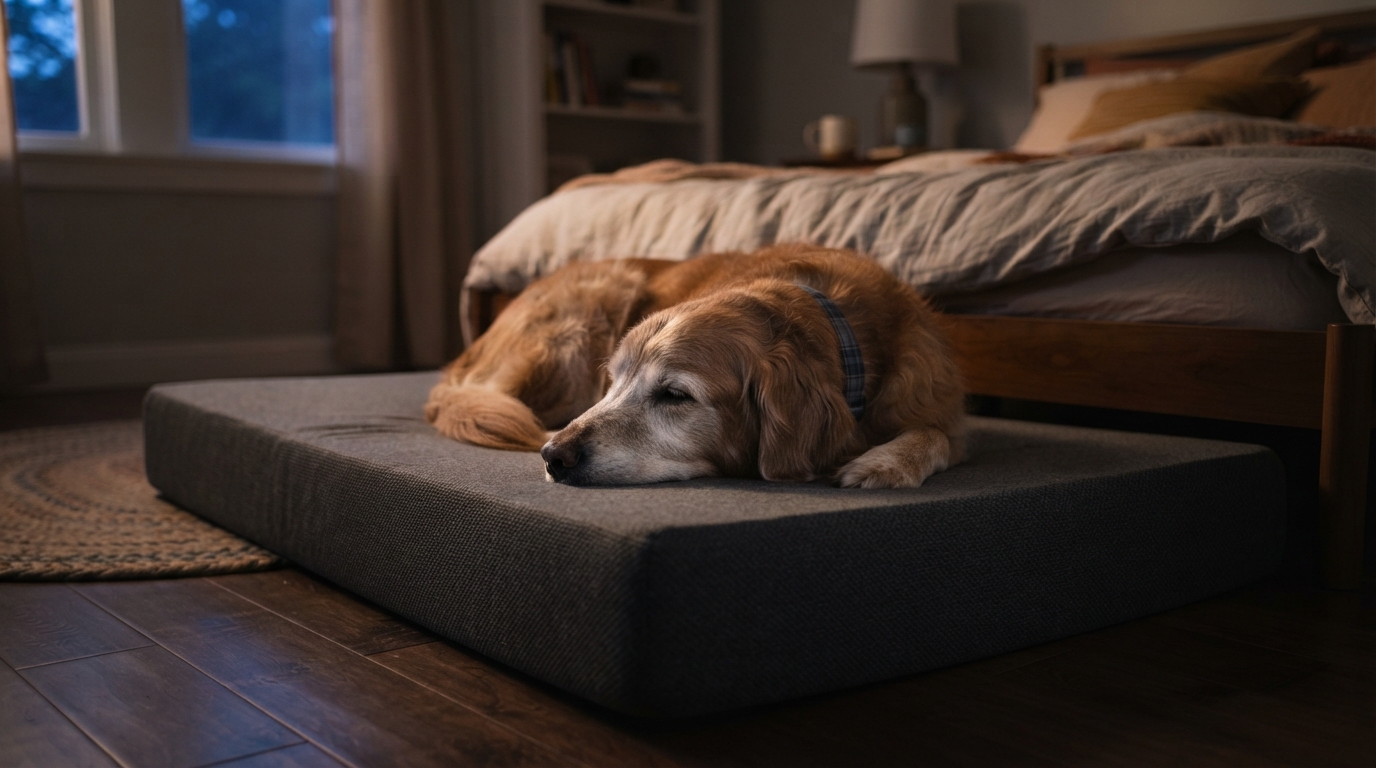
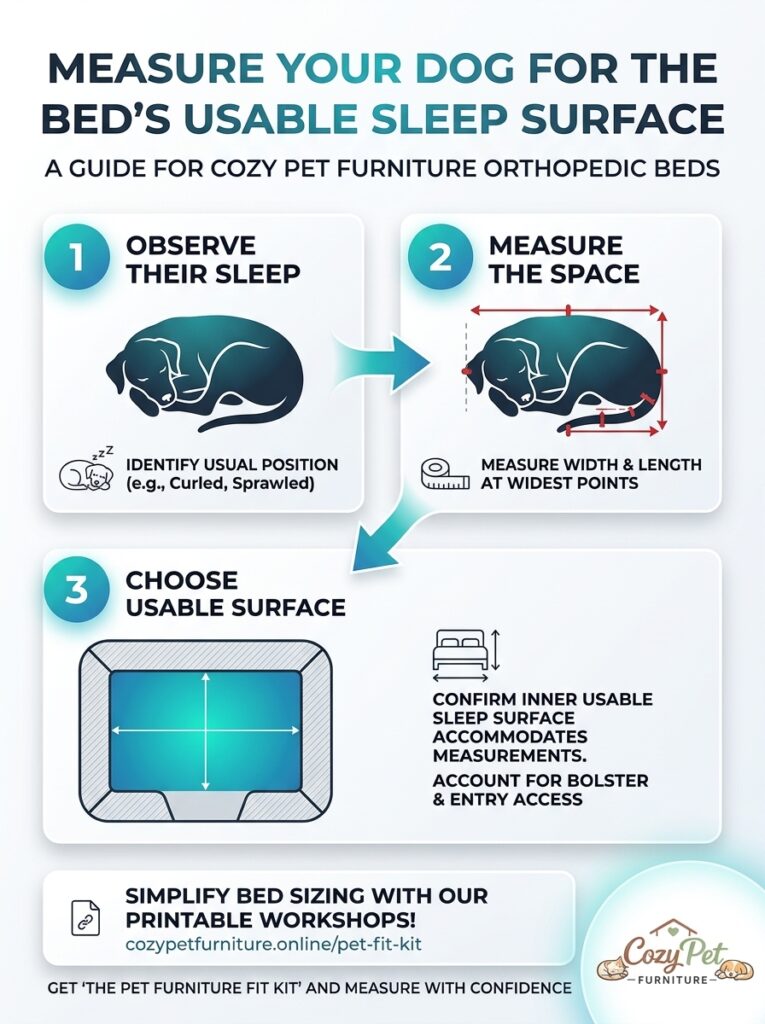
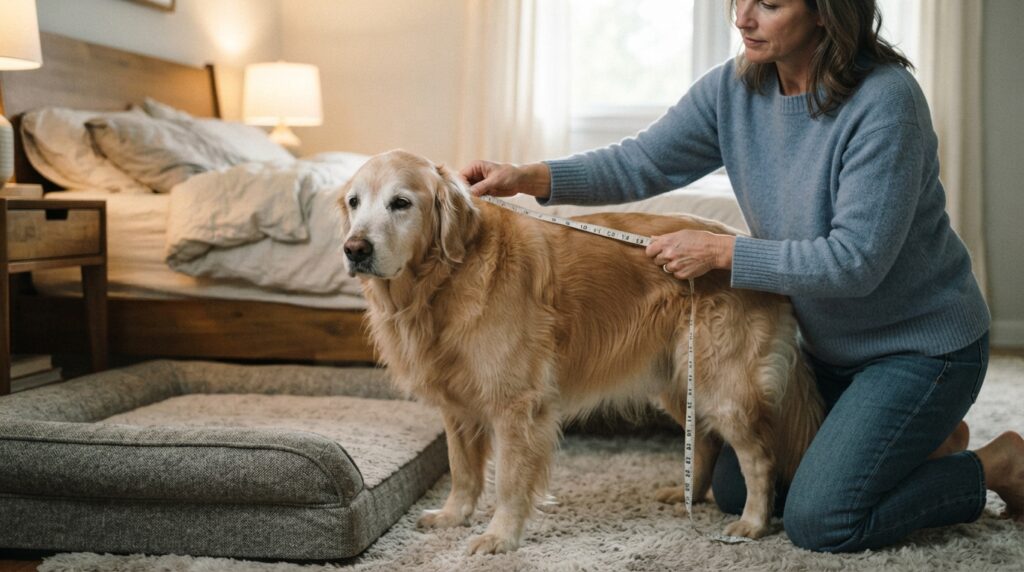
A curled-up measurement may not show how much room your dog uses at other times. Watch your dog in more than one typical sleeping position, including a stretched-out position if they regularly sleep that way, and measure the space occupied by the whole body and paws.
If your dog changes position often, repeat the resting measurement across a few relaxed sleep periods. Use a representative full footprint rather than basing your choice on one curled-up moment.
Choose enough surface area for the positions your dog actually uses. A dog who curls up much of the time can still benefit from room to stretch if stretching is part of their normal routine.
Leave the full tail out of the body-length measurement, but include legs or paws when they extend beyond the torso during sleep. Those extra inches of resting space can make a difference when you compare the bed’s length and width.
If your dog keeps turning, use the position they settle into naturally rather than trying to hold them still. For dogs who need help getting comfortable, choose a safe position they can reach without being forced to stand or stretch.
Compare the measurements with the usable resting area
Compare your dog’s length and width with the bed’s interior resting surface, not its outside footprint. A frame, thick rim, or raised side may look like part of the bed’s overall size, but it doesn’t provide the same clear space for sleeping.
For a bed with a bolster or raised sides, measure the flat interior area left between the edges. These features can reduce the usable surface substantially, especially for a dog who sleeps stretched out.
Allow some room beyond your dog’s measured footprint so they can shift position. Compare length and width separately; one generous dimension can’t make up for a bed that’s too narrow or too short.
Compare clearance in each direction: set the bed’s clear interior length against your dog’s longest regular footprint, then compare its clear width with the widest footprint. The difference in each direction shows where the fit is tight; extra length cannot make up for cramped width. For example, if a dog’s paws nearly reach the inner edges across the bed, a generous length may still leave too little room to shift. There is no universal extra-space allowance that suits every shape and sleeping habit, so treat little or no clearance in either direction as a close fit and check the footprint your dog uses most.
If your dog’s measurements fall between sizes, favour the size that accommodates their regular stretched-out footprint, provided it will still fit the intended spot at home. A bed that crowds the dog may make it harder to settle, turn, or extend their legs comfortably.
Signs a bed may be too small include your dog’s body repeatedly spilling over the usable surface, paws being pushed against an edge, or difficulty changing position without leaving the bed. Pay attention to what your dog does after settling, not just how the bed looks beside them.
For a quick comparison while considering different dimensions, the dog bed size guide is a relevant place to organize your options.
Choose a shape and entry that suit your dog
Match the bed shape to your dog’s sleeping habits. A rectangular resting area is practical for dogs who stretch lengthwise, while a round or oval shape can suit dogs who commonly curl up.
Raised edges can give a dog a place to rest their head or lean against, but they reduce the flat interior area. Make sure the edges don’t crowd a dog who likes to sprawl or leave too little room to reposition.
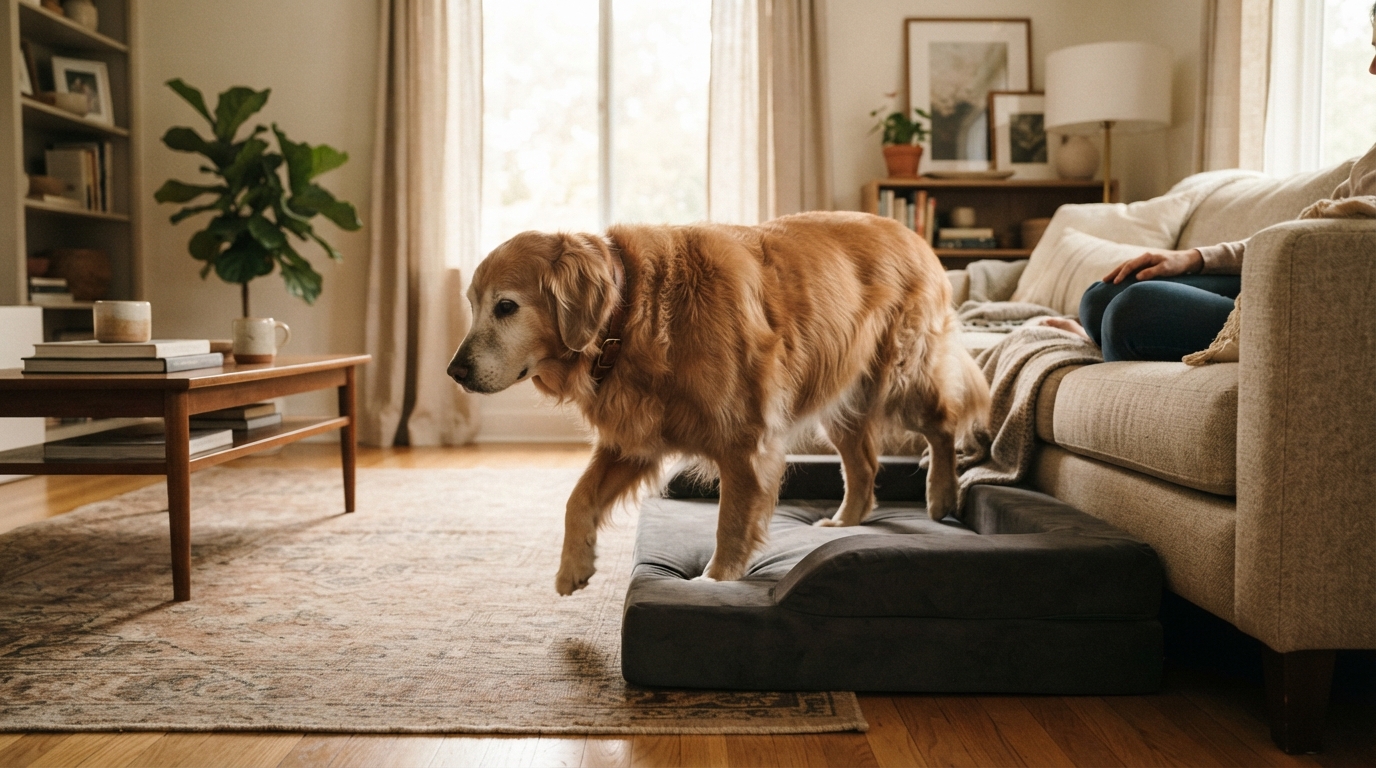
For a dog with stiffness or limited mobility, prioritize an easy-to-enter design with a low threshold. A high edge can become an obstacle when a dog has to step over it every time they get in or out.
An edge may help a dog brace or rest their head, but that preference shouldn’t take away the clear space their body needs. If you’re choosing for a senior dog, consider the combination of resting room and access, not age alone; the senior dog selection relates to this stage of bed planning.
There isn’t one perfect shape for every dog. Watch where your dog places their head, whether they lean against a surface, and how much room they use when they stretch.
Check orthopedic support separately from bed size
Fit and support are two different checks. First make sure the resting area fits your dog, then consider whether the bed’s core cushions their body without bottoming out onto the floor or base.
“Orthopedic” doesn’t describe one single foam recipe. Memory foam is viscoelastic, so it responds to heat and pressure; other supportive beds may use different foam constructions or combinations.
A memory foam dog bed may be an orthopedic option, but the label alone doesn’t tell you how the bed will respond to your dog’s body. A larger bed doesn’t automatically provide better pressure relief, either: the core’s construction and its response under your dog’s weight matter.
Foam density and firmness describe different properties. Density is how much material is packed into a given volume, while firmness describes how much the foam resists compression; neither term alone tells you exactly how a bed will feel to a particular dog.
When assessing an orthopedic bed, consider your dog’s weight alongside the core’s construction and how it supports them in their usual sleeping position. The practical question is whether the bed cushions their body while keeping them from sinking through to the floor or base.
Look at how the foam supports your dog in their usual position, especially beneath the shoulders and hips. The body should be cushioned without one area sinking markedly lower or the dog pressing through to the base. Check the bed on the surface where it will be used, with its cover in place, and observe your dog after they settle and shift. Pressing the foam by hand can help you notice its feel, but it cannot show how it responds to your dog’s full weight; a quick recovery after pressure is not, by itself, proof of adequate support.
If your dog has pain, new difficulty getting up, or a sudden change in mobility, a bed choice isn’t a substitute for veterinary care. Comfort needs can vary, and a veterinarian can help you understand whether a change in sleeping surface is appropriate.
Make a final fit check for age, growth, and mobility
For a growing dog, allow for expected growth and repeat the measurements as their body changes. An early puppy measurement is a snapshot, not a permanent guide to the space they’ll need later.
For an older dog or one with mobility challenges, prioritize a surface they can enter and leave comfortably as well as enough room to reposition. A bed that fits on paper may be a poor practical fit if the entry is difficult for your dog to manage.
Bring the key checks together before deciding: recorded body length and shoulder width, the full resting footprint, the bed’s usable interior area, and your dog’s access needs. Breed names and generic size categories can’t replace these individual measurements.
The Pet Furniture Fit Kit printable measuring and sizing worksheets can keep those measurements and bed comparisons organized as your dog grows or their needs change. For more related guidance on choosing dog furniture and resting spots, browse Dog Bed & Furniture Guides.
Review the measurements in the same order each time: body, sleeping footprint, usable surface, support, and access. This makes it easier to compare beds on the factors that affect your dog’s comfort, rather than being led by a size label alone.
Frequently Asked Questions
Are orthopedic dog beds only for senior dogs?
No. Dogs of different ages may use an orthopedic bed, and age alone doesn’t determine whether a particular bed suits an individual dog. If your dog shows ongoing discomfort or a sudden change in how they lie down, ask a veterinarian about the change.
Can you make your own orthopedic dog bed?
Yes, you can make a bed using foam cut to a suitable footprint and a close-fitting washable cover. A homemade bed isn’t automatically supportive, so consider how the foam responds under your dog’s weight and protect it from chewing or moisture.
For a homemade bed, think about the layers as well as the footprint. A supportive base with a more cushioning surface layer can provide both resistance and comfort, while a single very soft layer may compress too much under your dog. The right feel depends on the dog and the foam, so assess the assembled bed with its cover on: check that the layers stay flat, the shoulders and hips remain supported, and the dog does not sink through to the floor or base. Foam density alone cannot confirm that the finished bed will support your dog.
How can I tell whether my dog likes a bolster or raised edge?
Try placing a securely folded blanket along one side of your dog’s usual sleeping spot for a few nights, then observe whether they choose to lean against it or move away. Keep the temporary edge low and stable so it doesn’t obstruct your dog’s route on and off the resting surface.
Can an orthopedic dog bed fit inside a crate?
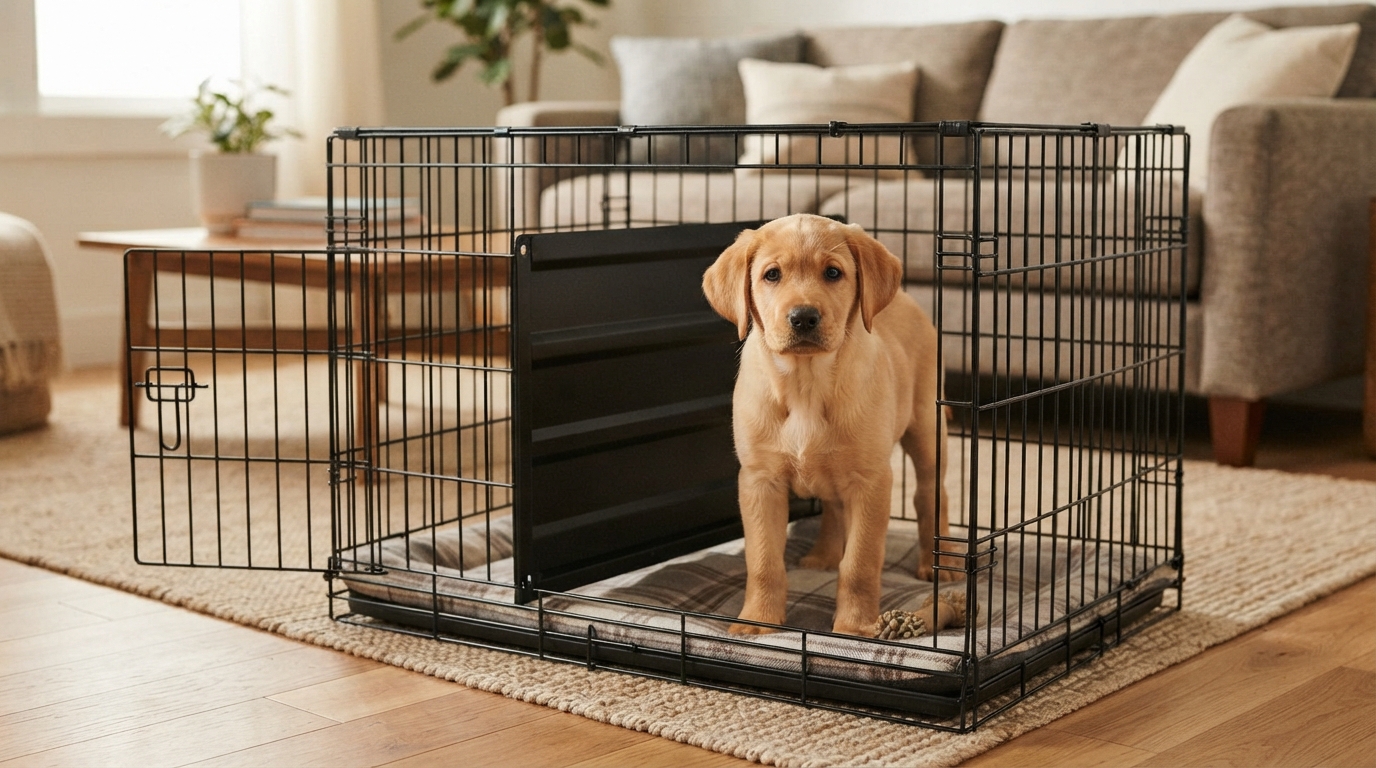
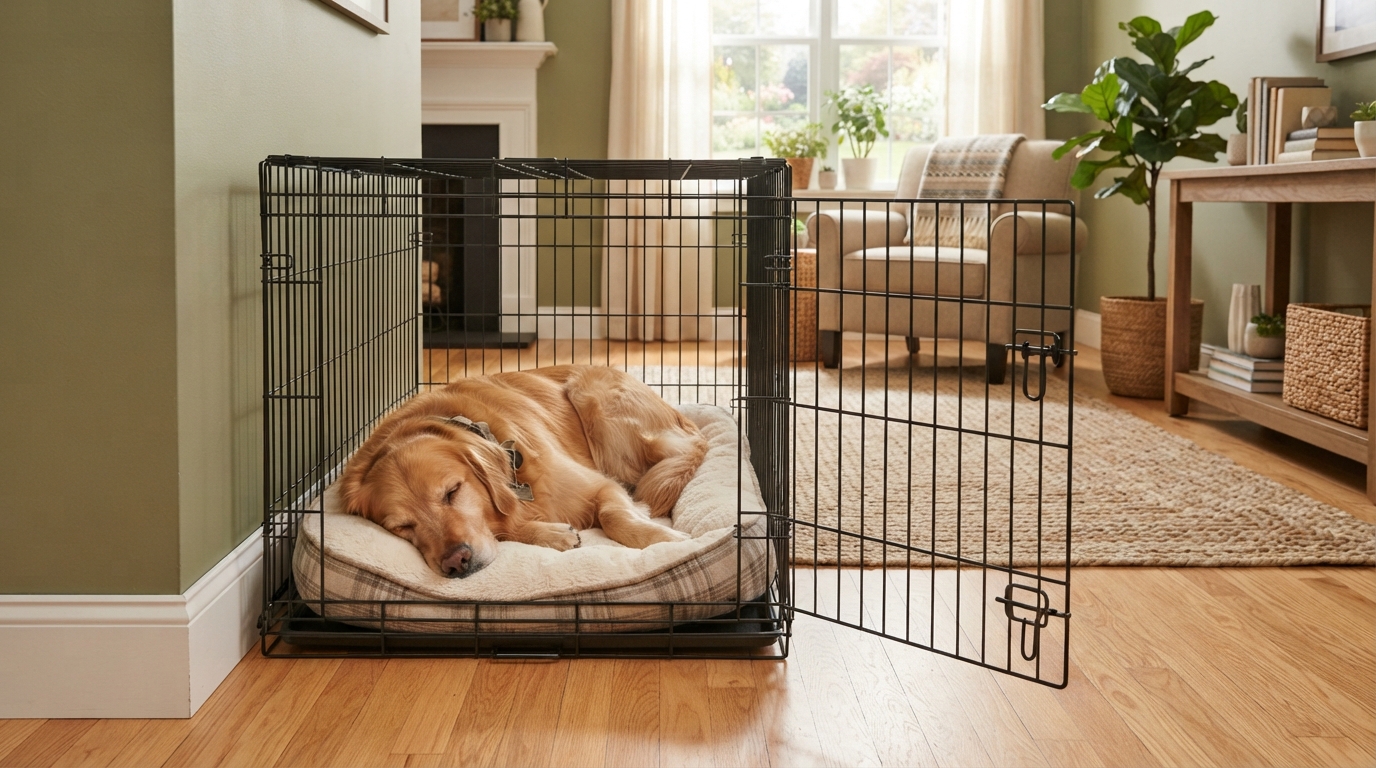
Yes, if the bed fits within the crate’s interior while leaving the door clear and allowing your dog to settle without being wedged in. Consider how the bed sits against the crate walls, since a thick edge can reduce the space available inside.
Is an orthopedic bed good for a dog?
It can be a good fit if your dog settles on it comfortably and can get on and off without difficulty.
How can I help my dog get used to a new orthopedic bed?
Place the bed where your dog already chooses to rest and let them investigate it at their own pace. A familiar blanket can make the surface feel less new, and calm praise when your dog settles can help create a positive association.
Conclusion
How to Measure Your Dog for an Orthopedic Bed comes down to more than length or a size label. Record your dog’s relaxed body measurements, account for the sleeping positions they use, and compare their full footprint with the bed’s usable interior.
Then assess support, shape, and entry as separate parts of the choice. A well-sized resting area, a core that supports your dog without bottoming out, and access that suits their mobility make for a more practical fit.