Pet-Friendly Upholstery: Hair Release or Stain Resistance? The answer depends on what causes the most work in your home: shedding, spills, odors, or claws. Hair release and stain resistance are separate fabric qualities, so choose for your pet’s habits rather than relying on a general pet-friendly label.
Key Takeaways
- What kind of sofa fabric is best for dogs? A tightly woven, low-pile fabric is a practical starting point for many households, but frequent spills, heavy shedding, and scratching call for different priorities.
- Which upholstery materials release pet hair most easily? Smooth, low-pile surfaces such as finished leather usually let hair lift away more easily than looped or high-pile fabrics.
- What upholstery works best for pet accidents and spills? Look for a fabric with documented liquid or stain resistance and care instructions that allow cleaning with the method you can use.
- How can you choose upholstery for several pet needs at once? Compare hair release, stain protection, snag resistance, and cleaning instructions separately. A good fit for one does not guarantee a good fit for the others.
- What should you test before choosing a sofa fabric? Use a swatch to check how your pet’s hair releases and how the fabric responds to a small, representative spill and an approved cleaning method.
- For more practical guidance on shared interiors, browse our pet-friendly home guides.
Hair release and stain resistance solve different problems
Pet hair release describes how easily loose fur lifts from upholstery during vacuuming or brushing. Stain resistance describes how well a fabric resists absorbing or holding marks from spills and soil; liquid repellency is one part of that picture.
A fabric can perform well on one measure and poorly on another. A tightly woven surface may let hair brush away but still absorb a spill, while a protective finish may slow liquid absorption without stopping fur from clinging to the fabric.
That difference matters when you’re choosing pet-friendly upholstery. If shedding is your daily frustration, prioritize a smooth surface and easy hair removal. If accidents or muddy paws are the bigger concern, prioritize stain and moisture protection, plus a cleaning method you can use consistently.
Best sofa fabrics for dogs, cats, and shedding
There isn’t one best fabric for every pet household. Compare the material, weave, surface texture, and care method together.
| Fabric type | Hair release | Spills and stains | What to consider |
|---|---|---|---|
| Finished leather | Usually easy; hair tends to sit on the surface. | Many protected finishes wipe clean more readily than absorbent upholstery. | Claws can scratch or puncture it, and scratch visibility varies by finish and color. |
| Microfiber | A dense, short surface can make vacuuming or brushing straightforward. | Performance depends on the fiber, finish, and care method. | Static may attract fine hair. Oils and soil can build up, and some versions can pill. |
| Performance fabric | Varies with the weave and pile; a smooth, tight weave is often easier to clean. | Some versions resist stains or moisture through the fiber, a finish, or both. | The label alone doesn’t tell you how the fabric sheds hair, resists snags, or should be cleaned. |
| Olefin | Depends on surface texture and construction. | Its low moisture absorption can help with many water-based spills. | Oil-based marks and heat can be concerns, so follow the fabric’s care guidance. |
| Loose-weave or high-pile fabrics | Hair can work into the texture and take more effort to remove. | Cleaning can be difficult if spills settle deep in the pile or weave. | Loops and raised texture may catch claws or snag, depending on construction. |
For a best couch fabric for dogs shortlist, start with tightly woven microfiber or a smooth performance fabric if you want a balance of comfort and practical cleanup. Choose protected leather when easy hair removal matters most and your pet is unlikely to scratch it heavily.
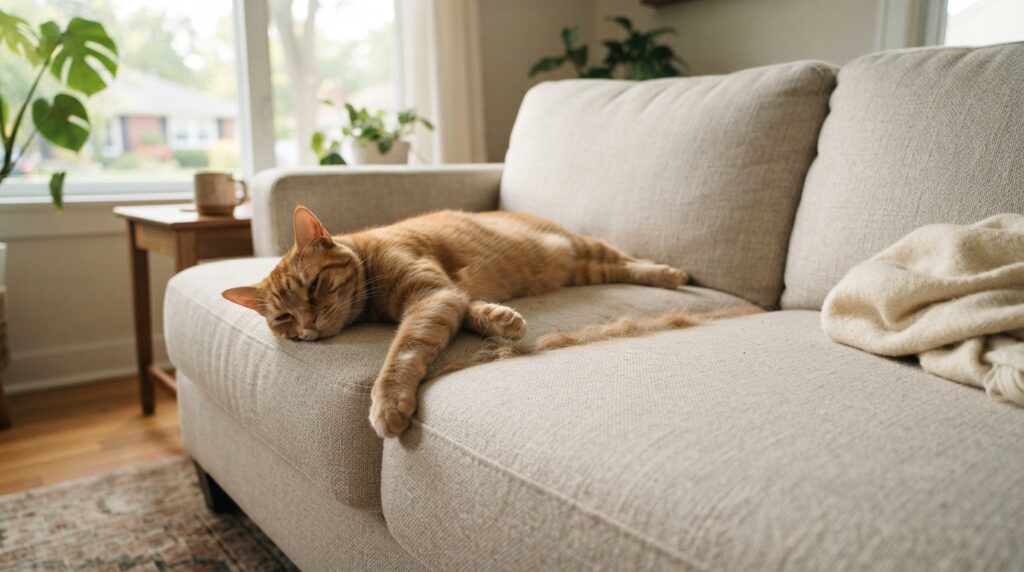
Leather isn’t scratch-proof, and every leather finish behaves differently. An absorbent, less-protected surface can mark more readily than a protected finish, while scratches may be more visible on some colors and textures than others.
Match the fabric to shedding, scratching, and accidents
For a heavy shedder, look for a smooth, low-pile surface that lets hair lift away without digging into loops or deep texture. A dense microfiber or tightly woven performance fabric may suit your home, but check for static cling with the coat your pet actually sheds.
For a pet that scratches or climbs, look beyond abrasion resistance. Abrasion ratings describe resistance to wear from rubbing; they don’t necessarily tell you whether claws will catch a loop, pull a yarn, or leave a visible mark. Prioritize snag resistance and avoid looped or loosely woven surfaces when claw snags are a regular problem.
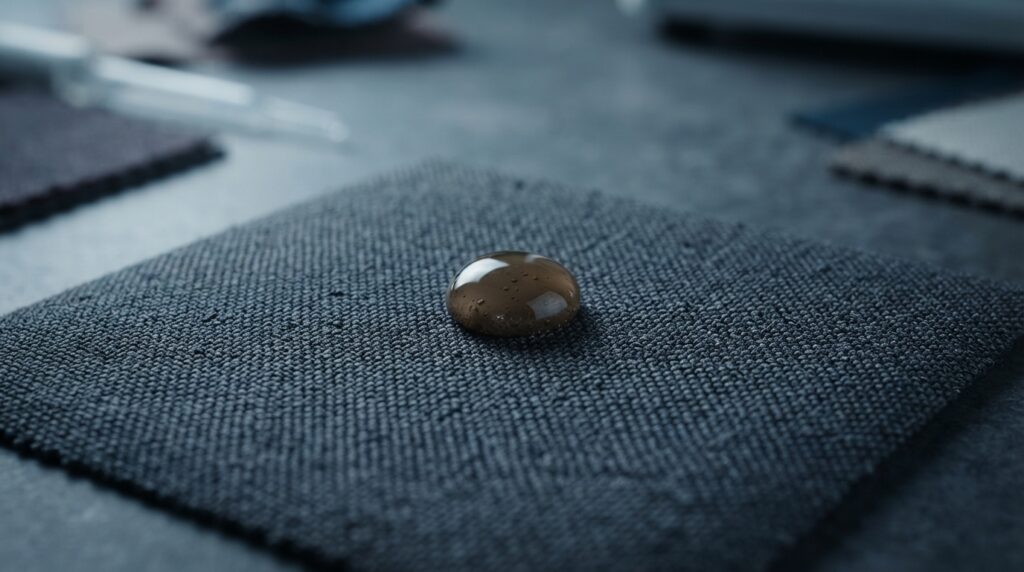
For a pet prone to spills or accidents, focus on stain resistance, liquid repellency, and cleaning instructions. Odor resistance also matters, but a surface treatment can’t guarantee that liquid won’t reach a cushion or settle into other layers.
Think about your pet’s age and habits, too. Senior pets may benefit from a comfortable resting spot with a washable cover, while an active dog may put more wear on sofa arms and cushions. It’s also important to remember that no fabric is completely pet-proof.
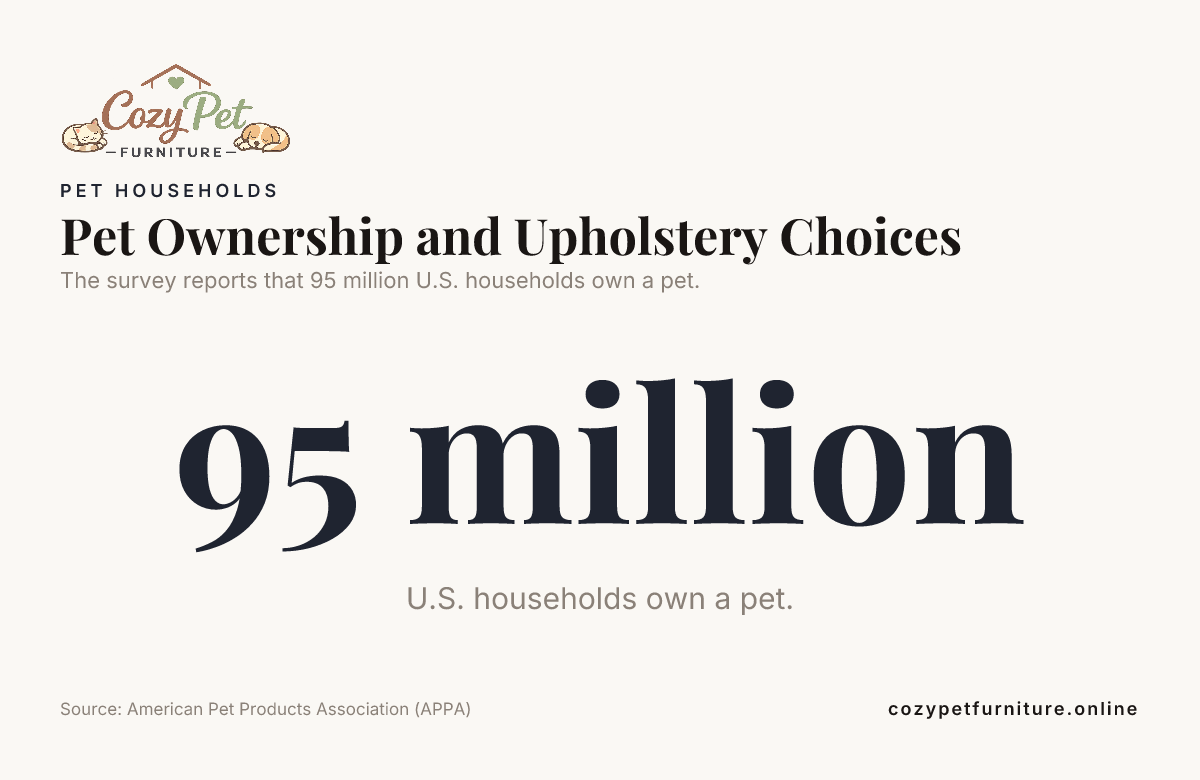
The survey reports that 95 million U.S. households own a pet.
Check the weave, pile, and protection details
A tight weave leaves fewer gaps for hair and claws to enter, while a loose weave can catch fur and snag more easily. Loops create small points that claws can hook, so a flat, close construction is often more practical when scratching is a concern.
Fabric pile affects both cleaning and feel. Short, even pile is usually easier to vacuum than deep, plush pile, where hair and crumbs can settle; raised textures may also show brushing marks or wear differently over time.
Find out how stain protection works. It may be built into the fiber, applied as a finish, or use both approaches. A topical finish can wear or change with cleaning, so read the care guidance for approved products and instructions on maintaining the treatment.
Don’t treat a broad performance label as a complete answer. Look for specific information about liquid repellency, stain resistance, abrasion resistance, snag resistance, odor resistance, and the permitted cleaning method.
Test upholstery swatches with your pet’s hair
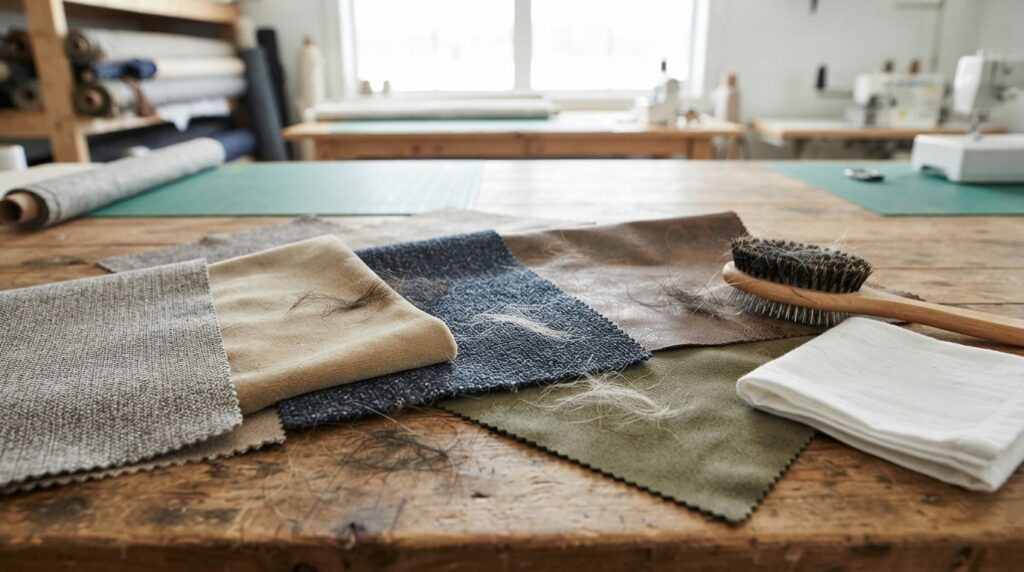
A swatch test lets you compare fabrics against the real problems in your home before you commit. Use the same steps for each sample so one fabric doesn’t get an easier test than another.
- Check the care instructions first. Note which cleaning methods and products the fabric allows.
- Use your pet’s own hair. Rub a small amount across the swatch, then try the removal method you normally use, such as a vacuum upholstery tool or soft brush.
- Try a representative spill. Use a small amount on a spare swatch, not the furniture. Follow the fabric’s instructions for blotting and cleaning.
- Compare the results. Look for remaining hair, changes in texture or color, and any residue after cleaning and drying.
- Check the surface for snags. Observe how the weave responds to normal handling; don’t drag claws or sharp objects over the fabric.
This makes the trade-off easier to see. A fabric may release hair well but need more careful spill cleanup, or resist a spill while holding onto fine fur.
Choose a care routine you can maintain
Care instructions should shape your choice of pet-friendly upholstery. Upholstery cleaning codes commonly use letters such as W for water-based cleaners, S for solvent-based cleaners, WS for either type, and X for vacuuming or brushing only. Follow the instructions supplied for the specific fabric, because a product that works on one surface may damage another.
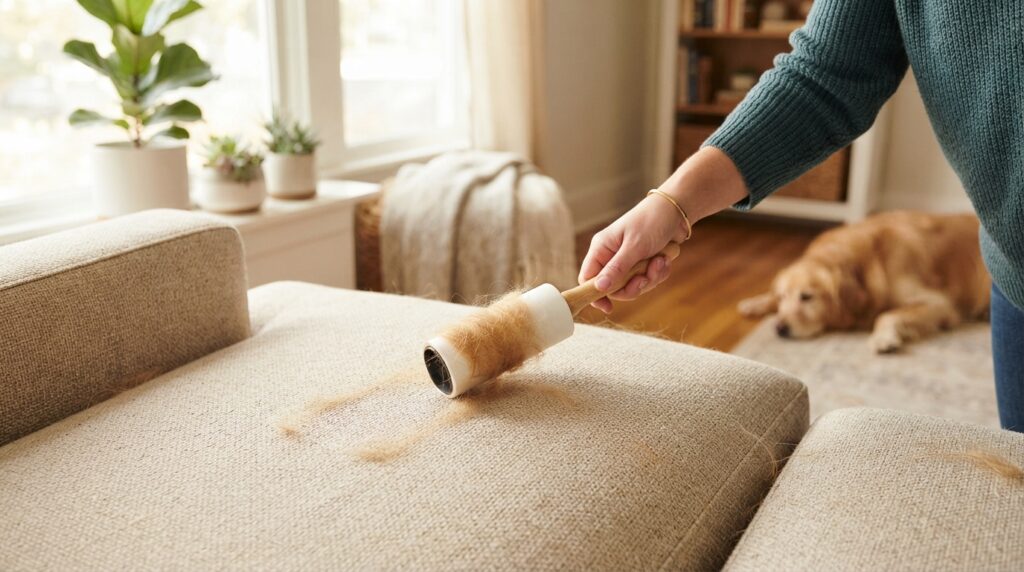
For routine hair removal, start gently with an upholstery attachment or a soft brush suited to the fabric. A rubber tool can gather loose fur from some surfaces, but test any tool on a discreet area first, especially on delicate or textured material.
Blot spills rather than rubbing them deeper into the weave. Avoid bleach, solvents, or other cleaners unless the fabric’s care guidance permits them, and let cleaned upholstery dry fully before pets use the area again.
Removable slipcovers can make furniture care simpler when their washing instructions fit your routine. Check whether the covers can be removed and cleaned as a set, and follow their guidance on washing, drying, and putting them back on.
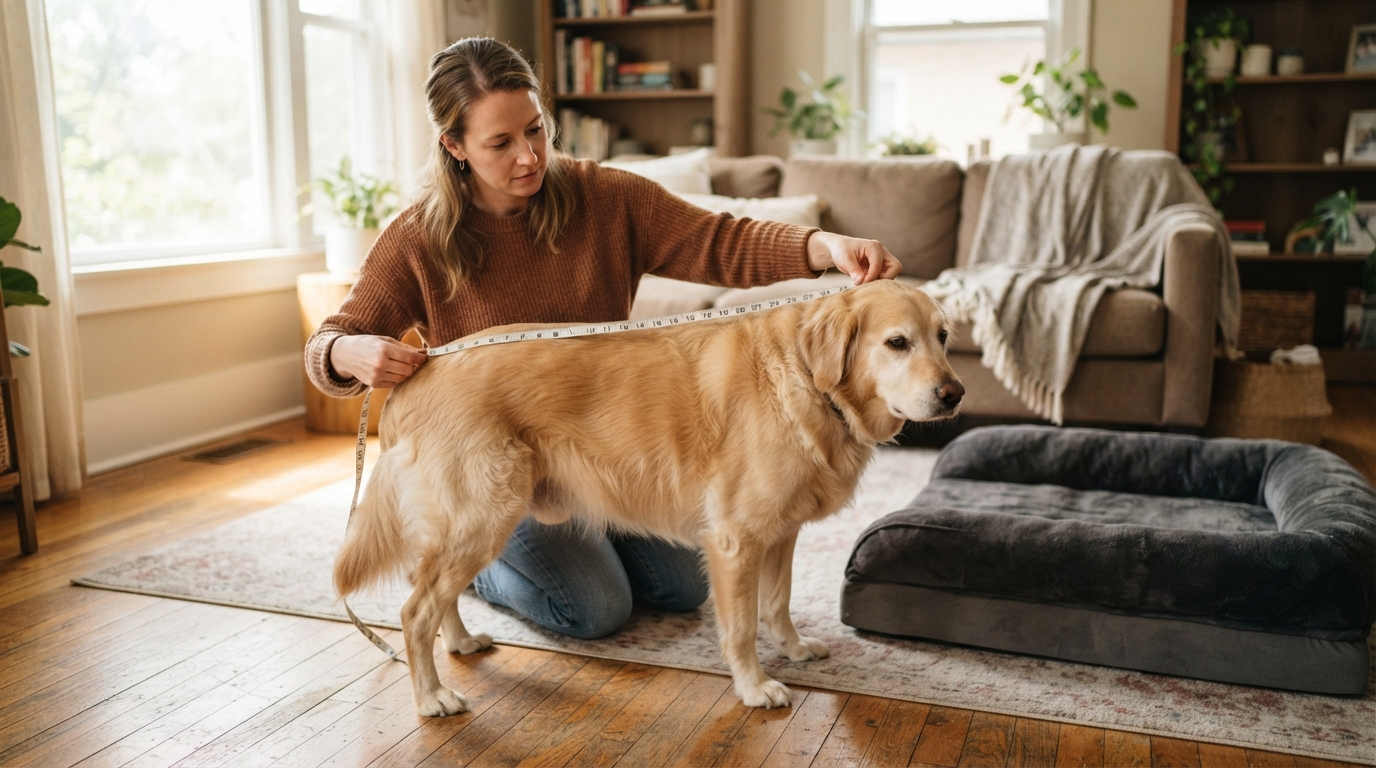
If you’re planning around a new sofa or slipcover, the Pet Furniture Fit Kit printable measuring and sizing worksheets may be useful for organizing your furniture measurements alongside your fabric comparisons.
Choose color and pattern for your room, not just the fur
Color can make shedding more or less noticeable, but it doesn’t replace cleanability. Light hair often stands out on dark fabric, while dark hair can show more clearly on pale upholstery; mixed coats may be less obvious on a blended or patterned surface.
Lighting changes what you see. Check a swatch in the room where the sofa will sit, at different times of day, and compare it with your pet’s coat in that light.
Patterns and heathered colors can disguise loose fur and everyday marks between cleanings. Choose them only after considering the weave, snag risk, and care method; a pattern can hide visible hair without making it easier to remove.
Frequently Asked Questions
Are cotton or linen sofas a bad choice for homes with cats?
Not always, but loosely woven cotton and linen can snag more easily, and absorbent fibers can make spills harder to clean. If you like either material, favor a close weave and make sure its care requirements fit your household.
Is velvet a practical upholstery fabric if my dog sheds?
Short, dense velvet may release hair more easily than deep pile, but its surface can show pressure marks and direction changes. Check how the nap looks after brushing and whether the fabric’s cleaning method suits your routine.
Can I put a washable sofa cover in the dryer?
Only if the care instructions allow it. High heat can shrink a cover or affect its backing, so use the permitted drying method and let the cover dry fully before refitting it.
Is a lint roller safe to use on every sofa fabric?
No, adhesive can pull at delicate fibers or leave residue on some surfaces. Test it in a hidden spot first, and use a fabric-appropriate brush or vacuum attachment if the swatch shows any damage.
What should I do if a pet accident reaches the cushion beneath the cover?
Clean the cover and cushion according to their separate care instructions, since their materials may require different methods. If the cushion insert can be removed, allow it to dry completely before putting the cover back on.
What are the downsides of polyester sofas?
Polyester upholstery can build up static, which may make fine pet hair cling to the surface. Polyester alone doesn’t predict how a sofa will perform, so assess the specific fabric before choosing.
How to make dog hair not stick to a couch?
Choose smooth, tightly woven, low-pile upholstery, where hair is less likely to catch in the texture. Regularly remove loose fur with a fabric-appropriate vacuum attachment or soft brush; a washable cover can also make cleanup easier.
Conclusion: Choose the upholstery your household can live with
Pet-Friendly Upholstery: Hair Release or Stain Resistance? Start by identifying which problem takes the most time in your home, then compare hair release, stain protection, snag resistance, and cleaning instructions as separate qualities. A swatch test with your pet’s hair and a small representative spill can help you make a well-researched decision.
The best fabric for a couch with dogs, cats, or both depends on coat, claws, age, and everyday habits. Choose a surface that suits your pet and your cleaning routine, and remember that color and a pet-friendly label can’t replace a suitable weave and clear care guidance.