Puppy Crate Size: Plan for Growth Without Guessing starts with two practical questions: how much room does your puppy need now, and how much space will they need as an adult? Measure your puppy, estimate adult size as a range, and use a divider with regular fit checks to adapt the crate as they grow.
Key Takeaways
| What to check | Why it matters |
|---|---|
| Measure body length and standing height. | Breed and weight alone don’t show whether your puppy’s proportions will fit comfortably. |
| Compare your measurements with the crate’s interior dimensions. | Walls, the divider, bedding and accessories all affect usable crate space. |
| Choose a crate that can suit expected adult size, then adjust the divider. | Your puppy needs enough room to stand, turn and rest now, without a large unused area. |
| Recheck fit after noticeable growth. | There isn’t one schedule that suits every breed or puppy. |
| Consider where the crate will be used. | Home placement and travel can call for different crate shapes, access and setup. |
| Keep crate size separate from potty breaks and supervision. | A divider helps manage space, but it doesn’t replace a routine suited to your puppy. |
For related advice about pet comfort and dog furniture, browse our dog guides.
Measure your puppy and the crate’s usable interior
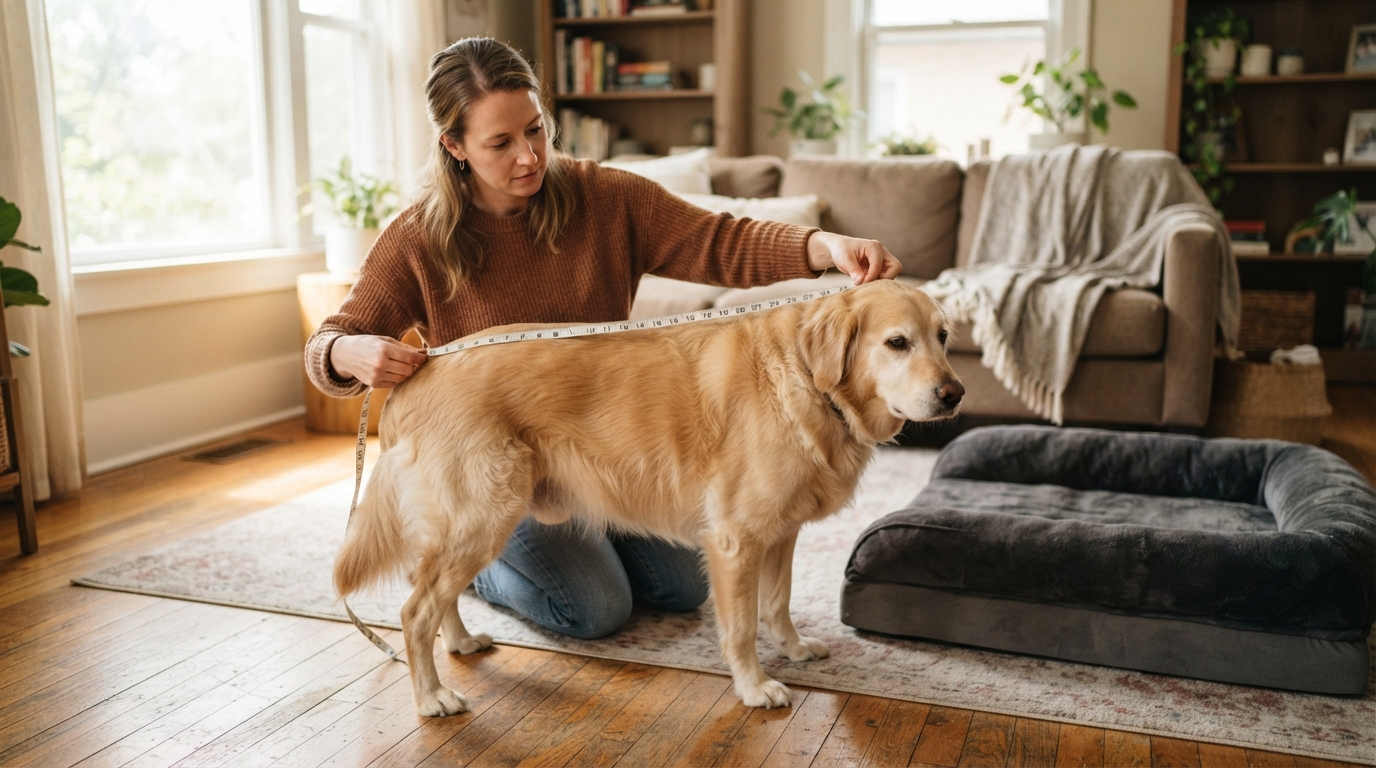
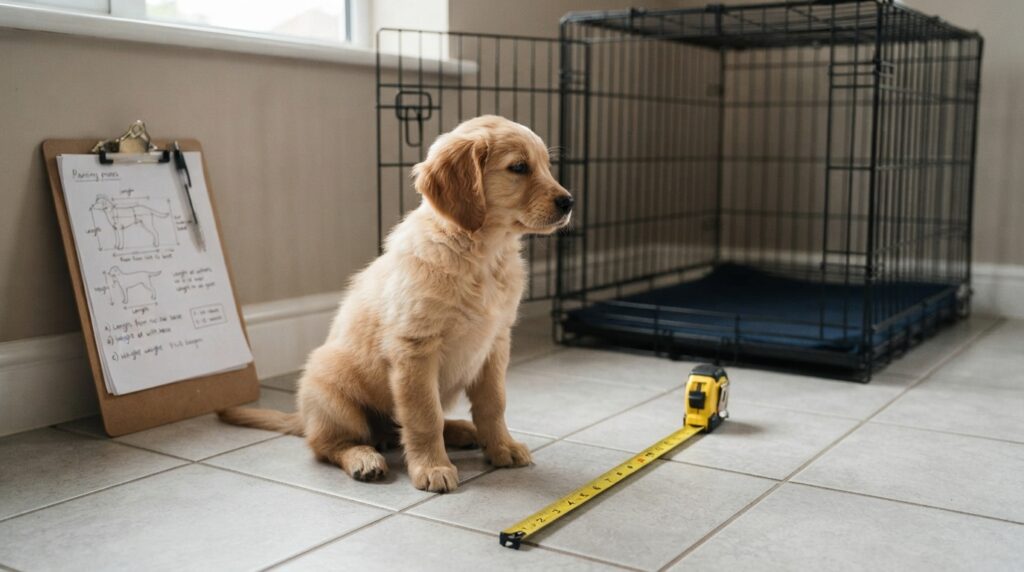
Measure your puppy’s body length from the nose to the base of the tail. For standing height, measure from the floor to the top of the head or ears while your puppy stands naturally, rather than crouching to fit the tape.
Compare these measurements with the crate’s interior dimensions, not its exterior footprint. The crate walls take up space, and a divider further reduces the area your puppy can use.
Your puppy should be able to stand without crouching, turn around without squeezing, and lie down in a natural resting position. A puppy who has to curl tightly or hold an awkward posture to fit needs more usable space.
A crate size chart can give you a starting point, but body proportions matter. A long-bodied puppy or one with tall ears may need a different fit from another dog at the same weight.
Our existing Best Dog Crates: How to Choose the Right Size, Style, and Security guide covers crate size, style and security, with attention to resting room and manageable everyday care, cleaning and safe use. Those practical details belong alongside measurements when you’re choosing a crate for a growing puppy.
Estimate adult size as a range, not a promise
Known breed mix and parent size can help you estimate adult size, but they can’t predict an exact adult build. Use them to sketch a likely range; individual proportions and growth rates vary, even among puppies with similar breed backgrounds.
If breed or parent information is uncertain, follow your puppy’s current measurements and weight trend, and ask your veterinarian to help assess growth. A breed label by itself may not tell you whether your puppy will be compact, long-bodied or tall.
Growth timing also differs by size. A toy (under 9kg) dog reaches adulthood in 1 year, and a giant breed (over 40kg) takes nearly 2 years, according to WALTHAM Petcare Science Institute.
The WALTHAM Petcare Science Institute says its charts are most accurate when recording starts as early as possible, between 12 and 20 weeks, when puppies experience their most rapid period of growth. Record measurements repeatedly so you can follow a trend rather than treating one adult-size estimate as exact.

Start recording as early as possible for the most accurate growth charts.
Choose adult capacity and use a divider for the puppy stage
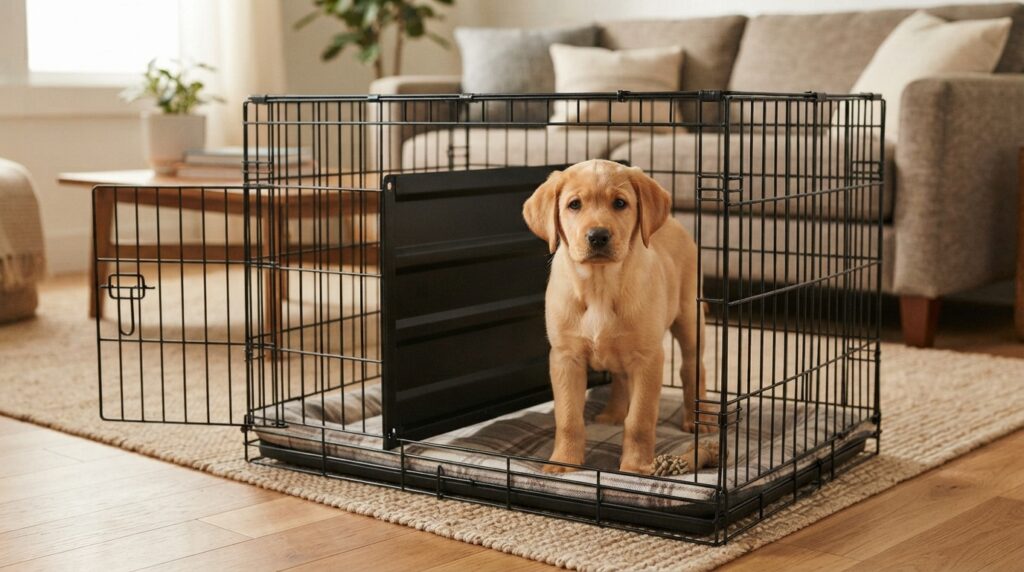
If you choose a crate for your puppy’s expected adult size, use a secure crate divider to limit the usable area during the puppy stage. Set it to leave enough room for your puppy to stand, turn and lie down comfortably.
The space should allow resting and repositioning, but shouldn’t leave a large unused area at the other end. During early potty training, a puppy may use that extra space as a separate toilet spot.
Move the divider as your puppy grows. Don’t leave it where your puppy has to crouch, twist or squeeze past it to reach a resting position.
Don’t choose a crate that’s too small simply to control accidents. A comfortable fit and close supervision are separate parts of crate training, and restricting movement is not a substitute for a potty routine.

Recheck the fit as your puppy grows
Recheck your puppy’s standing, turning and resting positions regularly, especially after you notice a growth spurt. When there’s no longer comfortable clearance, move the divider or provide more space.
Look for visible signs: your puppy’s head or ears come close to the top while standing, turning becomes difficult, or resting requires an unnatural curl. These are practical cues to reassess the fit rather than wait for your puppy to become cramped.
Keep a simple record of body length, standing height and divider position. That way, you can compare changes over time instead of relying on memory or guesswork.
Make more room before your puppy feels cramped. Puppy crate size depends on individual growth, so base changes on fit rather than the calendar.
Check bedding, accessories and the crate’s location
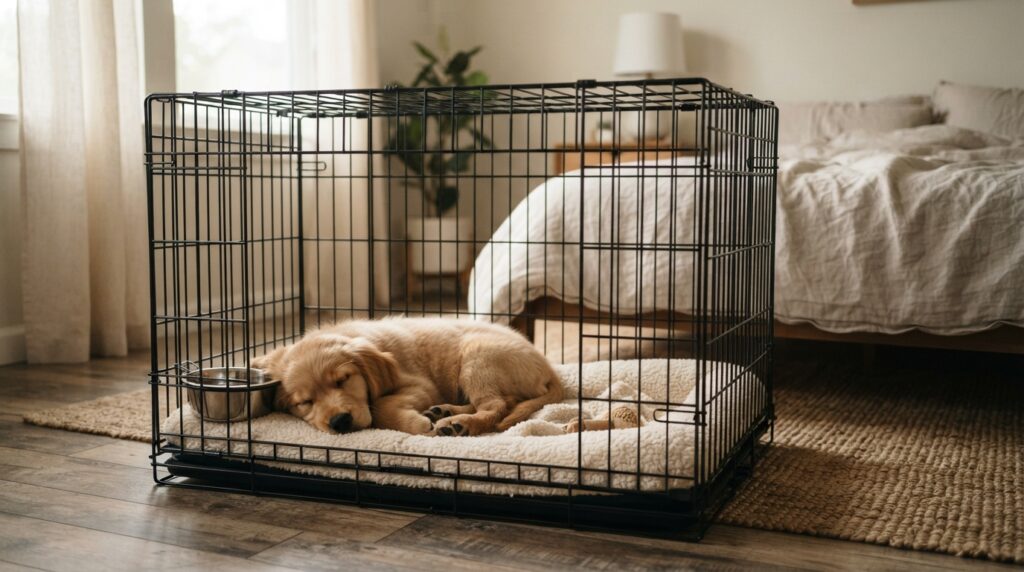
Include bedding in every fit check. A thick bed takes up floor area and raises your puppy’s resting position, which can affect both how much space is left to lie down and the clearance above their head.
Keep toys and other accessories out of the way of your puppy’s path to turn, lie down or reach the crate door. An item that seems small outside the crate can interfere with movement when the usable area is already limited.
If you’re comparing two crate sizes, mark each one’s interior floor area at home with removable tape. Check your puppy’s standing height and natural resting positions against each outline; a floor plan alone can’t show whether the crate has enough vertical clearance.
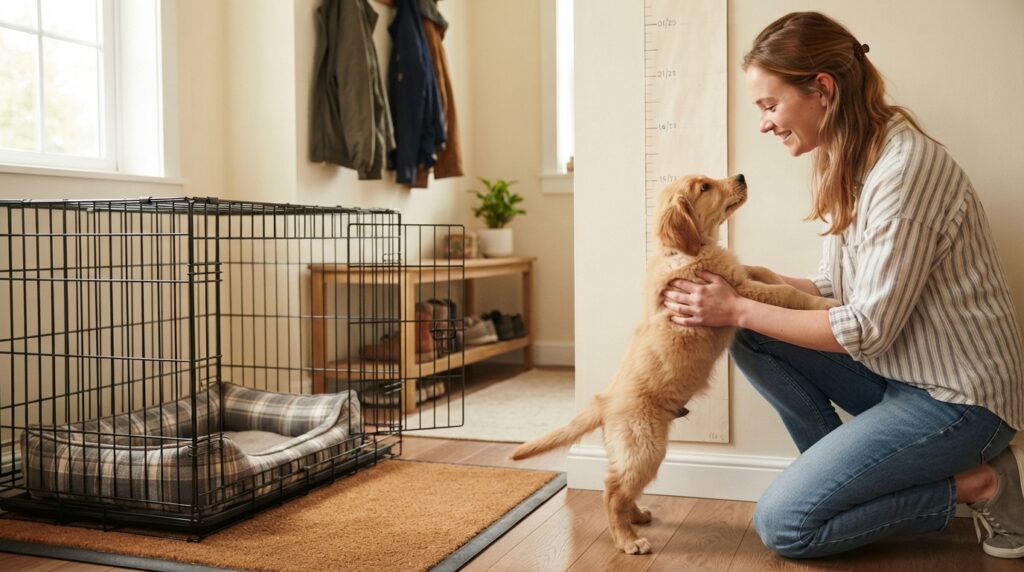
Measure the intended location, too, including the room needed to open the door. A crate can fit your puppy and still be awkward for daily use if you can’t reach the door comfortably.
Separate home-crate fit from travel-crate fit
For a crate that stays at home, prioritize comfortable movement, a suitable resting area and practical access to the door in the place where the crate will live. The right arrangement should work for both your puppy and the household’s everyday routines.
Travel calls for a separate check. Consider how the crate will be transported and secured; a comfortable home fit alone doesn’t establish that a crate is suitable for a particular trip.
If you use separate home and travel crates, measure your puppy for each one. Interior shape and door placement can change how much space is usable, even when two crates appear similar in overall size.
Recheck a travel crate as your puppy grows, just as you would a crate at home. A fit that worked earlier may not leave enough room after a growth spurt.
Keep crate size separate from potty breaks and confinement
A large usable area can make it easier for a puppy to toilet at one end and rest at the other. A divider can help manage that space during potty training, but it’s only one part of the routine.
A correctly sized crate doesn’t replace timely potty breaks, supervision or a confinement routine suited to your puppy. The right fit supports rest; it doesn’t determine how long your puppy can safely be left alone.
If accidents continue, look at the potty schedule and training routine as well as the crate fit. Making the crate smaller than your puppy can comfortably use is not the answer to every accident.
Likewise, don’t choose extra space as a substitute for monitoring your puppy. Crate size and the length of time a puppy can safely be confined are different questions.
Frequently Asked Questions
Will a small crate stunt a puppy’s growth?
A crate doesn’t determine a puppy’s genetic growth potential, but a cramped space can restrict comfortable posture and movement. If you’re concerned about your puppy’s development, discuss their growth and overall health with your veterinarian.
What should I do if my puppy has an accident in a correctly sized crate?
Clean the crate and any affected bedding thoroughly, and note when the accident happened so you can look for a pattern. If accidents begin suddenly or come with signs of illness, contact your veterinarian to assess the cause.
Can a puppy sleep in a crate overnight?
Yes, a puppy can sleep in a crate overnight when the setup is comfortable and the routine accounts for their needs. Some puppies need an overnight potty trip, so plan for that possibility instead of expecting every puppy to sleep through the night.
Should I change the divider position after my puppy has a growth spurt?
Reassess the setup after a noticeable growth spurt, then make one secure adjustment and observe how your puppy settles during a supervised period. This gives you a chance to spot a loose divider or an unexpected obstacle before relying on the new arrangement.
Should my puppy wear a collar in the crate?
Remove collars, tags and other items that could catch on crate bars or fittings before crating your puppy. Keep identification current in other ways so your puppy can be identified if they get separated from you.
Can I cover a wire crate to help my puppy settle?
A cover may reduce visual activity around a wire crate, but keep the area well ventilated and make sure the fabric stays outside the puppy’s reach. If covering the crate makes your puppy more distressed, remove it and use a quieter location instead.
Conclusion
For Puppy Crate Size: Plan for Growth Without Guessing, measure your puppy and compare those measurements with the crate’s usable interior. Estimate adult size as a range, adjust a secure divider as your puppy grows, and recheck comfort, bedding, accessories and access regularly.
The best fit is the one that supports comfortable movement at your puppy’s current growth stage while making everyday crate use practical. Keep the potty routine and supervision in view, too; crate dimensions can help, but they don’t replace either one.