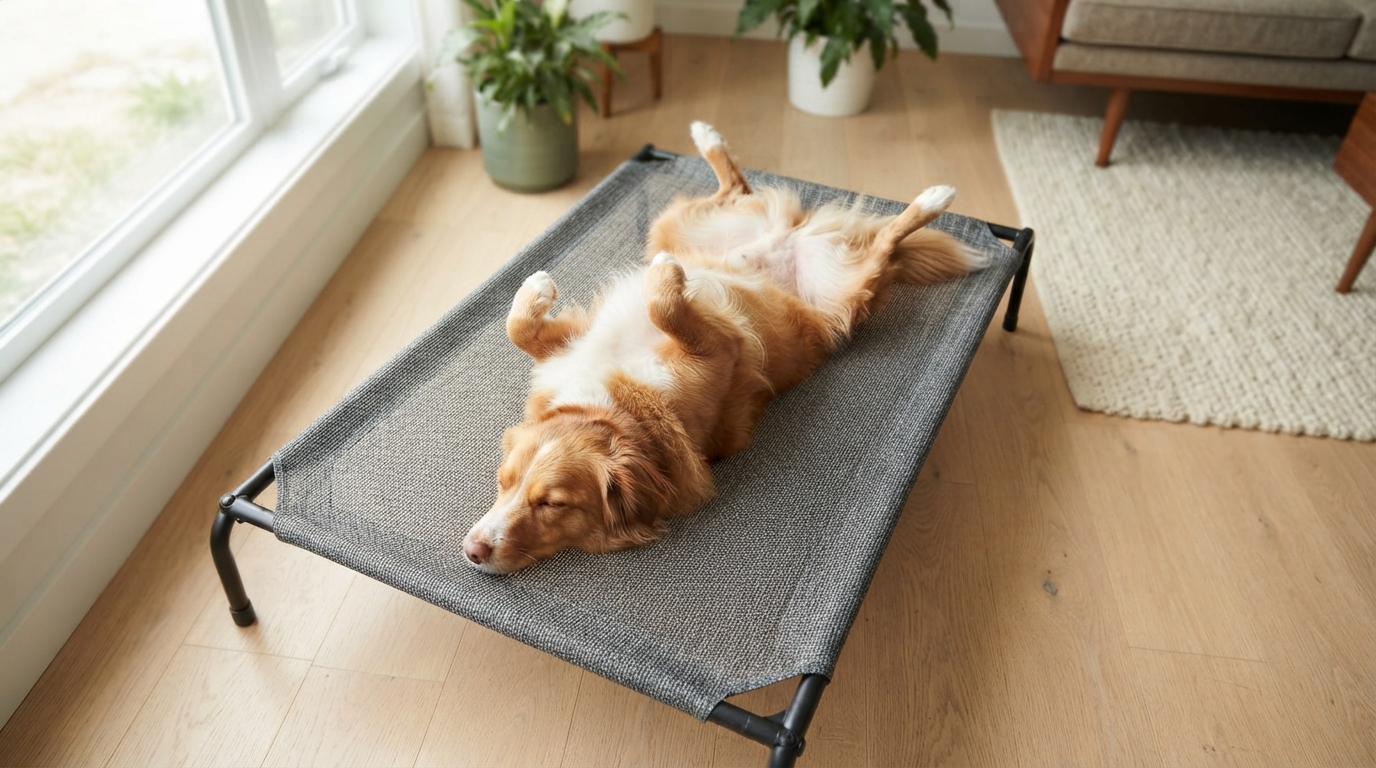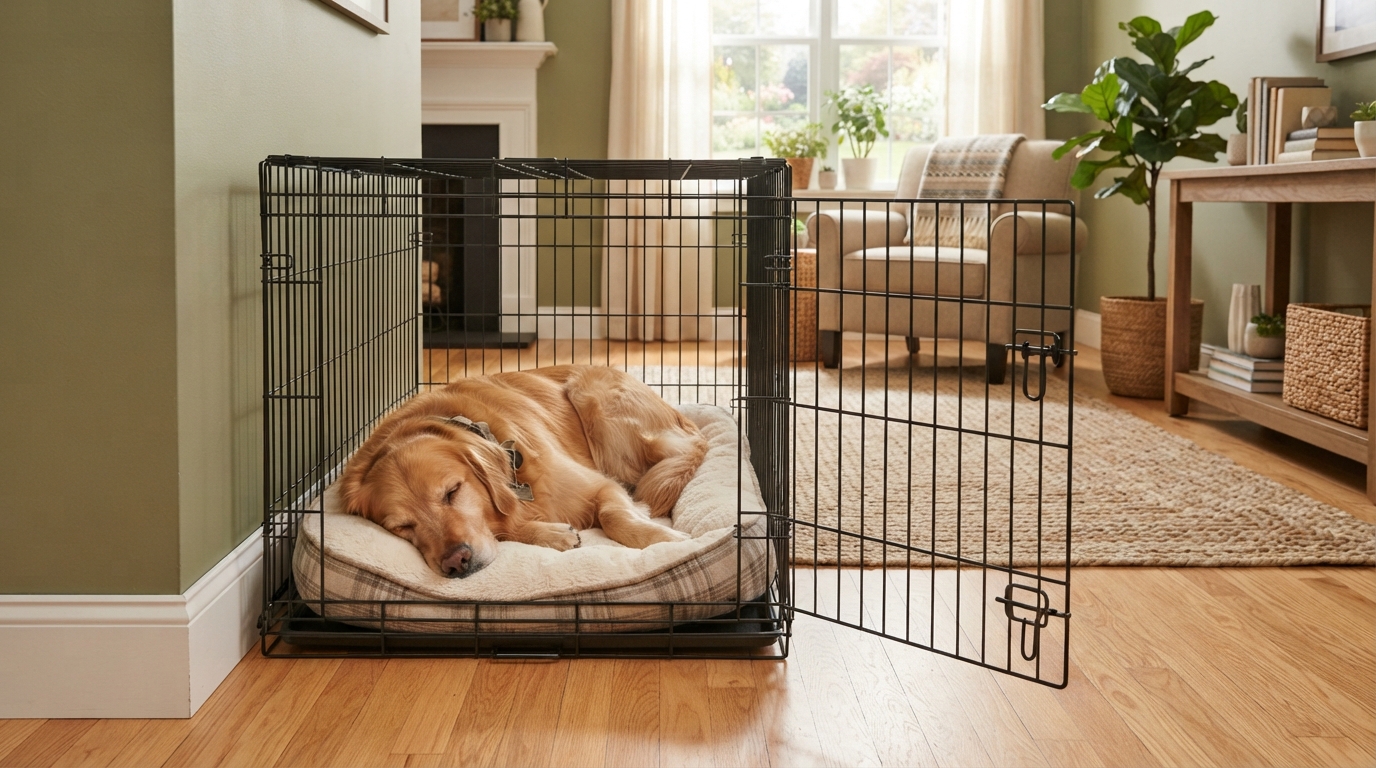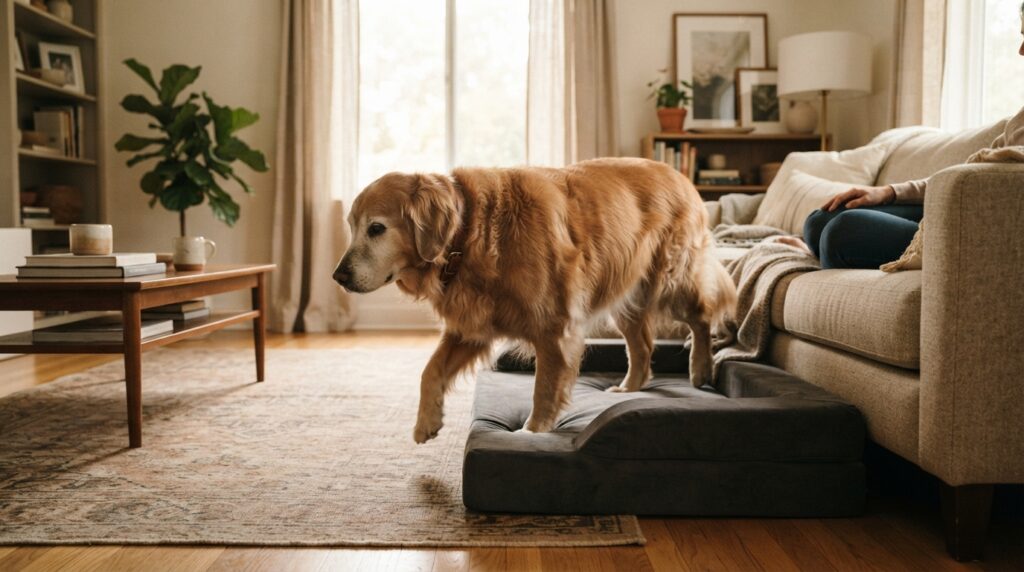
Which bed or resting spot will your dog be able to use comfortably every day? Dog Furniture for Easier Access and Better Fit starts with your dog’s measurements, sleeping habits, mobility, and the room available at home.
Key Takeaways
- Match the style to the way your dog sleeps. Flat beds suit dogs that stretch out, while bolsters and cave-style beds offer different kinds of boundaries and shelter.
- Measure the dog and the usable sleeping area. The outside dimensions can be misleading when raised edges take up space inside the bed.
- Make getting on and off part of the decision. A low entry, ramp, or stairs may be easier for a dog than jumping onto a high surface.
- Choose support your dog can rise from. A cushioned surface can reduce pressure against a hard floor, while a very yielding bed may be harder for some dogs to leave.
- Check the whole setup. Include the bed’s stability, floor covering, access route, and landing area when deciding where it will go.
- Compare styles in context. Our dog furniture section is a useful place to consider the types of resting spots available for dogs.
Match the furniture type to how your dog rests
Start with your dog’s usual sleeping position, not the shape of the furniture. A flat dog bed gives a stretched-out sleeper room to extend its legs, while a bolster bed has a raised edge a dog can lean against or use as a headrest.
A sofa-style bed gives dogs who like a raised, defined resting spot a distinct place to settle. It also requires them to climb up, so consider the height and the effort your dog needs to get on and off.
- Flat bed: A practical choice for dogs that sprawl or change position often. Look at the full usable area so the bed accommodates your dog’s longest resting posture.
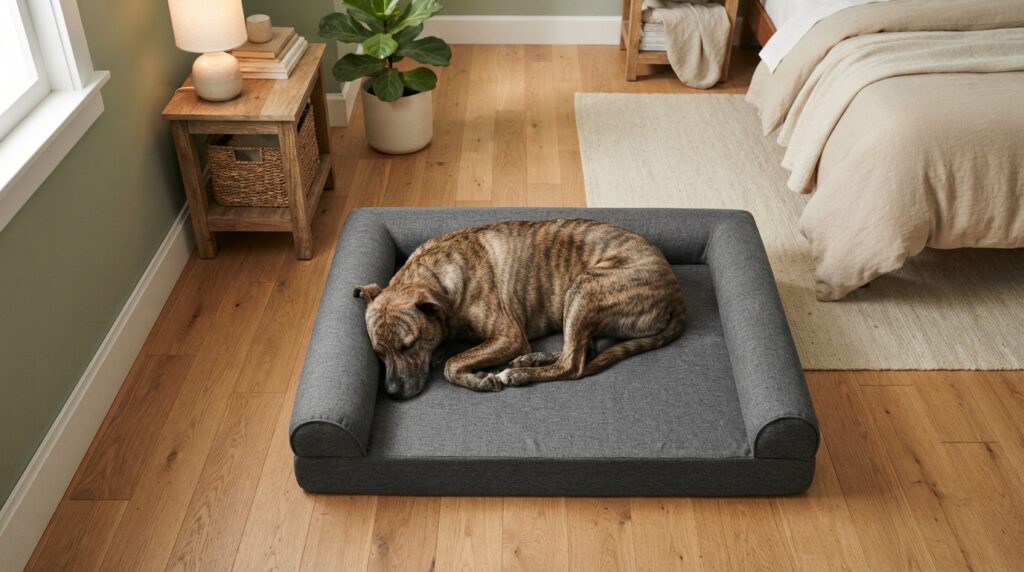
- Bolster bed: The raised edge offers a boundary to lean against. It reduces the flat area inside, so compare the interior space with your dog’s measurements.
- Sofa-style bed: A defined, raised surface can suit dogs that choose furniture-like resting spots. Its entry height matters as much as its sleeping area.
- Cave-style bed: The covered space can appeal to dogs that like to rest in an enclosed spot. Make sure the opening is easy to enter and there is room inside to turn around.
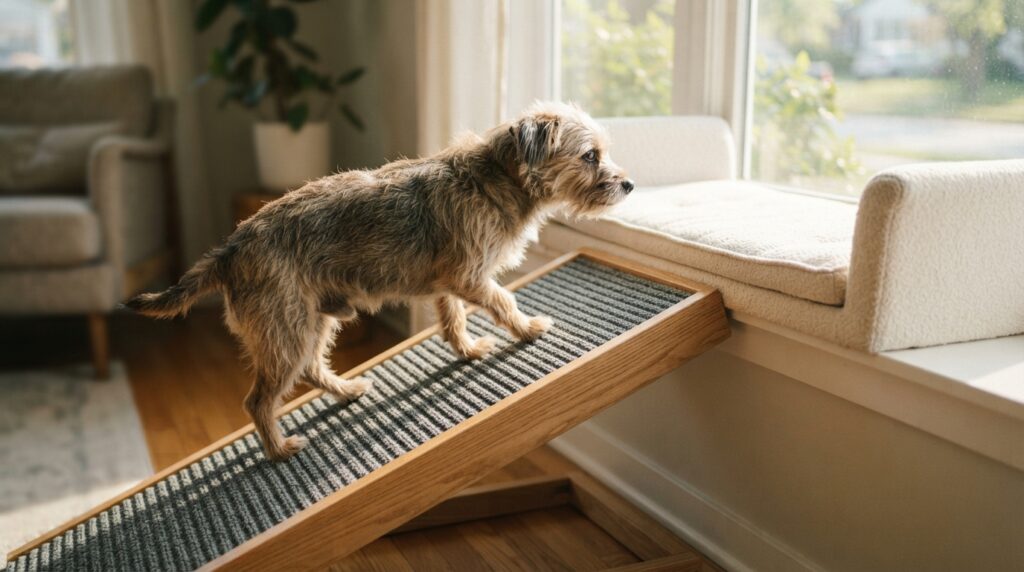
- Ramp or stairs: These are access aids rather than beds. A ramp offers a gradual ascent, while stairs ask the dog to step up repeatedly.
Watch where and how your dog already chooses to rest. That habit can tell you whether a flat surface, a raised edge, or a more enclosed spot is likely to feel familiar.
Measure your dog before choosing a size
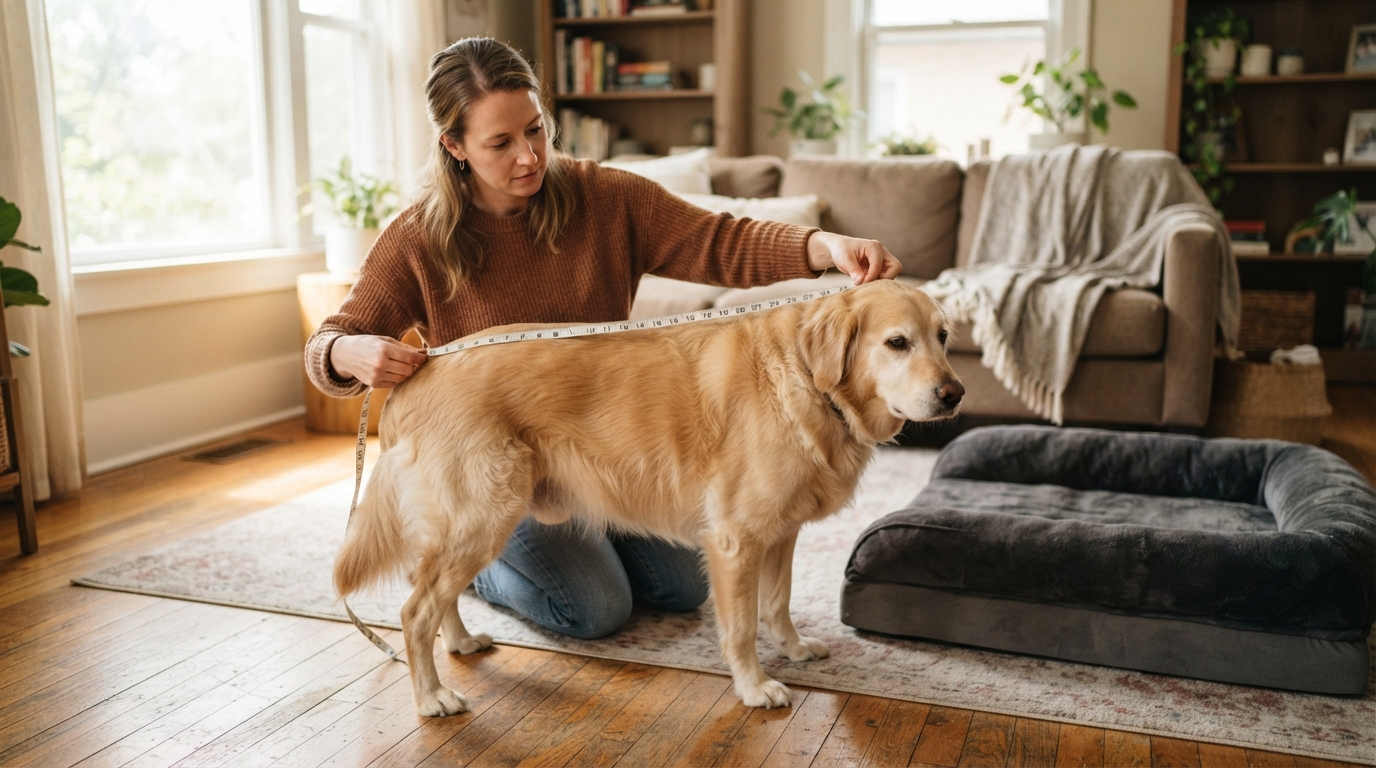
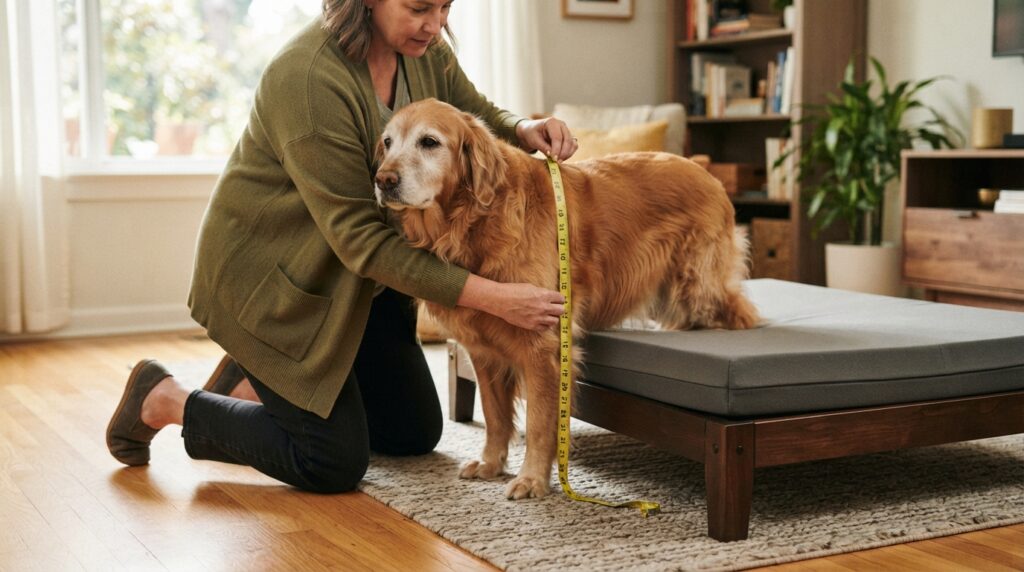
Measure your dog while standing, from the nose to the base of the tail. Allow extra room when estimating the space needed for a dog to stretch out comfortably.
Also measure your dog in its usual sleeping position. A dog that curls into a compact shape may need less floor space than one that regularly lies fully stretched, and a bed should suit the position your dog actually uses.
Compare those measurements with the usable sleeping area, not only the furniture’s outside dimensions. Bolsters and raised edges take up interior space, so a bed that looks large from the outside may offer a smaller flat area for resting.
Keep the dog’s dimensions and the furniture’s footprint together while you compare styles. The Pet Furniture Fit Kit printable measuring and sizing worksheets PDF can help you keep those measurements organized in one place.
- Record your dog’s nose-to-tail-base length while standing.
- Note the dog’s typical curled or stretched sleeping position.
- Write down the usable sleeping area and outside footprint of each option.
- Include any raised edges that reduce the flat area inside.
Measurements give you a more useful comparison than a size label alone. They also make it easier to judge whether a dog bed will fit the dog and the room without crowding either.
Check the entry height and route onto the bed
For puppies, senior dogs, short-legged breeds, and dogs with limited mobility, a low-entry bed can reduce the need to jump. Measure from the floor to the sleeping surface, then consider whether your dog can step up without straining or slipping.
A ramp provides a gradual route to a higher resting spot, which can be easier for a dog that struggles with a sudden jump. Stairs may suit dogs that can step up steadily, but repeated steps can be difficult if balance or leg strength is limited.
Think about pet ramps for couches and high beds as part of the full route, rather than as a separate accessory. Place a ramp or stairs on a firm, nonslip surface, and leave enough room at the top for your dog to reach the bed without making a sharp turn.
- Check whether the approach is straight and easy to see.
- Make sure the access aid does not shift when your dog uses it.
- Leave a clear landing area at the top and an open path around the furniture.
If your dog starts avoiding a bed, hesitates to climb, or shows signs of pain, ask a veterinarian about the change. Furniture adjustments can make access easier, but they do not replace an assessment of new or worsening mobility problems.
Choose support that suits your dog’s body
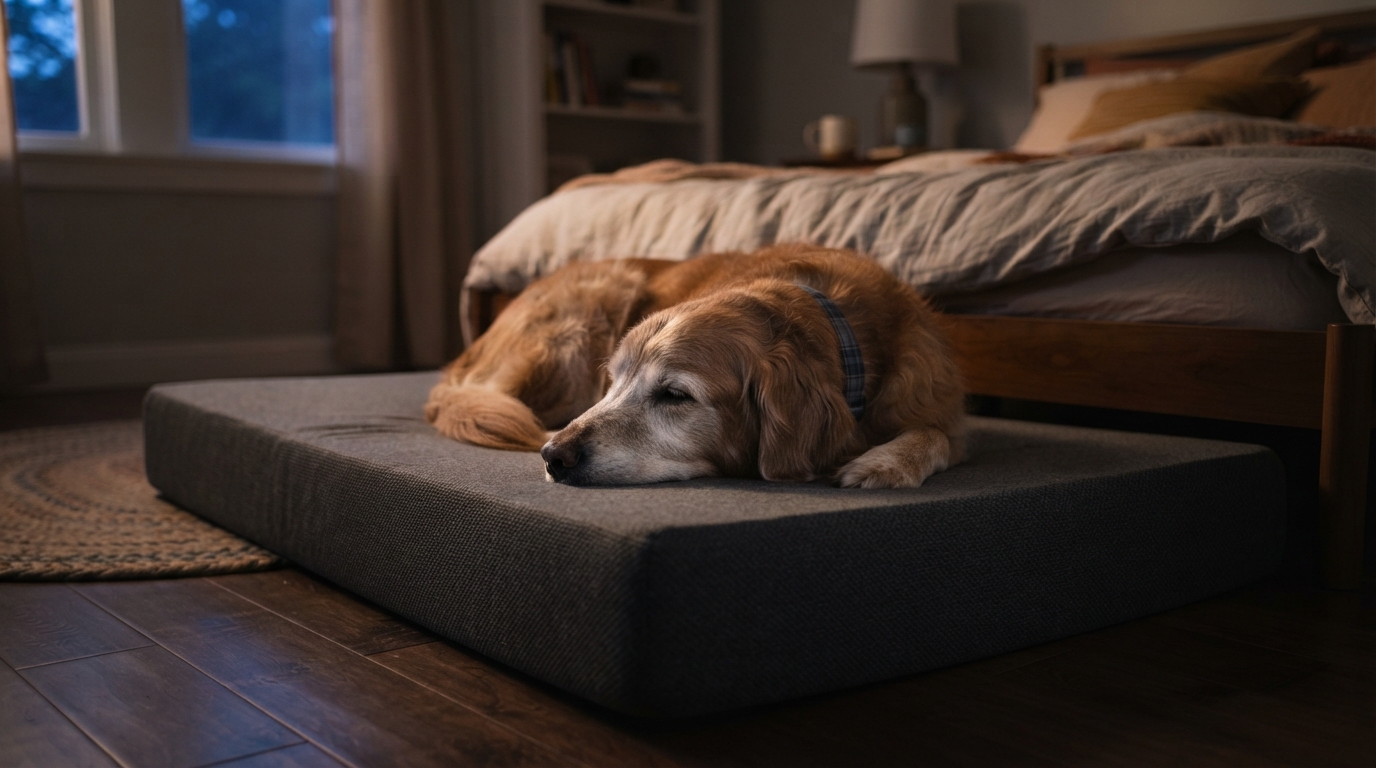
A supportive foam base cushions pressure points while helping keep a dog from lying directly against a hard floor. Look for enough cushioning that the hips and shoulders do not press into the floor when your dog lies down, especially if the bed will sit on a hard surface.
Memory foam conforms more closely to the body than firmer, conventional foam. That contouring can feel comfortable to some dogs, while others may find a less yielding surface easier to push up from.
For owners comparing the best dog beds for senior dogs with mobility problems, pay attention to both cushioning and how easily the dog can rise. When looking at the best orthopedic dog beds for hip dysplasia, consider your dog’s individual comfort needs and discuss support with your veterinarian.
Raised beds allow air to move beneath the sleeping surface, which can make them a useful option in some homes. They may be a poor fit for a dog that has trouble stepping up or balancing, so compare airflow benefits with the effort required to use the bed.
There isn’t one perfect support level for every dog. Observe how your dog rests and gets up, and let those movements guide the choice alongside the bed’s construction.
Compare covers, edges and overall stability
A removable, washable cover is practical when a bed needs regular cleaning. Follow the cover’s care instructions to reduce the risk of shrinking or damaging the fabric, and consider how easy it will be to remove and put back on.
A bolster can give a dog a defined edge to lean against, but it reduces the flat sleeping area. Include that raised section when comparing bed dimensions, particularly if your dog likes to stretch out.
Check whether the base stays stable as your dog steps on and off. Furniture that slides can make access harder and less secure, so consider the surface beneath it as well as the bed itself.
Measure the floor space where the furniture will sit. Include room for any ramp or stairs, a clear path around the resting area, and enough space for your dog to approach without squeezing past household furniture.
- Cover: Check that it can be removed and washed according to its care instructions.
- Edges: Count the space taken up by bolsters or raised sides.
- Base: Make sure the bed remains steady during everyday use.
- Placement: Allow for the entire access route, not just the bed’s footprint.
These details affect everyday comfort as much as a bed’s appearance. A well-sized option still needs to work with your dog’s habits and the layout of your home.
Use a simple fit checklist before deciding
Bring the measurements and access requirements together before comparing options. A short checklist helps you assess different styles consistently instead of choosing by appearance alone.
- Record resting length and position. Note your dog’s standing length and whether it usually curls up, stretches out, or changes positions.
- Describe current mobility. Consider how easily your dog lies down, stands up, and steps onto a low surface.
- Note a comfortable step height. Compare that with the distance from the floor to the bed’s sleeping surface.
- Compare usable area and support. Include the effect of bolsters, the firmness of the base, and whether your dog has room to settle.
- Assess stability and the route. For ramps or stairs, include the approach, the landing area, and the floor surface beneath the aid.
- Measure the room. Keep room dimensions beside the dog’s measurements so you can plan placement as you compare styles.
A checklist is especially useful when you are comparing a flat bed with a raised sofa-style option. Each may offer a different sleeping surface and access route, so compare the whole setup rather than one appealing feature.
Use the same criteria for every option: does your dog have room to rest, can it get on and off comfortably, and will the furniture fit the intended spot? That gives you a practical way to narrow the choices without assuming one style works for every dog.
Frequently Asked Questions
How can I help my dog get used to a new bed or sofa?
Let your dog investigate the new spot at its own pace, and reward calm curiosity with praise or a treat. A familiar blanket can make the surface smell recognizable, while short, positive visits help build comfort without forcing your dog to stay.
Is a ramp or a set of pet stairs easier for a dog to learn?
Some dogs find a ramp easier when they can practise walking across it while it lies flat, then gradually use it at a slope. Others are comfortable learning stairs one step at a time, so the better starting point depends on how your dog responds to each movement.
Where should I place dog furniture so my dog can use it confidently?
Choose a calm spot where your dog can settle without being in the middle of a busy walkway. Many dogs also prefer a resting place with a view of familiar household activity, rather than a location that feels isolated.
Can a dog use a ramp if it has never used one before?
Yes, you can introduce a ramp with short, reward-based practice on a gentle slope. Allow your dog to move at its own pace, and avoid pulling or pushing it along the ramp.
Does dog crate furniture need to fit differently from a dog bed?
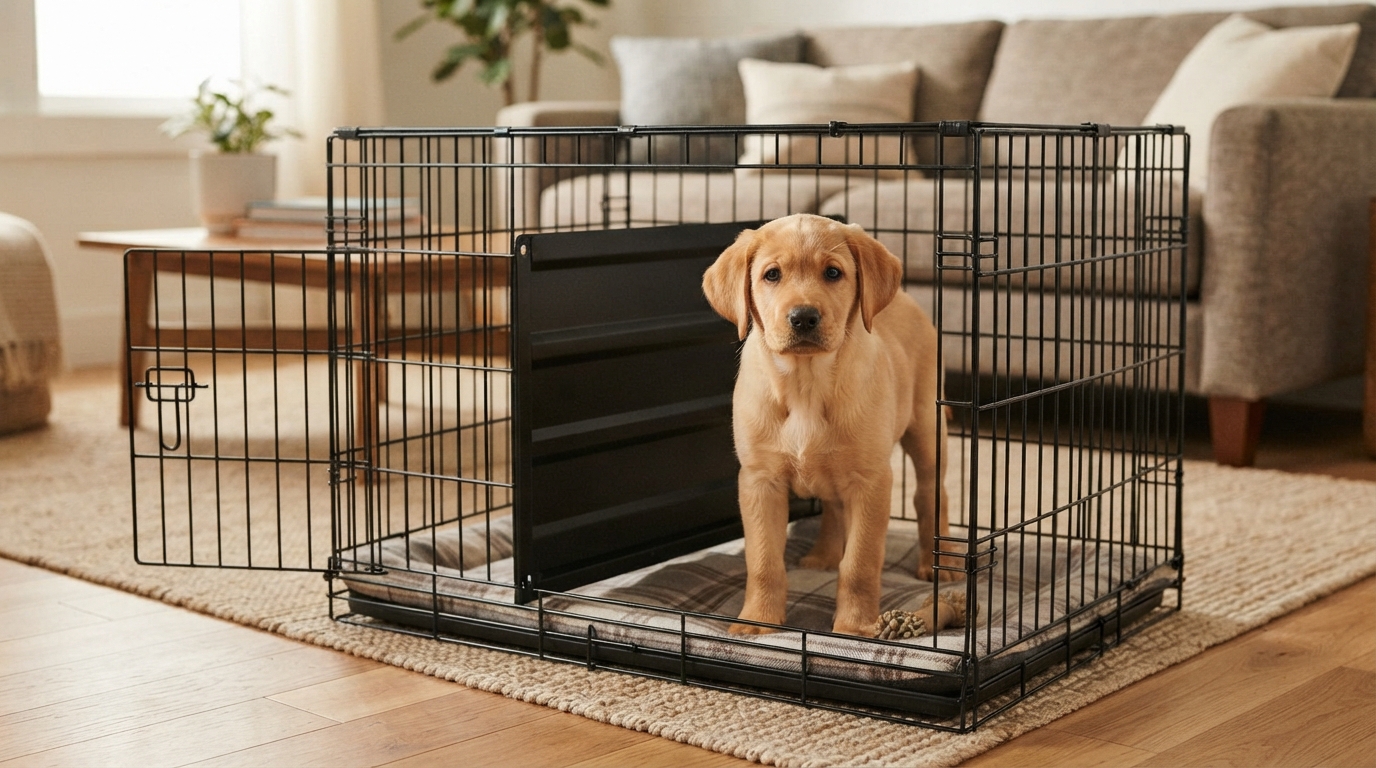
For dog crate furniture, focus on the usable interior space so your dog can stand, turn around, and lie down comfortably. Also consider how the door opens and whether the crate’s position leaves a clear approach for your dog.
Conclusion
The best Dog Furniture for Easier Access and Better Fit in 2027 is the option that suits your dog’s measurements, sleeping style, support needs, and mobility. Measure the usable sleeping area, assess the entry route, and make sure the bed stays stable where you plan to place it.
A comfortable resting spot should fit both your dog and your home. Compare each option against the same checklist, and choose the setup your dog can use with confidence.