Chew-Proof Dog Beds: What to Check Before You Buy starts with a practical question: which parts of a bed can your dog reach, grab, or pull apart? A chew-resistant design may reduce easy targets, but the right choice still depends on your dog’s habits, comfort, size, and sleeping spot.
Key Takeaways
- There is no bed we can promise a dog cannot chew through. Check the seams, edges, closures, frame, and attachment points, not just the fabric name.
- Match the style to the behavior. A cot-style bed, crate pad, and padded bed expose different parts to a dog that grabs corners, digs, or scratches.
- Durability is only one part of a good choice. Comfort, support, temperature, and ease of getting on and off matter just as much.
- Fit the bed to the dog and its setting. Measure the dog stretched out, compare weight capacity, and consider moisture, dirt, and cleaning.
- Read the warranty carefully. Chewing damage, replacement parts, claim steps, and return-shipping costs can all affect the value of a bed.
- Bed choice may not resolve persistent chewing. Enrichment, training, supervision, or professional guidance may also be needed. For related comfort decisions, browse our dog bed and furniture guides.
Match the bed style to how your dog chews
A good dog bed for a chewer is one whose construction suits the way that dog interacts with it. A dog that grabs a corner needs a different set of features from one that digs at the sleeping surface.
| Bed style | What to inspect | Resting feel |
|---|---|---|
| Cot-style bed | Frame joints, feet, fabric edges, and attachment points | Elevated and usually firm |
| Crate pad | Perimeter, seams, closures, and fit against the crate floor | Low-profile cushioning |
| Padded bed | Cover, seams, corners, and any exposed filling | More cushioning, depending on the filling |
A cot-style bed keeps the sleeping surface raised and may leave fewer fabric edges for a dog to grab. Still, inspect the frame joints, feet, and points where the fabric attaches, since those components can become accessible chew targets.
A low-profile crate pad can suit a dog that already rests comfortably in a crate. Look closely at its perimeter, seams, and closures, and make sure the pad fits the usable floor so it does not fold into tempting loose edges.
A padded bed can cushion the body, but a breached cover or seam may expose filling. Weigh that comfort against your dog’s tendency to pull at corners, scratch, or dig; a tough outer panel does not help if the dog quickly opens a seam.
For a closer look at how cushioning styles differ, Memory Foam or Bolster Dog Bed: What Changes at Bedtime? compares how memory foam and bolster dog beds cushion a dog. It can help you consider comfort alongside the construction details that matter for a chewer.
Choose by the behavior you actually see. Corner-grabbing calls for careful attention to edges and attachments, while digging or scratching makes the sleeping surface and seam construction especially important.

Inspect fabrics, seams, and chewable components
A fabric name alone cannot tell you how well a bed will hold up. Ballistic fabric is a tightly woven construction, while ripstop fabric uses a reinforcing grid intended to help limit the spread of tears; neither makes a bed impossible to damage.
Look for reinforced seams, securely finished edges, and attachment points that do not leave loose fabric or easy-to-grip tabs exposed. Check whether the seams sit within the bed’s structure or create a raised ridge your dog can catch with its teeth.
Inspect the whole bed, not only the main panel. Corners, zippers, piping, straps, frame ends, and exposed hardware can become weak spots even when the sleeping surface feels tough.
- Edges and corners: Check for flaps or folds that a dog can get its teeth around.
- Closures: Look for zipper pulls or fastening tabs that sit within reach.
- Frame and fittings: Check that joints and hardware are protected from direct chewing.
- Seams: Look for tight stitching and clean finishes without loose threads.
“Indestructible” is marketing language, not a guarantee. A determined chewer may damage beds made with tough materials, so think of chew resistance as reducing easy purchase points rather than eliminating risk.
Practical check: If you can easily pinch, pull, or lift a loose edge with your fingers, your dog may be able to target it too.
Use the same inspection on each candidate rather than comparing fabric names alone. Picture your dog’s usual approach: can it get its muzzle under an edge, grip a closure, or reach the point where fabric meets a frame? A hidden zipper does not settle the comparison if another seam or attachment is exposed. For a corner-focused dog, prioritize a bed with no easy lift point in its normal setup; for a surface-digger, inspect the sleeping panel and its perimeter. Choose the construction that removes your dog’s most-used purchase point, not simply the one with the toughest-sounding label.
Balance durability with comfort and support
A bed that looks fine from the outside may not give your dog the support or comfort it needs. For dogs with joint or mobility concerns, assess whether the surface supports the body evenly and whether your dog can get onto and off the bed without struggling.
A cot-style bed has a taut, firmer surface, while a padded bed can cushion pressure points. A raised bed may be a poor fit if stepping up is difficult, so choose for the dog’s movement and comfort rather than toughness alone.
For dogs with arthritis or other mobility needs, pay attention to the height and firmness of the resting surface as well as its durability. If getting up, lying down, or moving around seems painful, bed selection does not replace veterinary advice.
Extra cushioning can create new chew targets. Check whether it adds loose layers, exposed edges, or removable pieces, and consider whether a blanket or separate pad would give your dog another corner or strip of fabric to pull.
Temperature matters too. A raised, open cot allows air to move beneath the dog, while a padded bed may feel warmer against the body; consider the room, the dog’s coat, and where it prefers to sleep.
Get the size and setting right
Measure your dog while it is stretched out in a usual sleeping position, then choose a surface with room to turn, curl, or extend without hanging over the edge. A bed that is too small can limit comfortable movement, while extra fabric may create edges a dog can grab.
Compare the bed’s stated weight capacity with your dog’s weight, and consider whether the frame or support surface will stay stable during normal use. Stability matters for comfort, and a shifting bed can invite a dog to paw or pull at its components.
For a crate pad, compare its footprint with the usable crate floor. It should lie flat rather than bunching into folds that are easier to grip.
Indoor and outdoor use bring different cleaning demands. Consider exposure to moisture, dirt, and heat, and whether the sleeping surface and frame can be cleaned and dried effectively in the place you plan to use the bed.
To keep measurements in one place, use the Pet Furniture Fit Kit, printable measuring and sizing worksheets. Record the dog’s stretched-out length, the usable crate floor, and the space where the bed will sit before comparing dimensions.
Work through one real fit before buying: if your dog stretches beyond its current crate pad, measure the full sleeping outline in that posture, then compare it with the crate’s usable floor and the bed’s actual sleeping surface—not just its outer dimensions. If the pad fits only when pushed against the walls or folded, that fit may create loose edges; compare a different footprint or bed style. For a free-standing bed, check that the selected spot leaves room for your dog to approach and turn without shifting the bed.

Read warranty terms and plan for cleaning
Read the warranty for exclusions covering chewing, fabric, seams, or frame components. A general durability promise does not establish that chewing damage is covered, so look at what the warranty actually applies to.
Compare the claim requirements, time limits, and return-shipping costs. Find out whether replacement covers, fabric panels, or other components can be purchased, since replacing one part may be simpler than replacing the whole bed.
Choose a cleaning method that suits the dog and the bed’s location. Removable, washable parts can make routine care easier, but check whether fasteners or closures become accessible chew targets when the bed is taken apart or reassembled.
Let the bed dry fully after cleaning and inspect it during routine care. Dampness, dirt, and unnoticed wear can affect comfort and everyday use, even before a bed appears badly damaged.
The figures above report whether owners provided chew materials; they do not establish that those materials prevent bed damage or predict an individual dog’s behavior. The linked paper is the place to check the study context. Treat the figures as background, not as a substitute for observing your own dog.
Respond to chewing, not just the damage
Inspect a bed regularly for loose fabric, exposed filling, torn seams, or detached components. Remove it if your dog could swallow pieces, and contact a veterinarian if you suspect ingestion.
The Applied Animal Behaviour Science study provides population-level context, not a forecast for a particular dog. For your own decision, note what your dog targets and what is happening before it starts; use that pattern to guide supervision, enrichment, and bed design.
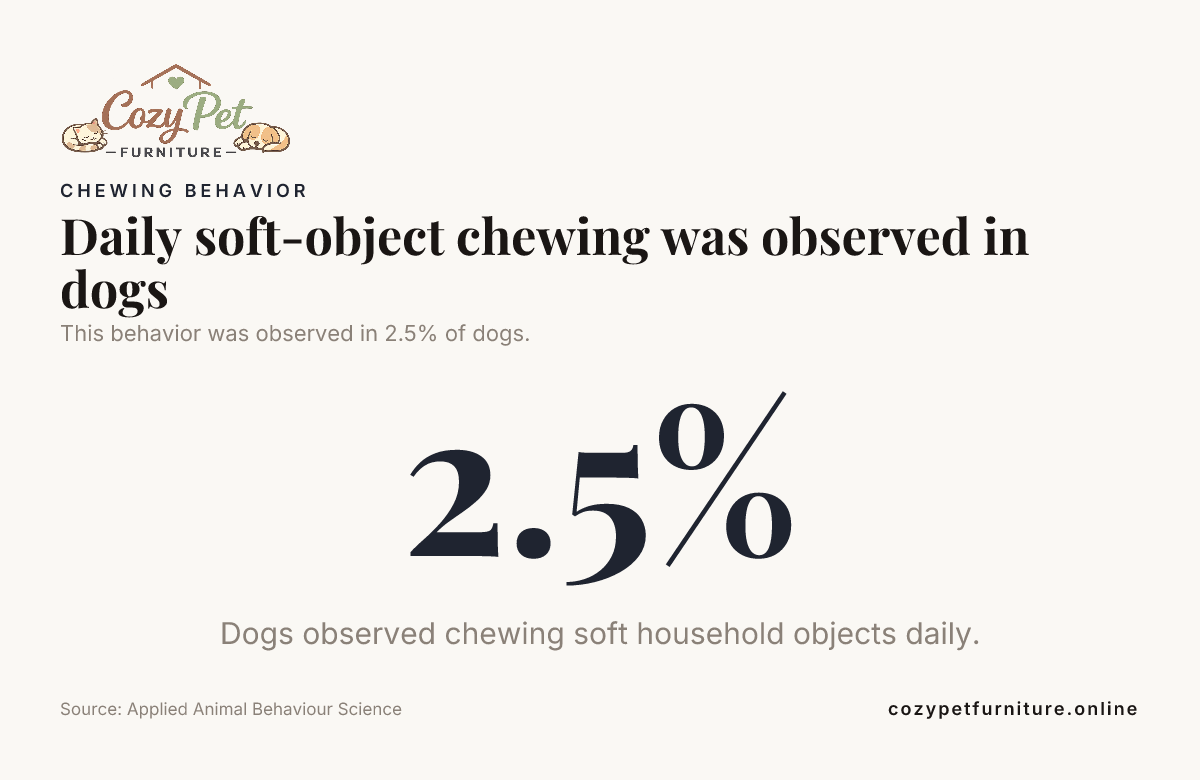
Daily chewing on soft household objects was observed in 2.5 % of dogs.
Source: Applied Animal Behaviour Science
If chewing seems linked to boredom or unmet activity needs, offer suitable enrichment and training alongside a different bed. When chewing persists or feels difficult to manage, seek guidance from a qualified professional rather than relying on a tougher bed alone.
Notice what your dog targets. Repeatedly grabbing one corner or seam can guide your next choice, and supervising use helps you see whether the new bed changes that pattern.

Conclusion
Chew-Proof Dog Beds: What to Check Before You Buy comes down to more than a fabric label. Compare the parts your dog can reach, the bed’s seams and attachments, the support and fit it provides, and the cleaning and warranty terms.
No construction guarantees that every dog will leave a bed intact. The most practical choice is one suited to your dog’s chewing behavior and comfort, paired with regular inspection and a plan to address persistent chewing.
Frequently Asked Questions
Can a puppy use a chew-resistant dog bed while teething?
Yes, a puppy can rest on a chew-resistant bed, but the bed is not a chew toy and does not replace suitable teething items. If your puppy mouths the bed, redirect it to an appropriate chew before the behavior turns into pulling at seams or swallowing pieces.
Is it safe to leave a dog unsupervised with a new bed?
There is no fixed trial period that makes every new bed safe for every dog. First observe whether your dog settles, mouths the closures, or tries to move and dismantle the bed, then make decisions based on that behavior.
What should I do if my dog may have swallowed a piece of the bed?
Contact your veterinarian or an emergency veterinary clinic promptly and describe the material and the amount you think may be missing. Do not wait for symptoms or try to make your dog vomit unless a veterinarian directs you to do so.
How can I help a dog accept a new bed after chewing the old one?
Place the new bed near a familiar resting spot and reward calm approaches or settling. Let your dog investigate at its own pace, and keep the first resting sessions low-key rather than forcing it onto the bed.
Should I use a bitter spray on a chew-resistant dog bed?
Use a deterrent only if it is labelled as suitable for both pets and the bed’s surface, and follow its directions. Avoid household chemicals or essential oils as improvised repellents, since dogs may lick or ingest treated material.