Cat Beds for Desks: How to Pick a Secure Spot Without Crowding Your Workspace comes down to three things: a stable setup, a comfortable resting area, and enough room for you to work. The best choice depends on where your cat already likes to settle and how your desk is built.
Key Takeaways
- What is the best cat bed for a desk? Choose a style that suits your cat’s resting habits and leaves your chair, work surface, and equipment usable.
- Do cat desk beds work? They can, especially when the spot feels familiar and the cat can reach it and leave comfortably.
- Is there a cat bed that clips onto a desk? Yes. A clamp-on cat bed or desk hammock attaches to a desk edge, so check the edge, clamp fit, and space beneath the desk.
- How can you tell if a desk edge suits a clamp-on bed? Look for a rigid, flat edge the clamp can grip securely across its contact points.
- How can you test a location first? Set an existing cushion or bed there for a few days and see whether your cat chooses it and whether it interrupts work.
- When is a desk perch a poor fit? If your cat prefers a different resting place or has trouble getting onto a raised surface, use a more accessible spot instead.
Choose between a clamp-on bed, desktop bed, and freestanding perch
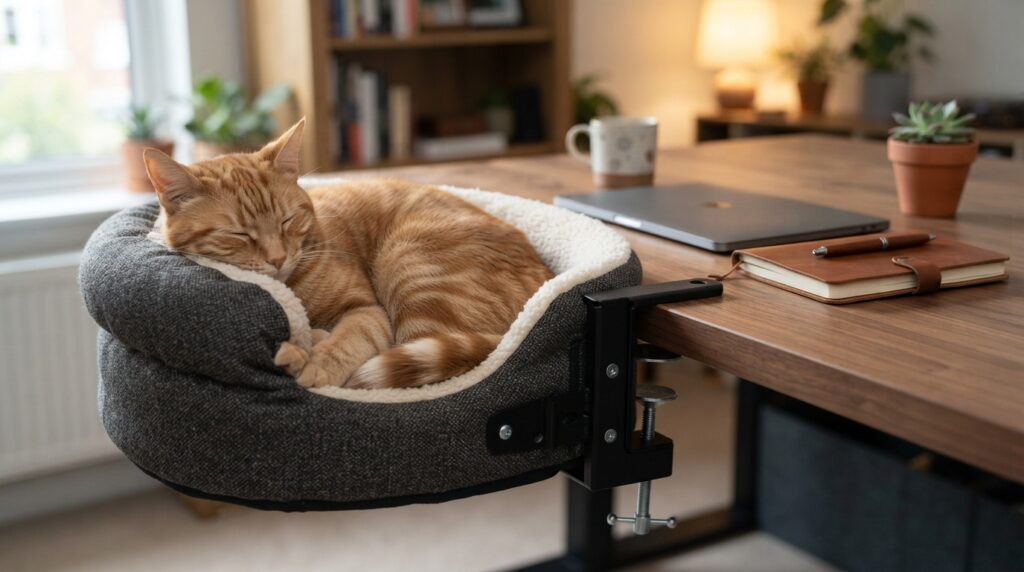
A clamp-on cat bed keeps the sleeping surface off the desktop. It still needs a compatible, secure mounting point, and the bed or clamp can take up space under the desk.
A desk hammock is one version of this arrangement, with a fabric sleeping area held by a frame or straps. It can suit a cat that likes a supported resting spot near you, provided the mount does not interfere with the desk apron, chair, or legroom.
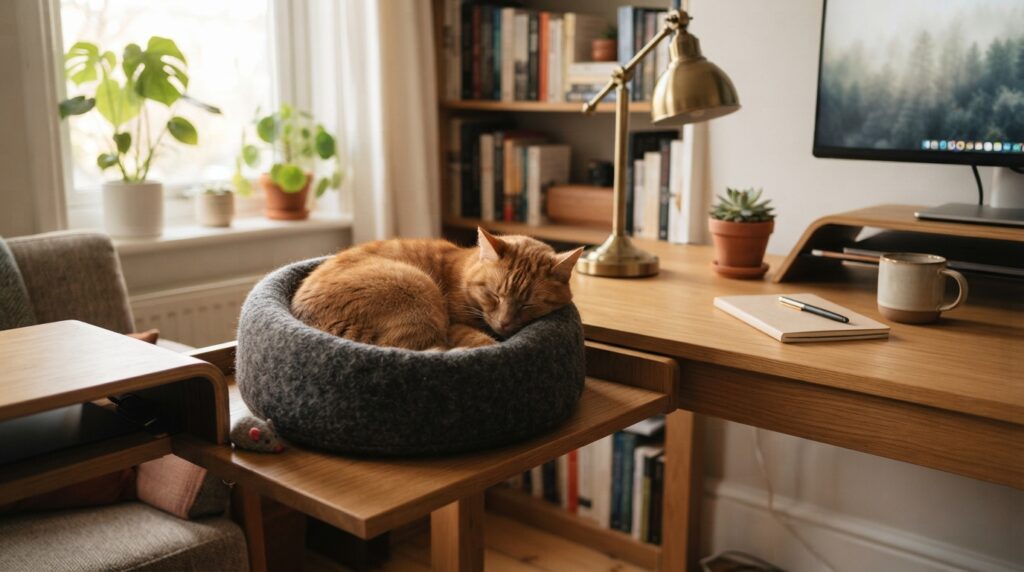
A desktop cat bed is simple to reposition and does not need a clamp. Its trade-off is the work surface it occupies, so keep it clear of monitors, tools you use often, and ventilation openings on equipment.
A freestanding perch gives your cat a separate footprint rather than using the desktop or desk edge. It may be easier to move, but place it where it will not crowd your chair or narrow a walking route.
A window perch may be a better choice for a cat that already naps in the sun or watches outdoor activity. Pay attention to where your cat already likes to sleep; the preferred spot may not be the one closest to your keyboard.
There isn’t one perfect location for every cat. The best cat bed for a desk is the option that fits both your cat’s habits and the way you use the room.
Check the sleeping area, mount, and access for your cat
Choose a sleeping area that lets your cat curl up or stretch out without hanging over the edge. A deep, tight nest can feel enclosing to a cat that sprawls, while a flat mat may offer too little support for one that likes a snug boundary.
Measure your cat in its usual sleeping posture and compare that space with the bed’s usable surface. Include room for turning around, not just the length of a cat lying perfectly straight.
For a clamp-on bed, the desk edge must be rigid and flat enough for the clamp to grip fully. Rounded or beveled edges can leave an uneven hold; glass, hollow tops, or fragile surfaces can slip, crack, or crush under pressure.
Check the desktop thickness and clamp clearance, including any desk apron, trim, or frame beneath the edge. A clamp that fits the top but cannot sit flat against the underside does not create a secure mounting point.
Weight capacity matters, but a static limit alone does not tell you how a mount handles a cat jumping into the bed or shifting its weight. The desk, clamp, and bed need to stay stable during those movements, not only while the cat is lying still.
Consider your cat’s age, size, and mobility before choosing a raised perch. Kittens, senior cats, and cats with limited mobility may do better with a low, easy-to-reach bed and a steady route on and off it than with a high platform.
If a desk edge is not suitable for a clamp, consider a desktop bed or a separate resting place rather than forcing the mount to fit. The important point is a stable sleeping spot your cat can access without a difficult jump.
Place the bed where your cat already likes to rest
Try the spot where your cat already naps, watches the room, or settles near you. A familiar location is more likely to attract your cat than a spot chosen only because it seems convenient for the work area.
Before installing a permanent desk perch, place an existing cushion or bed in the proposed location for a few days. This simple trial lets you see whether your cat chooses it and whether it blocks your view, tools, or normal movement.
Keep the route onto and off the bed predictable. A perch beside a door, above a sudden drop, or next to a busy walkway can make some cats hesitate, even when the sleeping surface itself is comfortable.
In a room shared by multiple cats, plan more than one resting option so each cat can settle without being crowded. The Compendium: Continuing Education for Veterinarians states that owners of multicat households need to provide enough space to permit each cat to keep a social distance of 1 to 3 meters horizontally as well as vertically when they share a room.
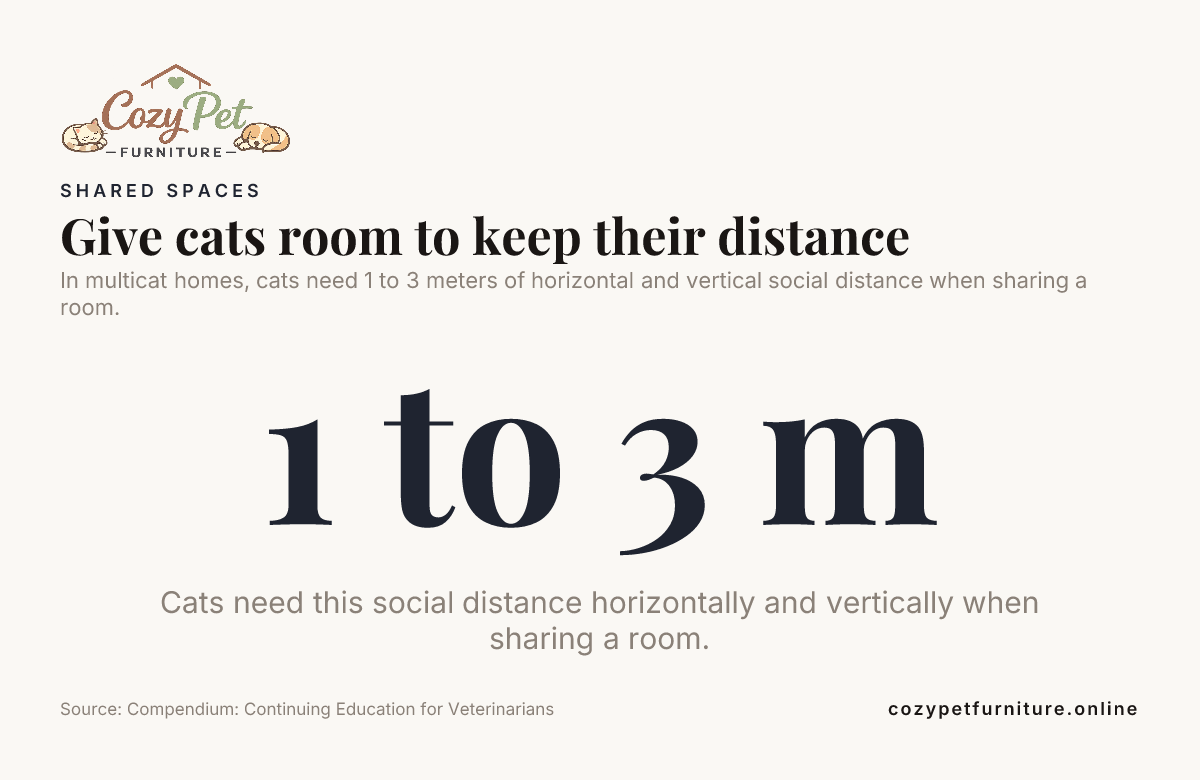
Owners of multicat households need to provide enough space to permit each cat to keep a social distance of 1 to 3 meters horizontally as well as vertically when they share a room.
Protect chair movement, equipment, and desk access
Map the chair’s full range of movement before choosing a mounting point. Include drawers, legroom, outlets, and the path you use to get in and out; a clamp-on bed can use space beneath the desktop even when its sleeping surface sits above it.
Keep the bed clear of cords, monitor stands, and desk controls. Arrange cables so a cat jumping up or turning around cannot pull on them or knock equipment out of position.
With an adjustable desk, check the complete range of motion before letting your cat use the setup. Look for places where cables could pinch, the bed could collide with nearby furniture, or the changing desk height could make the route on and off harder.
Keep the clamp and its contact points unobstructed. Bedding, dangling toys, and other accessories should not sit between the clamp and the desk or interfere with the attachment.
After arranging the setup, sit down and use the desk as you normally would. Move the chair, open drawers, reach for controls, and check whether the cat’s space remains separate from your everyday work zone.


Make the bed comfortable without adding clutter
Choose a stable, cushioned surface that stays in place when your cat turns around. Loose or slippery bedding can bunch up underfoot and make a small bed feel less secure.
A removable, washable cover can simplify routine cleaning. Wash it according to its care instructions and let the bed dry fully before returning it to the desk.
Cats sleep between 12–16 hours a day, according to PetMD. Comfort and a low-disturbance location matter more than decorative features, so choose a surface that suits your cat’s usual sleeping posture and a spot where ordinary work will not constantly interrupt it.
Keep the arrangement compact: a secure bed and a clear route to it are usually more useful than extra cushions or accessories that spread across the desk. If your cat’s preferred spot is a window or another quiet corner, use that location instead of pressing a desk bed into an unsuitable space.
A cat’s needs can change with age, size, and mobility. If your cat has pain or difficulty moving, ask your veterinarian about suitable access and comfort rather than relying on a furniture change alone.
Introduce the new resting spot gradually
Let your cat approach and leave the bed freely. Place familiar bedding nearby and give your cat time to investigate; lifting the cat into the bed can make the new spot feel less inviting.
Reward voluntary visits with calm praise or a treat. Keep the bed available as an option while your cat continues to use its usual resting places.
Observe how the setup works in everyday use. Notice whether your cat settles, gets down easily, and leaves you enough room to work; if the cat avoids the bed or it disrupts your routine, adjust the location.
After installation, check that the mount remains secure and the bedding stays in place during normal use. Recheck the setup after moving the desk or changing anything around the clamp.

Frequently Asked Questions
Can a desk bed also be a cat’s main sleeping place at night?
It can be, if your cat chooses it and the desk stays stationary while the cat is resting. If you move or adjust the desk overnight, provide another comfortable sleeping place that remains available.
What should I do if my cat chews the bed or its straps?
Remove the bed from use if chewing has frayed a strap, loosened stitching, or exposed filling, since damaged parts can fail or be swallowed. Offer an appropriate chew toy and supervise access while you work out what is attracting the chewing.
How often should a cat desk bed be replaced?
There is no single replacement schedule for every bed. Replace it when the sleeping surface no longer stays supportive, seams or straps are damaged, or the mount cannot hold firmly in normal use.
Can I keep using the desk bed if my cat starts avoiding it?
First look for a change in the room, such as a new noise, scent, light pattern, or activity near the bed. If the avoidance continues or comes with a change in how your cat moves or rests, pause use and discuss the change with your veterinarian.
Should a desk bed have raised sides?
Raised sides can give a cat that likes to curl up a more enclosed place to lean against. A flat bed may suit a sprawler better and usually offers a simpler step onto the surface.
Conclusion
A secure desk bed fits your cat’s sleeping posture, attaches to a suitable surface or stands on a stable footprint, and leaves your work area usable. Start with a familiar resting spot, test the layout before committing, and make sure your cat can get in and out comfortably.
That is the practical answer to Cat Beds for Desks: How to Pick a Secure Spot Without Crowding Your Workspace. Choose for your cat first, then adjust the desk setup until both the resting place and the workspace work well.