The best dog crates give your dog enough room to rest while making everyday care, cleaning, and safe use manageable for you. The right choice depends on your dog’s size and behavior, where the crate will be used, and how its doors, ventilation, and construction fit your home.
Key Takeaways
| What to compare | What to look for |
|---|---|
| Crate construction | Match wire, plastic, wood, or reinforced designs to your dog’s habits and the crate’s purpose. |
| Home or travel use | Prioritize ventilation and access at home. For car or air travel, choose a crate suited to that specific journey. |
| Size and fit | Measure your dog and check the usable interior, not just the outside dimensions. |
| Doors and hardware | Look for a practical door position, secure latches, and parts that can’t catch paws or jaws. |
| Comfort and placement | Choose a calm location and a well-fitting mat that doesn’t block the door or bunch up. |
| Crate training | Introduce the crate gradually. More restrictive construction does not replace acclimation or support for distress. |
How wire, plastic, wood, and heavy-duty crates differ
Each type of dog crate creates a different mix of visibility, airflow, shelter, and cleanability. Start with what will help your dog settle safely, then consider how the crate will work in your home.
| Crate type | What it offers | What to check |
|---|---|---|
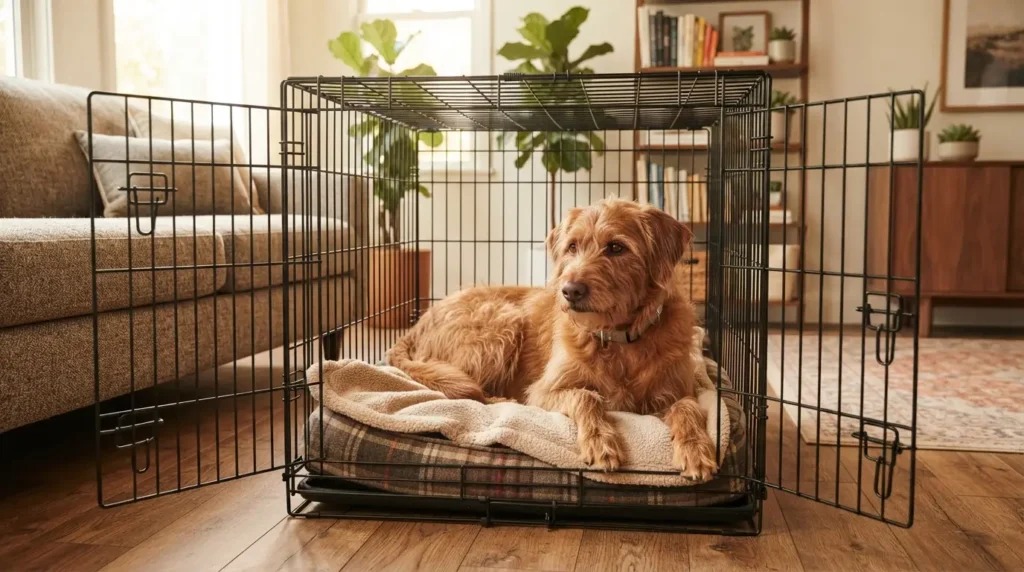
| Wire dog crate | Open sides allow airflow and let dogs see more of the room. Many wire models fold for storage. | Bar spacing, door gaps, hinges, and edges should not create places for paws, collars, or jaws to catch. |
| Plastic kennel | More enclosed sides can create a sheltered-feeling space than an open wire design. | Check that ventilation openings allow airflow and that you can still monitor your dog. |
| Wooden furniture-style crate | Its furniture-like finish can blend with a room’s furnishings. | Compare ventilation, door security, and how easily you can clean the interior with more open designs. |
| Heavy-duty crate | Reinforced construction may suit dogs that chew or work at latches. | Sturdy materials alone do not resolve anxiety or make confinement suitable for every dog. |
For any style, check that openings are appropriate for your dog’s size and that edges and moving parts are smooth. A crate that looks sturdy can still have a door gap or hardware detail that creates an entrapment risk.
Match the crate to home, travel, and your dog’s behavior
For home use, the best dog crate is the one that fits your dog and the space where you’ll use it. Weigh ventilation, visibility, stable placement, and easy access against how enclosed your dog seems comfortable being.
Dogs that chew or try to open doors need sturdy construction and escape-resistant hardware that cannot be worked from inside. A stronger crate may help manage the physical risk of chewing or manipulating a latch, but fear or separation distress needs a different response.
A portable kennel is not automatically a vehicle restraint. Before relying on a crate in a car, look for evidence that the exact crate and setup have been tested for vehicle use, then follow the vehicle and crate makers’ instructions.
For flying, distinguish a general travel kennel from an airline-compliant kennel. Requirements can vary by airline and journey, so a crate that works for one trip may not meet the rules for another.
Outdoor use calls for its own assessment. An indoor dog crate is not a substitute for a purpose-built outdoor dog kennel with suitable shelter, shade, and access to water.
Measure your dog for a comfortable crate fit
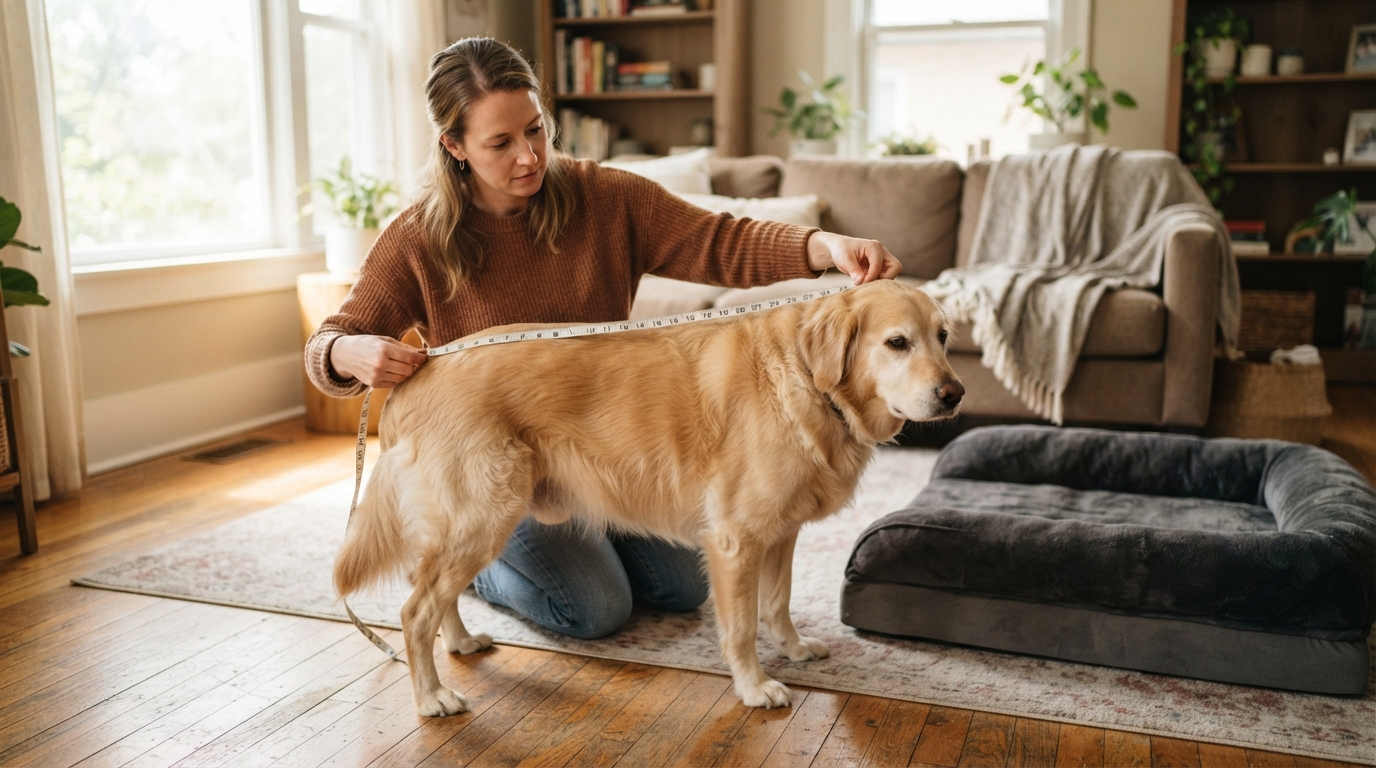
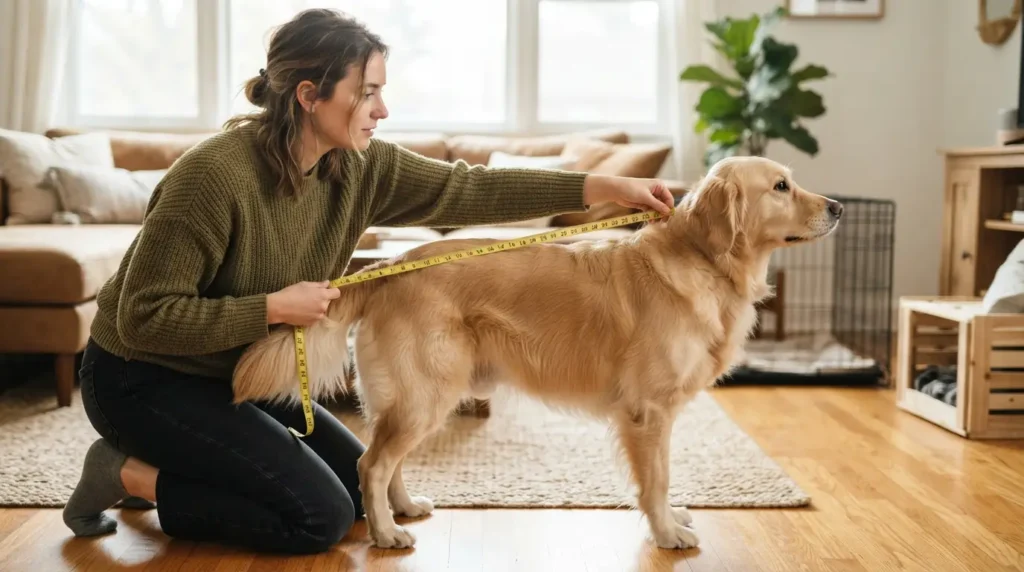
Measure your dog from the nose to the base of the tail, then from the floor to the top of the head or ears while your dog is standing naturally. Choose a crate that lets your dog stand without crouching, turn around, and lie down stretched out.
Compare those measurements with the usable interior dimensions, not the crate’s exterior. A thick mat, deep tray, or sloped roof can reduce the space your dog can actually use.
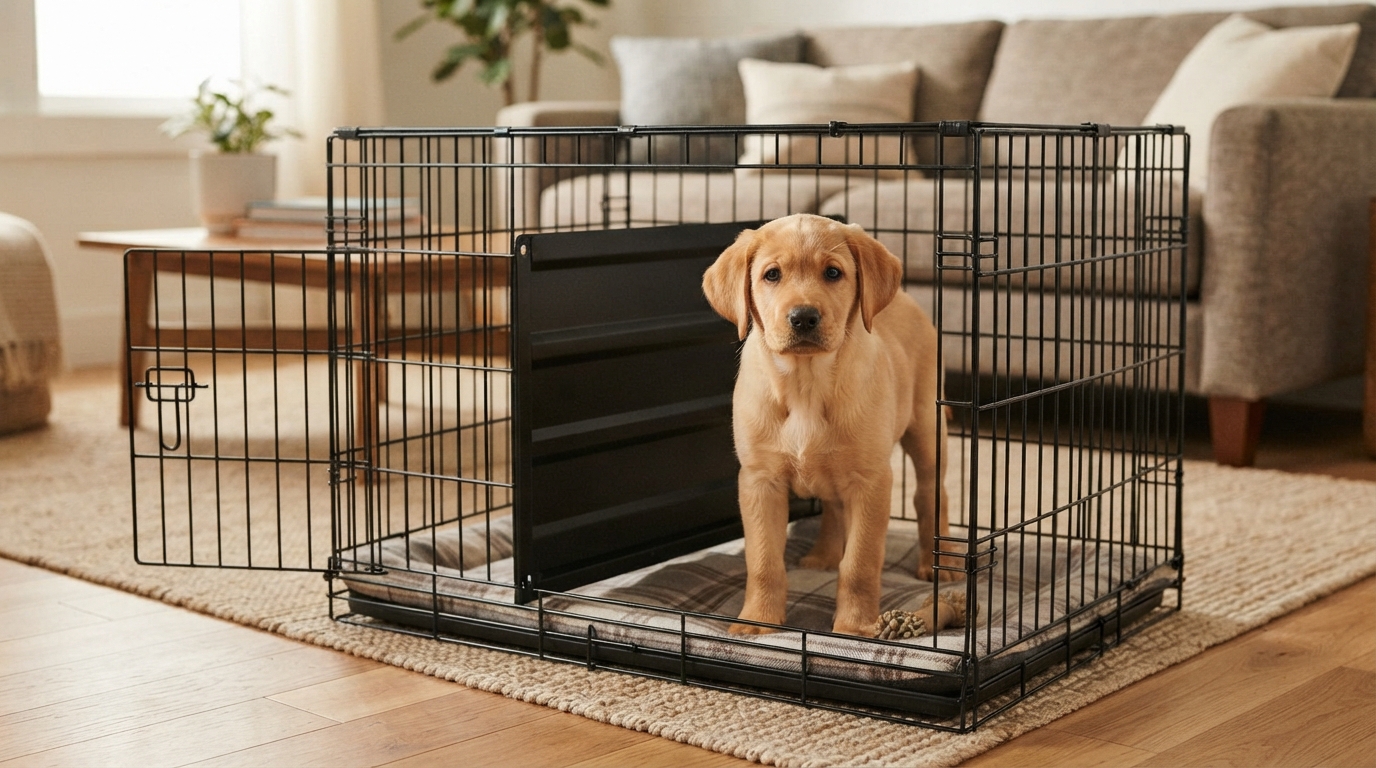
For a growing puppy, choose a crate that will accommodate adult size and use a divider panel to adjust the available area as your puppy grows. This avoids leaving a young dog with a much larger space than they need for resting.
Try the fit in the postures your dog uses most. A crate should not restrict movement, and it should still feel like a comfortable resting area rather than an oversized, awkward space.
If you’re also choosing a bed or mat for outside the crate, our guide to choosing the right bed size for your dog explains how to think about fit and resting posture.
Check doors, folding parts, latches, and trays
Choose single- or double-door access based on where the crate will sit and how you need to reach your dog. With a double-door crate, check that neither door will be blocked by nearby furniture or a wall.
A folding dog crate can be useful when you need to store it between uses. Check that panels and hinges lock securely when it’s set up, and move it only when folded and secured as intended.
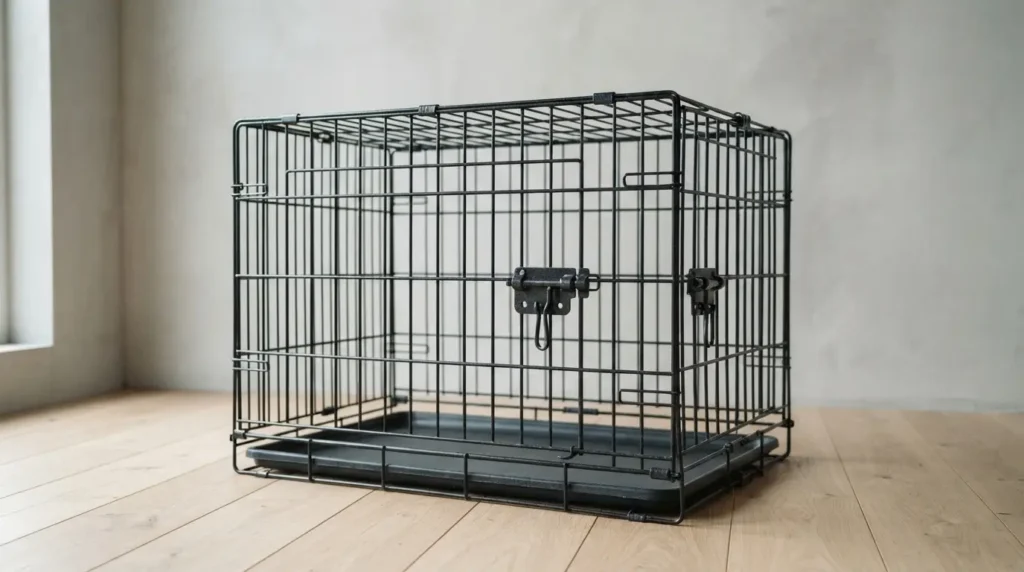
Look for a removable crate tray or another practical way to clean the floor. Pay attention to corners, seams, and door openings where paws, collars, or jaws could become caught.
- Close and open each latch to check that it works smoothly and securely.
- Look for hardware the dog could push, lift, or turn from inside.
- Check that doors stay clear of bedding and close without forcing them.
- Inspect folding joints for gaps that change when panels move.
Convenience matters, but a quick-to-fold crate is only useful if its panels stay secure during use. Choose features that make daily handling easier without introducing gaps or loose parts.
Choose furniture crates and crate accessories carefully
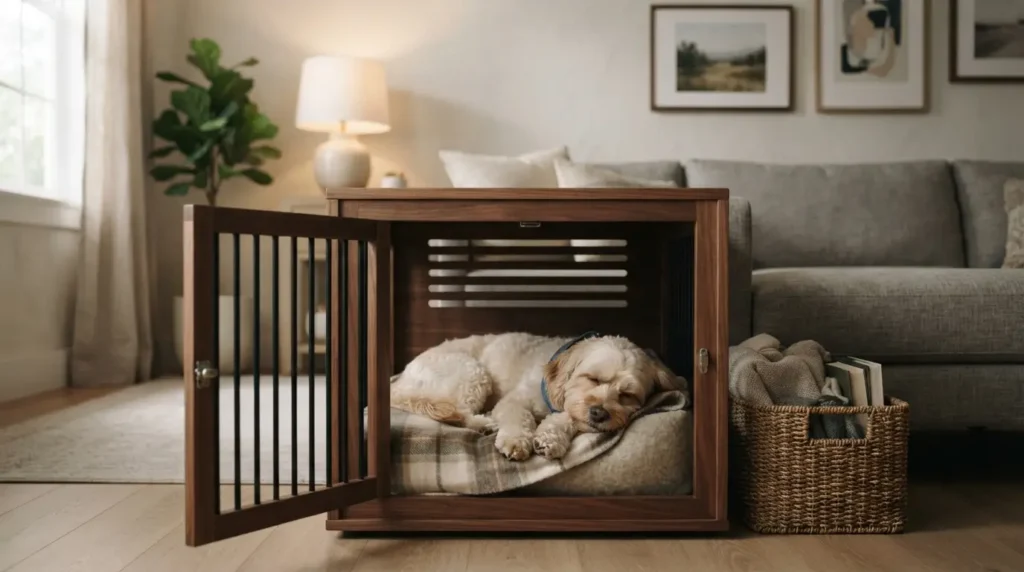
A furniture dog crate can suit a living room where a standard wire design would feel visually out of place. Prioritize open ventilation, a secure door, and enough usable interior room before deciding whether its finish works with the rest of the room.
Place the crate where your dog can rest without being cut off from household activity. Keep it away from direct heat, drafts, and hazards such as dangling cords or objects that could fall into the crate.
Choose a crate mat that fits without bunching, lifting at the edges, or blocking the door. If your dog chews or shreds bedding, avoid leaving a mat in the crate unsupervised until you know it’s safe for that dog.
A furniture top or decorative panel should never obstruct airflow, access, or your ability to monitor your dog. Appearance is part of the decision, but it comes after safety and comfort.
Keep bedding in good condition, too. Our guide to when to replace a dog bed covers signs that cushioning or fabric may need attention.
Introduce the crate gradually and respond to distress
Begin with the door open and give your dog time to explore at their own pace. Treats, meals, or familiar bedding can help create a positive association; don’t force your dog inside.
Build up in small steps. Start with brief time in the crate while the door remains open, then try short closed-door sessions and gradually extend them while your dog stays relaxed.
Once your dog has calmly managed 10 minutes, begin leaving the room, increasing your distance and time gradually. Texas A&M College of Veterinary Medicine & Biomedical Sciences advises beginning to leave the room once 10 minutes has been successfully achieved.
Persistent panic, self-injury, or repeated escape attempts are signs to stop increasing confinement. Speak with a veterinarian or qualified behavior professional rather than switching only to a more restrictive crate.
Keep the crate clean and in good working order
Remove bedding and clean the tray and interior regularly. Clean accidents promptly to limit lingering odors and residue.
Use cleaning products according to their directions, then let the crate dry before returning bedding or your dog. A damp mat or floor can make the resting space uncomfortable and hold onto odors.
Inspect bars, seams, hinges, doors, and latches for sharp edges, loose parts, chewing damage, or gaps that could trap a paw or jaw. Replace damaged components, or stop using the crate if its structure or closure no longer works securely.
Conclusion
The best dog crates balance a comfortable fit with construction that suits your dog’s behavior and the place you’ll use the crate. Compare ventilation, access, latches, cleaning, and the space your dog can actually use, then introduce the crate at a pace that keeps your dog relaxed.
Frequently Asked Questions
Is it okay to crate a dog every night?
Nightly crating can work for a dog that settles comfortably and has enough opportunity to exercise and relieve themselves during the day. Repeated restlessness, vocalizing, or reluctance to enter are reasons to reassess the routine and your dog’s needs.
Can I leave my dog in a crate for 3 hours?
Whether 3 hours is manageable depends on your dog’s age, health, toilet needs, and comfort with being alone. Puppies, dogs with medical needs, and dogs still learning to settle may need a different schedule.
Is it better to crate a dog or leave them out?
Neither option is best for every dog. A dog-proofed room or gated area may suit a dog that stays calm and avoids household hazards, while another dog may rest more comfortably in a familiar crate.
Can a dog crate help with separation anxiety?
A crate may give some dogs a familiar resting place, but it does not treat separation anxiety, and confinement can intensify distress for some dogs. A veterinarian or qualified behavior professional can help you choose an appropriate plan for departures and alone time.
What should I do if my dog refuses to go into the crate?
Pause and look for something making entry unpleasant, such as a rattling tray, slippery floor, noisy location, or awkward doorway. If the refusal begins suddenly or comes with difficulty lying down, ask your veterinarian whether pain or another health issue could be involved.
What is the best dog crate for use at home?
The best home crate is one that lets your dog stand, turn around, and lie down stretched out, while providing secure doors, good ventilation, and a calm place to rest. Choose a style that suits your dog’s behavior and the space where the crate will go.