Suction Cup or Sill-Mounted Cat Perch: Which Holds Firm? The safer choice depends on your window’s glass, frame and sill, as well as how your cat gets onto the perch. We’ll explain how each mount works and how to check its stability before your cat settles in.
Key Takeaways
- What holds a suction-cup cat perch in place? A tight seal against clean, dry, smooth glass keeps each cup attached.
- Is a sill-mounted perch always more secure? No. It needs a sturdy sill and a bracket or clamp that fits without rocking or slipping.
- How much weight can a cat perch hold? Use the stated capacity as a limit for the specified setup, not as a guarantee that every window installation will be secure.
- What matters besides your cat’s weight? Jumping, off-centre landings and multiple cats add force and movement to the mount.
- How do you test a new perch? Press it firmly by hand and check for sliding, rocking or any cup lifting before letting your cat use it.
- Which style suits a renter or frequent mover? A removable suction-cup perch can be easier to relocate; a sill-mounted style suits a stable sill and a preferred fixed spot.
How suction-cup and sill-mounted perches stay in place
A suction-cup-mounted perch grips smooth, nonporous glass when its cups create a close seal. It is removable, but dirt, an uneven surface or a cup that has not seated properly can break that seal and let the perch release.
A sill-mounted perch uses a bracket, clamp or other attachment to bear against or fasten to the window sill or frame. Its support comes from the contact between the mount and a solid part of the window, so a correct fit can make it feel firm and steady.
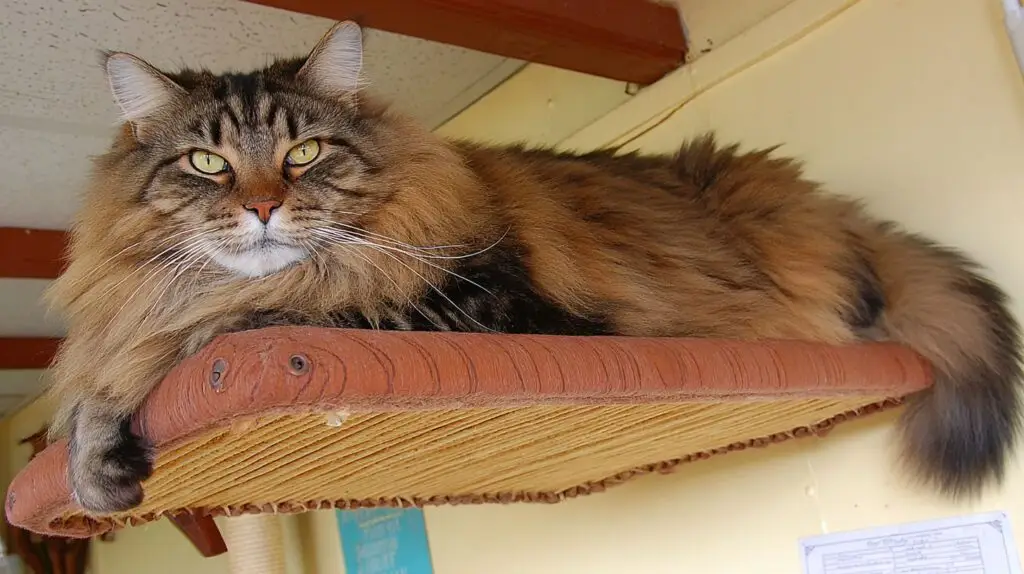
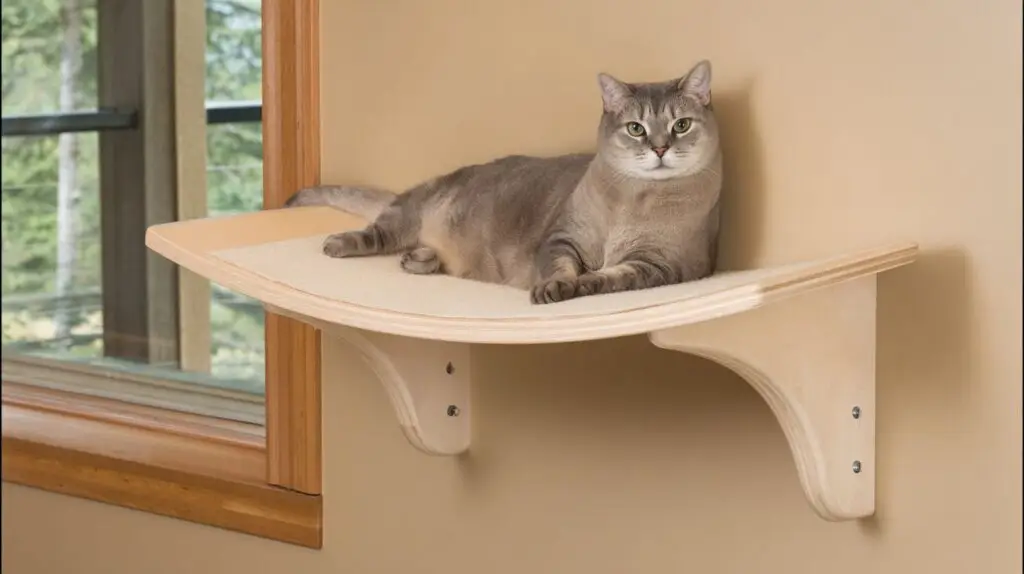
Don’t choose by the mount’s name alone. Look at where it contacts the window and how it prevents the perch from tipping, sliding sideways or pulling away from the glass.
| Mount type | What provides support | What to assess |
|---|---|---|
| Suction cup | A seal between the cup and smooth glass | Glass condition, cup placement and the seal |
| Sill mount | A bracket, clamp or attachment bearing on the sill or frame | Sill strength, usable depth and a stable fit |
A sill mount is not automatically the firmer option: a shallow, weak or poorly matched sill can undermine its support. A well-installed suction-cup perch can hold reliably on suitable glass, so compare the actual fit and contact points.
For a wider look at renter-friendly mounting styles, including suction-cup options, see our guide to cat shelves that don’t require drilling.
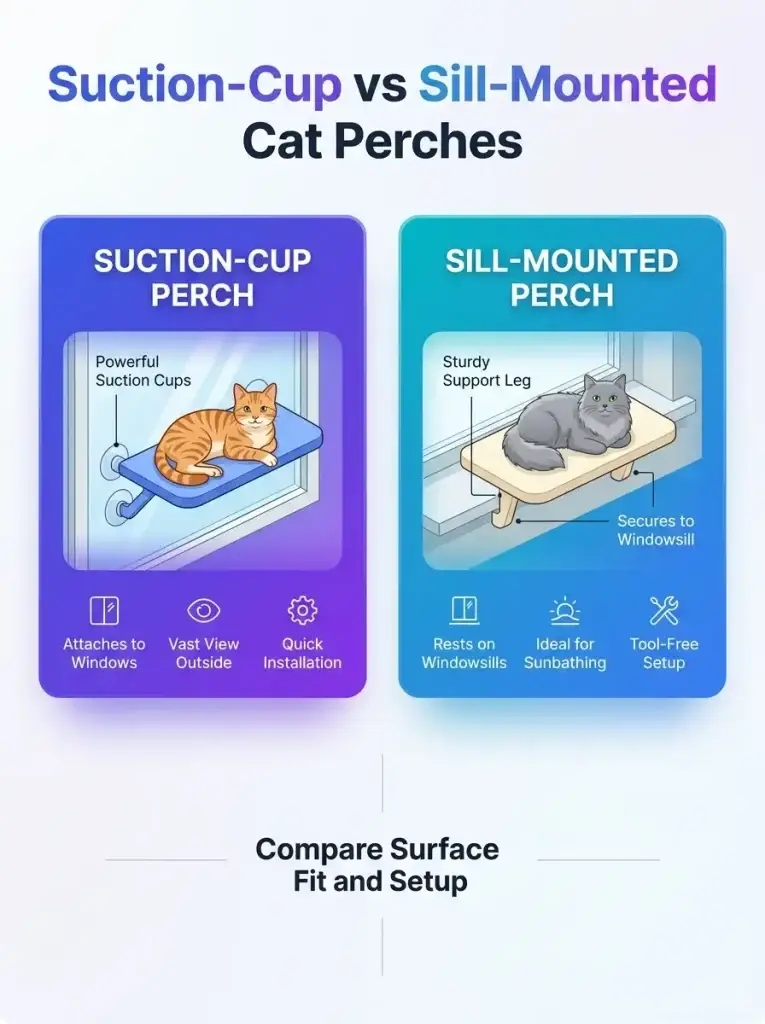
A side-by-side look at suction-cup and sill-mounted cat perches, showing how each style attaches. Compare the options when choosing a perch for your cat.
Check the window glass, frame, and sill before choosing
For a suction-cup perch, choose glass that is clean, dry and smooth. Dust, grease, moisture, texture, damage or a surface that is not flat can interrupt the seal and reduce perch stability.
Check whether the glass or frame shifts when the window opens and closes. Drafts and temperature changes at the proposed location can also affect reliability, while a moving window can jolt a mount or disturb its contact with the surface.
For a sill-mounted perch, measure the usable depth and compare it with the mount’s footprint and clamp position. The sill must be strong and stable enough to carry the bracket without rocking, slipping or pressing against weak trim.
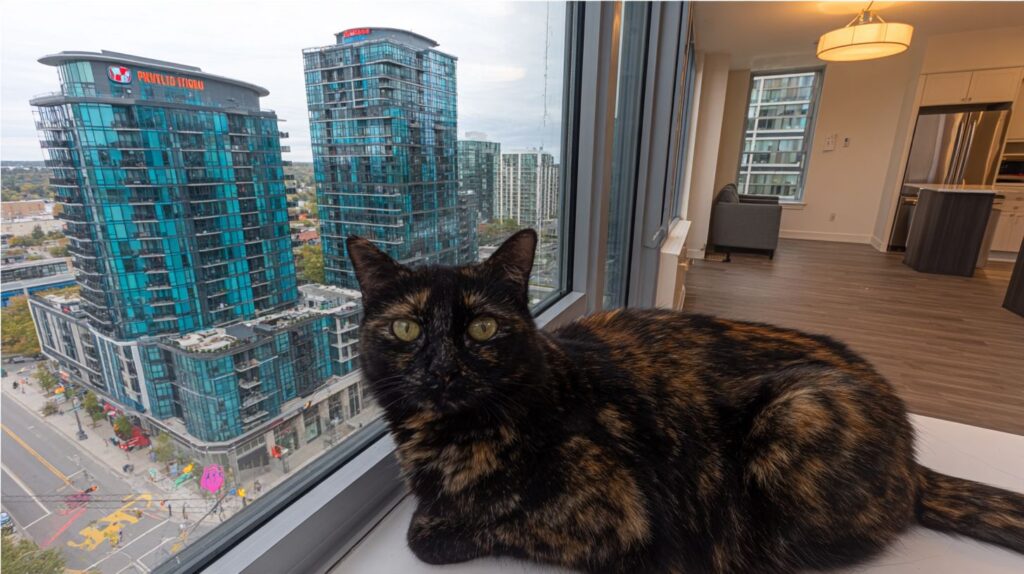

Allow room for both the perch and its mounting hardware, and make sure the window can still operate safely. Avoid a spot where opening the sash, moving a nearby object or brushing against the perch could loosen it.
Match the mount to your cat and the forces it will face
A stated weight capacity is a limit for a particular setup, not proof that every installation will hold securely. The glass, sill, fit and installation all affect whether a perch stays in place.
A cat’s still weight is only part of the load. Jumping onto the platform, landing off-centre or shifting position creates movement and added force at the mounting points.
Consider combined load if more than one cat might use the perch at the same time. Two cats settling or moving about together place different demands on the mount than one cat resting quietly.
Your cat’s size and habits matter, too. A cat that launches onto a cat window seat or climbs up its side puts greater demands on the supports than one that steps onto it gently and settles.
- Choose a platform with enough usable space for your cat to turn around and lie down.
- Think about whether your cat jumps directly up, climbs from furniture or approaches from the sill.
- For a cat hammock on a window, assess how the fabric or platform moves as your cat gets in and out.
- Use the combined load and movement of all likely users when judging the fit for your home.
Install a suction-cup perch and test it before use
Start with glass preparation: clean the mounting area and let it dry fully before attaching the cups. Dust, grease and moisture can interfere with a tight seal.
Place each cup on a smooth part of the glass and follow the perch’s mounting sequence. Seating the cups evenly helps the platform stay aligned rather than pulling one side out of position.
- Clear the area below and around the window so no one is under the perch during the test.
- Press firmly on the installed perch by hand, then check whether it slides, rocks or shifts.
- Look closely at each cup to see whether an edge is lifting or the seal is releasing.
- If a cup moves, do not let your cat use the perch. Remove and refit it only after reassessing the glass and placement.
Test the mount before the cat. A perch that moves under firm hand pressure is not ready for use.
Prepare the whole installation surface, not only the visible centre of each cup. A narrow strip of dirt or residue at the edge can prevent the cup from sealing evenly.
Inspect both mounting styles and respond to loosening
Recheck suction cups and sill mounting points regularly, and after moving the perch or noticing a change in the window. Clean and reseat cups if they collect dirt or begin to lift.
Inspect brackets, clamps and fasteners for looseness, movement or damage, and check the supporting sill for changes. A small shift can be easier to spot before it becomes a more serious stability problem.
If a perch loosens, keep your cat away, remove the load and secure the area before taking the mount down. Then reassess the surface, fit and installation rather than simply putting the perch back into use.
Do not keep using a mount that shifts after you refit or retighten it. Choose a safer location or a mounting arrangement better suited to that window.
Choose a location and perch style your cat will use
The best location for a cat perch is a calm spot with a clear view and an easy approach. Avoid strong drafts and places where frequent window movement could disturb the mount.
Make sure the perch is large enough for your cat to settle comfortably, and consider whether its padding suits the way your cat rests. A cat window bed should offer a stable place to lie down, not just an appealing view.
A removable suction-cup perch can suit renters or anyone who wants to relocate the setup. A sill-mounted style can suit a solid sill when you prefer a fixed position.
Introduce the perch gradually and keep the route to it clear, so a hesitant cat can investigate without having to jump awkwardly onto the mount. A cat window hammock, cat window seat or other perch works best when its position fits your cat’s approach as well as your room.
Frequently Asked Questions
Can a window perch damage glass or a window sill?
A properly fitted suction cup does not require drilling, while a clamp can mark or compress a sill finish if it is overtightened. Keep mounts away from chipped or cracked glass, and use protective contact pads if the design allows them.
Can I use a cat window perch with blinds or curtains?
Yes, if the window covering can move freely without catching on the perch or its supports. Keep dangling blind cords out of your cat’s reach, since a perch can make them easier to access.
How can I encourage my cat to use a new window perch?
Try a short play session near the perch, then let your cat approach at its own pace. A familiar blanket can make the surface feel more inviting, and a treat placed on the platform can reward voluntary exploration.
Is a window perch suitable for a kitten or an older cat?
Either may enjoy one if the route on and off suits their coordination and mobility. For a kitten, supervise use as it learns the space; for an older cat, a nearby step can make access easier on stiff joints.
Can I use adhesive strips instead of a sill-mounted bracket?
Only use adhesive strips when the perch is designed to attach that way, since an improvised adhesive connection may not resist the movement of a cat jumping or shifting. Match the mounting method to the perch’s intended support rather than combining unrelated hardware.
What is the best suction cat window perch?
The best choice is a perch with a mounting system that suits your window and your cat’s size and habits. For a suction-cup model, look for secure cups that fit clean, smooth glass, and test the installed perch for movement before your cat uses it.
Is there a cat window perch that doesn’t require suction cups?
Yes—choose one whose mount sits securely on a sturdy sill.
What is the best location for a cat perch?
Choose a place your cat can reach comfortably where the mount will stay undisturbed.
Conclusion
Suction Cup or Sill-Mounted Cat Perch: Which Holds Firm? A suction-cup model can be dependable on clean, smooth glass, while a sill-mounted perch can feel solid when its bracket or clamp fits a strong, stable sill. The firmest choice is the one that suits your window, your cat’s movement and the actual contact points, then passes a careful hand-pressure test and regular inspections.