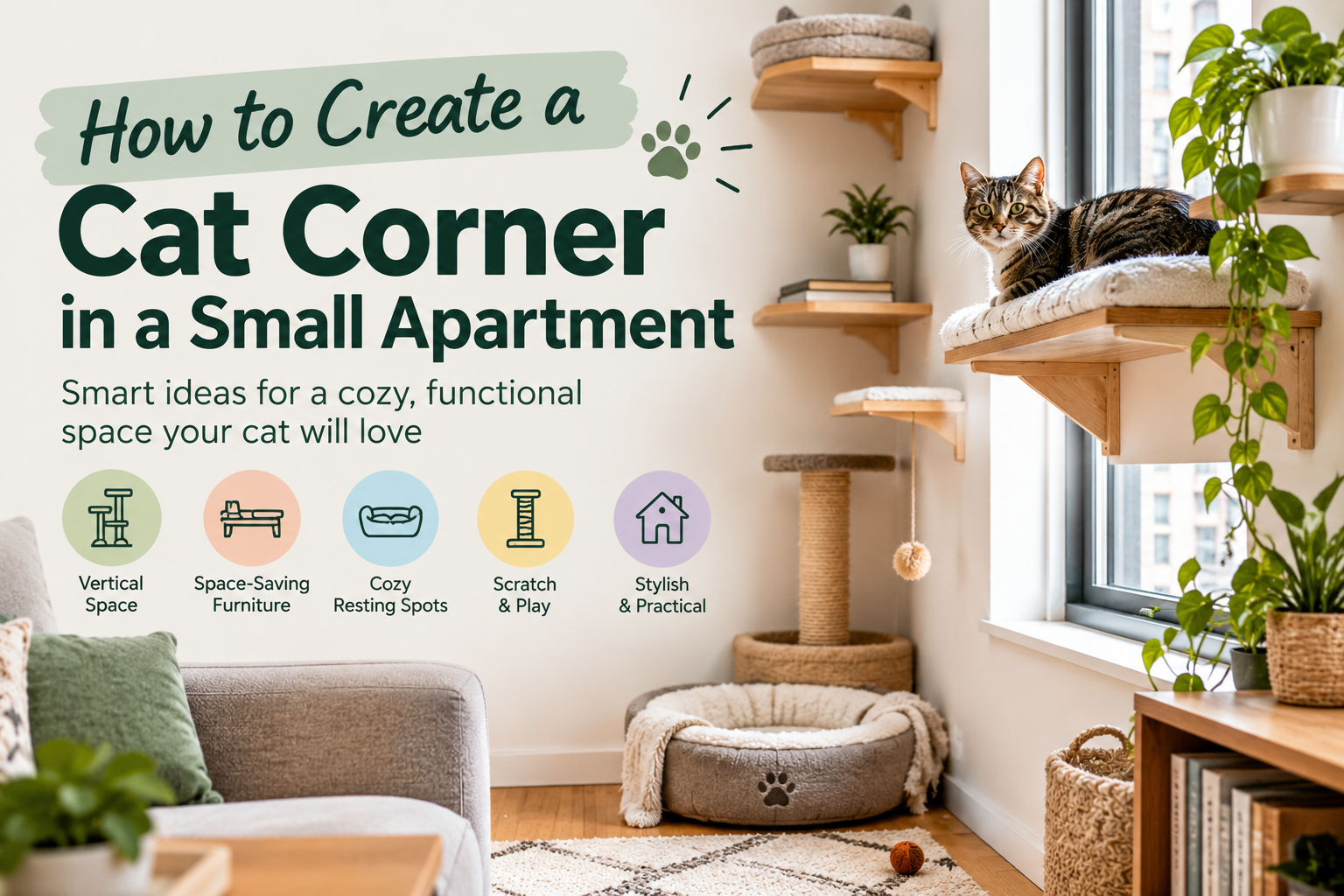
Renting an apartment shouldn’t mean your cat misses out on vertical space, but most cat wall shelves seem to require a drill and a landlord who won’t mind holes in the walls. The good news is that plenty of wall mounted options now rely on tension, suction, or strong adhesive instead. Here’s what actually holds up, and what to skip.
Key Takeaways:
- Renter-friendly cat shelves utilize tension rods, suction cups, or adhesive strips to provide vertical climbing space without damaging walls or violating lease agreements.
- Top options include heavy-duty tension-mounted shelves for stability, suction-cup window perches for views, and over-the-door designs ideal for small apartments.
- Choose based on your cat’s weight and available space, ensuring the no-drill installation method securely supports your pet without wall damage.
1. Why Renter-Friendly Cat Shelves Matter
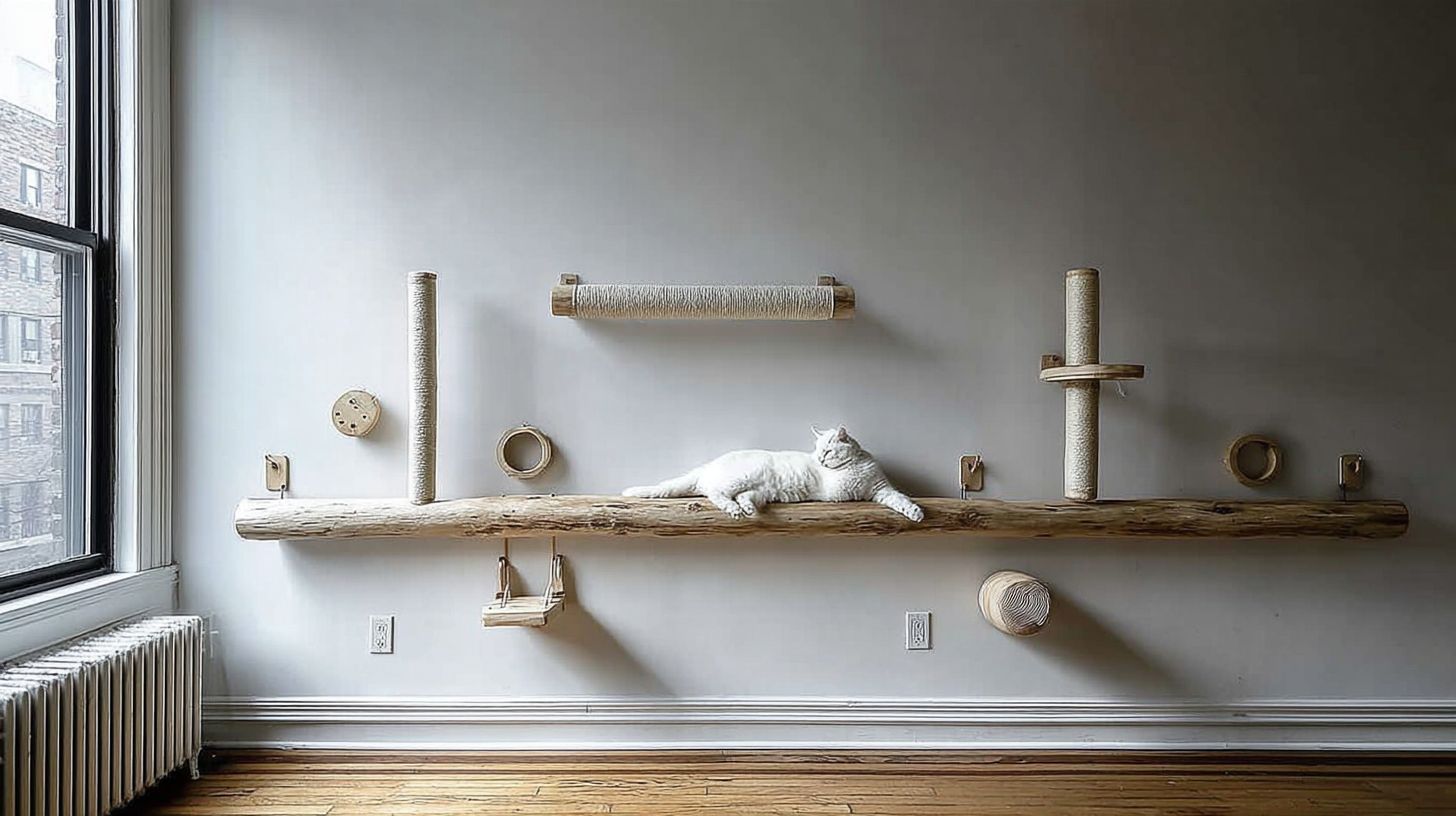
Ever dreamed of giving your cat a jungle gym but stopped because you can’t drill into your apartment walls? You are not alone. Renters often find themselves stuck between a lease agreement and a cat who desperately wants to climb.
The dilemma is real and frustrating. A cat tree eats up precious floor space in a small apartment, yet the walls stay bare because drilling means patching holes, repainting, and risking part of a security deposit. That tension between feline happiness and landlord rules is exactly where no-drill cat shelves come in.
These products use adhesive strips, tension-mounted poles, or over-the-door brackets to hold wall mounted platforms in place without a single screw touching drywall. The result: vertical real estate your cat can claim, and walls you can hand back untouched at move-out.
Why Vertical Space Is Not a Luxury for Cats
Cat behavior specialists consistently point to height as one of the most overlooked needs in indoor living. Many cat behaviorists recommend giving cats access to elevated perches because height signals safety. From up high, a cat can survey the room, watch windows, and nap without being startled from behind.
In multi-cat homes, this matters even more. Cats are territorial by nature, and a single floor-level cat condo or cat tree often becomes a contested zone. A climbing wall with several floating shelves spreads that territory out. Each cat can claim a separate cat perch, which reduces staring matches, ambushes, and litter box avoidance triggered by stress.
Vertical routes also deliver real exercise. Jumping between platforms works the hind legs and core, and it burns energy that might otherwise go into knocking items off counters at 3 a.m. Step spacing matters here: platforms set too far apart force awkward leaps, while a well-planned wall route encourages natural cat climbing.
The Deposit Problem, Solved
Standard stud mounting is the gold standard for strength, but it requires drilling and permanent holes. For a renter, that means patch compound, paint matching, and hoping the landlord does not notice the texture difference during inspection. Even small mistakes can cost part of a deposit.
Renter-friendly options sidestep all of it. Products built around adhesive backing, tension rods, or door-frame brackets leave no trace when removed. You still get cat shelves and wall furniture that support cat climbing, scratching, and lounging, just anchored differently.
That difference matters most for heavier cats. A large Maine Coon or a chunky domestic shorthair places serious kinetic load on a shelf during a landing jump. Reputable no-drill designs publish a load rating and use materials like engineered wood, rubber wood, or bamboo plywood to handle that force. Look for anti-slip felt on landing surfaces so paws do not slide on impact.
The Emotional Payoff for Both of You
There is a quieter benefit that rarely makes it into product descriptions. A cat with a proper cat house setup, complete with a sisal post or two for scratching surface variety, tends to be calmer. Fewer bored hours means less destructive scratching on your sofa and fewer midnight zoomies across your headboard.
Owners feel the difference too. Watching your cat scale a modular system of platforms you assembled in an afternoon, without a drill or a landlord conversation, is genuinely satisfying. You get the enrichment, the cat gets the territory, and the lease stays intact.
Before buying, check three things: the weight capacity of each shelf, the platform depth relative to your cat’s body length, and whether the system relies on wall anchors, toggle bolts, or pure adhesive. A shelf rated for a small kitten will not hold a full-grown cat mid-pounce, and feline safety should never depend on guesswork.
2. How We Evaluated These No-Drill Shelves
Not all no-drill shelves are created equal. Some can hold a hefty Maine Coon, while others sag under a kitten. To compare them fairly, we looked at four things: material, mounting mechanism, load rating, and how each shelf handles the sudden force of a cat landing on it.
Materials shape both durability and price. Engineered wood is the budget option, and quality varies widely. Rubber wood offers a denser, furniture-grade feel. Bamboo plywood resists moisture and warping well, which matters in humid apartments.
Mounting mechanisms decide where a shelf can go. Tension-mounted systems press between two walls. Adhesive brackets bond to a single surface. Over-the-door designs hang from the top of a door frame. Each approach suits different wall types and rental rules.
We also weighed kinetic load, the extra force created when a cat jumps or lands. A static weight rating tells only half the story. Bracket leverage, platform depth, and shear alignment all affect whether a perch stays put after months of daily use.
| Mounting Type | Typical Load Rating | Platform Depth | Suitable Wall Types |
|---|---|---|---|
| Tension-mounted | Moderate to high | Shallow to medium | Drywall, concrete masonry |
| Adhesive | Low to moderate | Shallow | Smooth drywall, tile, glass |
| Over-the-door | Moderate | Medium | Standard interior doors |
| Hybrid with wall anchors | High | Medium to deep | Drywall, framing timber |
Surface details matter more than shoppers expect. Anti-slip felt keeps paws from sliding during a quick turn. A scratching surface, whether sisal wrap or carpet, adds enrichment and protects the shelf edge from claw damage.
Finally, we considered modular system flexibility. Shelves that connect into a climbing wall or step set let you build a wall route with sensible step spacing. That helps multi-cat households manage territory without crowding a single cat perch.
No single design wins every category. A tension-mounted shelf may suit a renter with smooth drywall, while an anchored hybrid works better for heavy cats in a permanent setup. Match the shelf to your cat, your walls, and your lease.
3. Best Overall: Heavy-Duty Tension-Mounted Cat Shelf
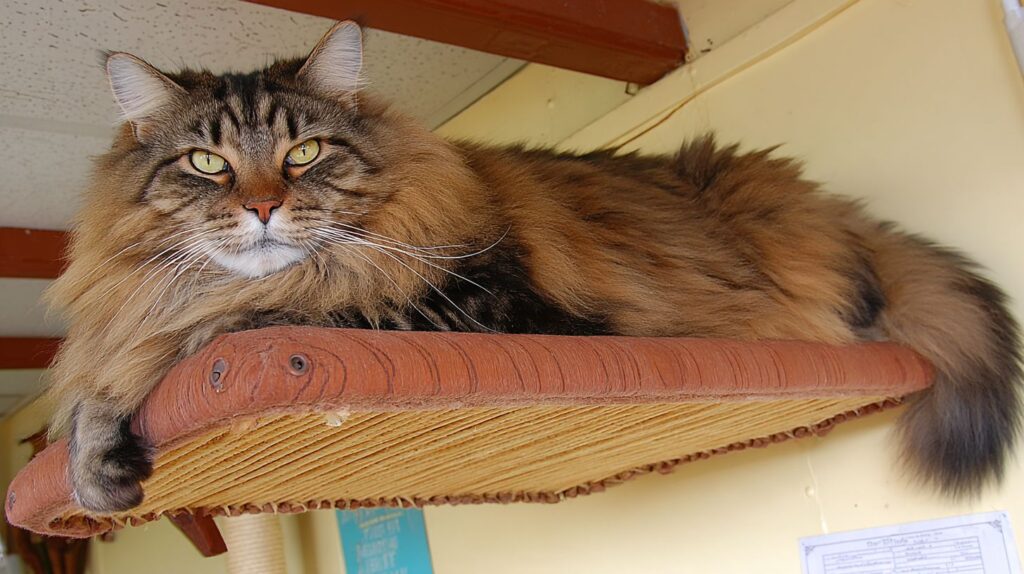
If you want a no-drill shelf that can handle a leaping Maine Coon without budging, a tension-mounted design is your best bet. This style wedges firmly between two opposing walls, using outward pressure instead of screws to stay put. For renters who still want a real cat perch with serious weight capacity, it solves the usual trade-off between strength and damage-free removal.
Most tension-mounted shelves rely on padded feet that grip the wall surface without marring paint. That means you get the stability of wall mounted cat wall shelves while keeping your security deposit intact. When you move out, the whole unit collapses down in minutes.
This is also the most flexible option for vertical space. You can stack several units into a small climbing wall, add a cat hammock, or clip on a sisal post for scratching. The result is a modular cat furniture setup that grows with your cat’s needs.
Below is a practical walkthrough for installing one safely, plus tips to keep it level and secure over time.
Tools you will need:
- A stud finder (to confirm 16-inch studs behind the drywall)
- A spirit level (for checking horizontal alignment)
- An adjustable wrench or the tension rod tool included with the unit
- A tape measure (for measuring wall-to-wall distance)
- A soft cloth or felt pads (to protect paint at contact points)
Step 1: Locate your wall studs. Run the stud finder along the wall and mark each 16-inch studs position with light pencil dots. Even though a tension shelf does not screw into wall studs, knowing where they sit helps you understand the wall’s structure and avoid weak spots like unsupported spans.
Step 2: Measure the gap and set the brackets. Extend the tension mechanism so the padded feet just touch both walls. Align the mounting brackets so the shelf platform sits level. This is where shear alignment matters: the downward force of a jumping cat should travel straight through the bracket, not at an angle that could twist the frame.
Step 3: Adjust the tension. Turn the adjustment collar until the unit feels firm with no wobble. Do not over-tighten, since excess pressure can bow drywall or crack plaster. A snug, even fit on both sides is the goal.
Step 4: Test the load. Press down gently on the center of the shelf to simulate a kinetic load. This mimics the jumping force of a cat landing from above. If the shelf shifts, tighten slightly and retest. A properly seated unit should feel solid under moderate downward pressure.
Tips for staying level and safe:
- Recheck the spirit level after every tension adjustment, since tightening one side can tilt the platform.
- Keep the platform depth reasonable so the shelf does not act as a lever against the wall.
- Add anti-slip felt pads under the feet to protect paint and reduce creeping.
- Recheck tension monthly, especially in humid rooms where materials expand and contract.
This design earns the best overall spot because it pairs high load rating with genuinely damage-free removal. There are no toggle bolts, no wall anchors, and no patching required when you leave. You get the strength of a fixed shelf with the flexibility of a rental-friendly one.
Compatible accessories make it even more useful. A bolt-on cat hammock adds a cozy nap spot, while a clip-on sisal post gives cats a dedicated scratching surface. Some kits accept a small cat house or corner cat condo attachment, turning a single perch into a mini cat tree.
For multi-cat homes, space the units into a modular system with clear step spacing. This supports natural cat climbing and gives each cat its own territory, which reduces conflict. Thoughtful enrichment like this keeps cats active and engaged indoors.
Materials matter too. Look for engineered wood, bamboo plywood, or rubber wood platforms, which resist warping better than thin particleboard. A sturdy build holds up to heavy cats and repeated landings without sagging over time.
4. Best for Windows: Suction-Cup Cat Perch
What could be better for a sun-loving cat than a front-row seat to the bird feeder? Picture a tabby sprawled across a clear acrylic cat perch stuck to the living room window, tail flicking as a squirrel raids the feeder below. Every twitch of the squirrel sends her paws pressing against the glass, and she has the best seat in the apartment without a single hole in the wall.
That is the quiet magic of a suction-cup perch. It installs in minutes, moves with the seasons, and gives any cat a slice of vertical space right where the action is. For renters, it is the rare piece of cat furniture that leaves zero trace when you move out.
But suction cups live and die by their grip. Choose the wrong ones, skip the prep work, or overload them with a hefty cat, and you will hear a crash at 3 a.m. The tips below cover how to pick, mount, and maintain a window perch that stays put.
Choosing the Right Suction Cups
Not all suction cups are built alike, and the cheap ones on discount perches are usually the first thing to fail. Look for large cups with a locking lever or twist mechanism. These apply steady pressure against the glass, which keeps the seal tight far longer than a simple push-on cup. A load rating printed on the packaging is a good sign the maker tested the product.
Size matters as much as mechanism. A cup roughly the diameter of a coffee mug grips far better than a coin-sized one, because more surface area means more holding power. Metal hooks or brackets attached to the cup also beat plastic clips, which can crack under a cat’s jumping force.
For heavy cats like a Maine Coon or Ragdoll, check the stated weight capacity and then add a safety margin. A perch rated for 30 pounds may hold a 20-pound cat on a cold day, but warm glass and age weaken the seal. When in doubt, pick a model rated well above your cat’s weight.
Prepping the Surface for a Strong Seal
Suction cups need smooth, non-porous glass to work. Clean the mounting area with warm soapy water or a glass cleaner, then dry it completely. Any film of dust, grease, or cooking residue gives air a path to sneak under the cup and break the seal.
Skip textured, frosted, or tinted windows, since cups cannot grip an uneven surface. The same goes for painted walls, wallpaper, and most tiles with grout lines. Plain window glass is the ideal target, and a mirror can work too if it is smooth and flat.
Mount the perch in the morning on a cool window, not in direct afternoon sun. Press each cup firmly, then engage the locking lever. Give the perch a gentle tug before letting your cat near it, and re-check the cups after the first day.
Sun, Heat, and UV Warnings
Direct sunlight is a double-edged sword. Cats adore the warmth, but UV rays degrade rubber and silicone over time, making cups brittle and prone to sudden release. A perch that faces strong afternoon sun may need cup replacement every few months.
Overheating is the bigger worry for the cat itself. A window perch in full summer sun can become uncomfortably hot, especially for dark-coated cats or flat-faced breeds that struggle to cool down. Offer a shaded alternative nearby, or move the perch to an east-facing window during heat waves.
Watch for warning signs: a cat that pants, sprawls limply, or avoids the perch on sunny days is telling you something. Rotate the perch to a different window when the season shifts, and never leave a cat locked in a sun-baked room with no escape.
Rotating Positions and Keeping Cups Clean
Even the best view gets boring. Cat behavior experts note that cats thrive on novelty, so shift the perch to a new window every few weeks. A kitchen window offers bird feeder drama, while a bedroom window delivers squirrel patrol and passing traffic.
Clean the cups every couple of weeks to keep the seal strong. Pop them off, rinse in warm water, and let them air dry before re-mounting. A dab of water on the cup before pressing helps create a tighter vacuum, but never use oil or grease, which ruins the grip.
- Re-press and lock each cup weekly, especially in humid weather.
- Replace cups at the first sign of cracking, discoloration, or a loose lever.
- Test the perch with a firm downward pull before your cat climbs aboard.
- Keep a spare set of cups on hand so a failure never grounds your cat.
Pair a window perch with other no-drill options like a cat hammock or freestanding cat tree to build a full climbing wall route without touching a drill. With a little upkeep, a suction-cup perch becomes the sunniest, safest spot in the apartment.
5. Best for Small Spaces: Over-the-Door Cat Shelf
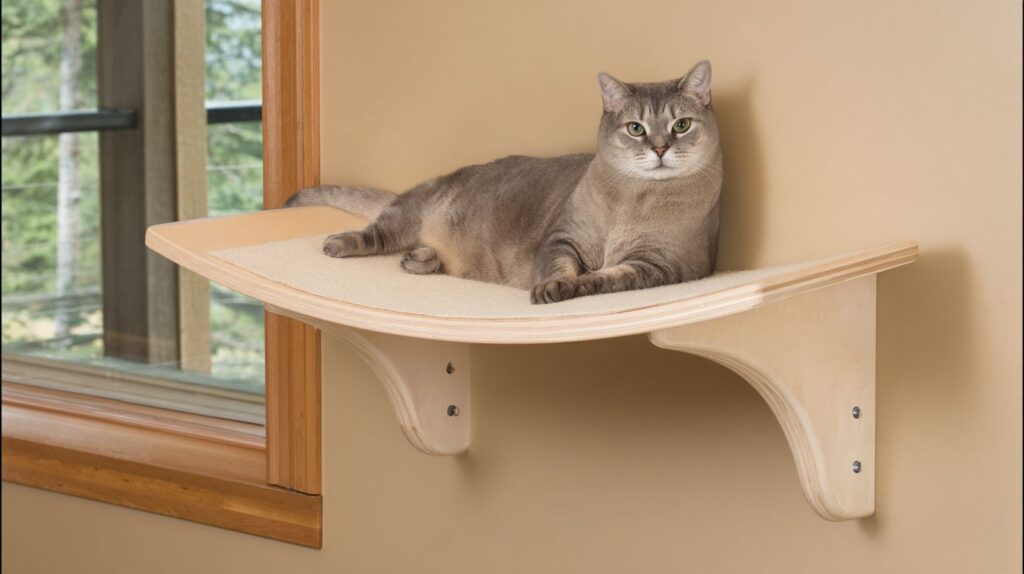
Living in a studio apartment doesn’t mean your cat can’t have a high-rise view. An over-the-door shelf turns any door into prime real estate, giving your feline a cat perch without a single hole in the wall. It is one of the simplest ways to add vertical space when floor area is tight.
These units hang from the top edge of a standard interior door and rest against the door face. Most models use padded hooks or brackets that grip the door frame, so installation takes minutes and requires no tools. For renters, that means zero damage and no awkward conversations at move-out.
Metal vs. Plastic, Single vs. Multi-Tier
Over-the-door options fall into two material camps. Metal frames tend to hold more weight and resist flexing, while plastic versions are lighter and cheaper but can bow under a heavier cat. If you share your home with a Maine Coon or another large breed, lean toward a reinforced metal frame.
Tier count matters just as much. A single-tier shelf works as a simple lookout point. A multi-tier design stacks two or three levels, mimicking a small cat condo and encouraging natural cat climbing.
- Single tier: lightest, easiest to stabilize, best for one cat
- Multi-tier: more enrichment, but adds weight and door clearance concerns
- With scratching surface: often wrapped in a sisal post sleeve or carpet pad
- Without scratching surface: smoother, easier to wipe clean, less bulk
A scratching surface built into the frame doubles as a scratching post, which helps protect your sofa. Just check that the wrap is replaceable, since sisal wears down over time.
Pros and Cons to Weigh
The biggest draw is no wall damage. You avoid wall anchors, toggle bolts, and the guesswork of finding wall studs. Setup is quick, and many designs adjust to fit different door thicknesses.
The trade-offs are real, though. Weight capacity on most over-the-door units is modest, so a jumping cat creates a kinetic load the frame must absorb. That force is why feline safety depends on matching the shelf to your cat’s size.
- Pro: no drilling, no drywall repair, renter-friendly
- Pro: adjustable hooks fit varied door thicknesses
- Con: limited load rating compared with wall mounted shelves
- Con: the door usually must stay closed, or the frame needs reinforcement
If the door swings open often, the shelf can shift or rattle. Some owners add a small brace or keep the door latched to prevent movement.
Decision Tree: Match the Shelf to Your Door
Door construction should guide your choice. Tap the door first. A hollow sound means hollow-core, and a solid thud points to a heavier build.
- Hollow-core door: choose a lightweight, single-tier shelf to reduce strain on the thin skin.
- Solid door: you can safely opt for a heavier multi-tier model with a scratching wrap.
- Heavy cat: favor metal, keep tiers low, and check the stated weight capacity.
- Multi-cat home: consider two separate doors rather than overloading one frame.
This mirrors the logic behind stud mounting on walls. A solid anchor point handles more jumping force than a thin panel ever could.
Stabilizing Tips and Door Clearance
Small tweaks keep the shelf steady and quiet. Anti-slip felt pads on the hooks and back edge reduce sliding and protect the door finish. Press each pad firmly so it does not peel during a cat’s launch.
Check door closure before your cat ever uses it. The top gap between door and frame must clear the hooks, or the door will jam. Trim or reposition padding if you feel resistance.
- Add anti-slip felt at contact points to cut vibration
- Test the door swing with the shelf empty first
- Keep the frame centered so weight stays balanced
- Re-tighten or re-pad hooks if the unit wobbles
Think of this setup as a compact modular system. It pairs well with other cat shelves and a cat tree to build a full climbing wall across your apartment. A door shelf handles the high perch, while floor-level pieces cover territory and rest spots.
6. Best Budget Pick: Adhesive-Backed Wall Shelf
Think you need to spend a fortune for a cat shelf? Think again. Adhesive-backed options can be surprisingly sturdy for small cats. These shelves skip brackets, toggle bolts, and wall studs entirely, which makes them a popular entry point for renters who want cat wall shelves without touching a drill.
They work best as stepping stones in a climbing wall route rather than primary perches. A lightweight cat can hop from one to the next on the way to a sturdier platform. Pair them with a sisal post or cat tree nearby so your cat still has a scratching surface and a solid landing zone.
That said, adhesive shelves fail for predictable reasons. Most problems trace back to installation mistakes, not the product itself. Here are the five most common errors and how to dodge them.
- Not cleaning the wall properly. Dust, grease, and cooking residue weaken the bond. Wipe the area with rubbing alcohol and let it dry fully before sticking anything.
- Exceeding weight limits. Every shelf has a load rating, and jumping force adds a kinetic spike far above your cat’s resting weight. Stay well under the stated limit.
- Placing on textured surfaces. Bumpy paint, brick, or rough plaster leaves air gaps. Adhesive needs flat, smooth drywall or tile to grip evenly.
- Ignoring curing time. Many people load the shelf minutes after pressing it on. Adhesive needs hours to set, so wait the full period before letting your cat near it.
- Using on painted wallpaper. The adhesive can pull paint or paper off the wall, and the bond itself sits on a weak layer. Skip these spots entirely.
Each mistake happens for a simple reason: people treat adhesive like a nail. It is not. It is a chemical bond that depends on surface prep, patience, and honest weight math.
Run a quick mini-test after installation. Press gently with your hand and hold for a few seconds. If you feel any give, wobble, or peeling at the edges, stop and reposition. A firm, silent shelf passes. A creaky one does not.
These shelves suit lightweight cats and short routes. For a Maine Coon or any heavy cat, choose a wall mounted shelf with brackets and proper wall anchors instead. Adhesive models are a budget-friendly starting point, not a forever solution for every feline.
7. Best for Multiple Cats: Modular Climbing System
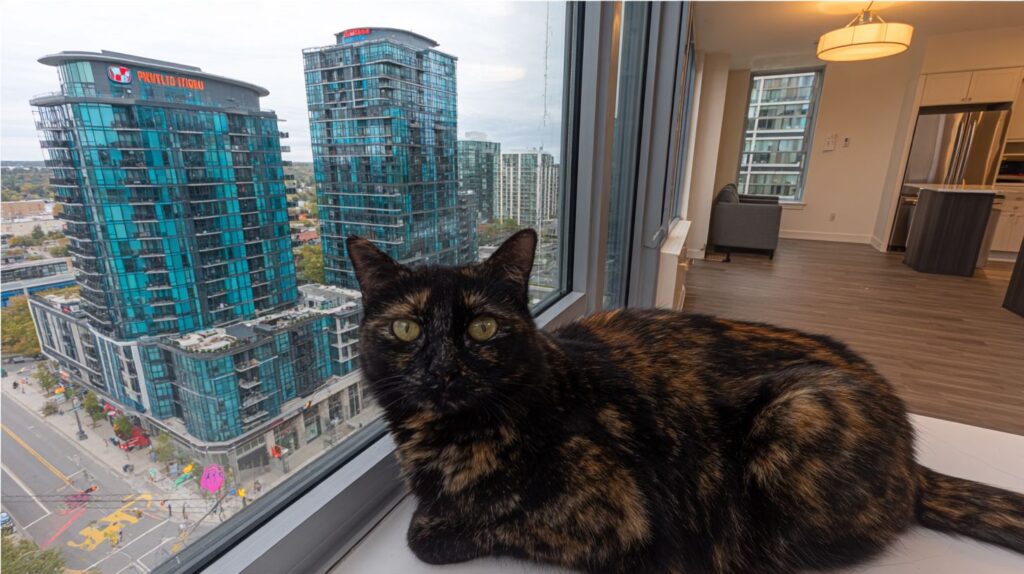
In a multi-cat household, a single shelf is like one parking spot for a family of five, and chaos ensues. The fix is a modular system that grows into a full climbing wall with several routes, perches, and resting spots. Each cat claims a lane, and the tension drops.
We asked a feline behavior consultant how to set one up without drilling. Her answers below assume wall mounted pieces held by adhesive strips, toggle bolts in drywall, or tension-based frames.
Q: How do I prevent territorial disputes?
A: Give every cat its own vertical territory. A cat perch on one side of the room and a second perch on the opposite wall creates separate zones. Add a cat hammock or cat condo at different heights so no cat has to share a single landing spot.
Q: What is the ideal step spacing?
A: Most cats jump comfortably with steps set 12 to 18 inches apart. Older cats or heavy breeds like a Maine Coon do better near the lower end. Wider gaps raise jumping force and put more kinetic load on each bracket, which matters when you rely on wall anchors instead of wall studs.
Q: How do I plan the routes?
A: Sketch at least two paths up the wall so cats can pass without blocking each other. Mix a sisal post, a scratching surface, and a platform at each level. This turns plain cat shelves into real enrichment.
Q: Where should food and litter go?
A: Keep litter boxes on the floor in separate corners, never beside a feeding station. Place food and water at ground level too, since most cats prefer to eat with all paws down. The vertical space is for resting and watching, not dining.
Q: What should I check before buying?
A: Look at the load rating and weight capacity of every piece. A modular system in engineered wood, bamboo plywood, or rubber wood tends to hold up better than thin composite. Anti-slip felt on the tops keeps landings quiet and secure.
Start with a small cat shelf set and add pieces over time as your cats claim their spots. A DIY cat setup built around one brand’s brackets is easier to extend than mixing hardware from different makers.
- Zones: one perch per cat, spaced across the room
- Spacing: 12 to 18 inches between steps
- Routes: two or more ways up and down
- Surfaces: sisal, carpet, and felt for variety
- Resources: food and litter on the floor, apart from each other
8. Best for Heavy Cats: Reinforced No-Drill Bracket Shelf
When your cat weighs as much as a small dog, flimsy shelves are a lawsuit waiting to happen. A reinforced no-drill bracket shelf is built for exactly this scenario, using wider mounting plates, thicker brackets, and hardware rated far above the weight of an average house cat. The goal is simple: keep a heavy cats perch rock solid without touching a drill.
Load rating is the number you check first. Static load covers a cat sitting still, while kinetic load accounts for the moment it lands after a jump. A Maine Coon launching onto a cat perch can briefly push several times its body weight through the bracket, so a shelf rated only for resting weight will flex, creak, or fail.
Bracket leverage matters just as much as raw strength. The further the platform depth extends from the wall, the more torque pulls at the top of the bracket. Short, deep-set arms with a diagonal brace reduce that leverage, which is why reinforced units often look chunkier than slim floating shelves.
Material choice affects strength-to-weight ratio directly. Heavier boards feel sturdier but stress the mounting system more, so the smartest picks balance stiffness with low mass.
- Engineered wood: dense and uniform, resists warping, but heavier than it looks.
- Rubber wood: solid hardwood with good screw-holding strength, a common choice for load-bearing cat furniture.
- Bamboo plywood: excellent stiffness per pound, though cheaper grades can split at fastener points.
Shear alignment is the quiet hero of any no-drill system. Even without drilling, the bracket’s top plate should sit where a wall stud runs, because vertical shear forces transfer into framing timber far better than into hollow drywall. Many renters use a stud finder purely to position the plate, then rely on toggle bolts or heavy-duty wall anchors through the drywall either side.
Toggle bolts spread load across a wide patch of drywall, while standard plastic anchors concentrate stress and can pull through under repeated jumping force. For concrete masonry walls, sleeve anchors or tension-mounted systems behave differently again, gripping the substrate rather than the cavity.
Use the table below as a rough planning guide, and always aim for a shelf rated at roughly twice your cat’s weight to absorb landing shock.
| Cat Type | Typical Weight | Recommended Shelf Rating |
|---|---|---|
| Average domestic shorthair | 8 to 12 lb | 25 lb minimum |
| Ragdoll | 12 to 20 lb | 40 lb minimum |
| Maine Coon | 15 to 25 lb | 50 lb minimum |
| Multi-cat shared shelf | Combined weight | Double the total |
For multi-cat homes, treat each platform as a shared resource and rate it for the heaviest pair that might land together. Adding an anti-slip felt layer helps, since it reduces the small skids that turn a gentle landing into a sideways shock load.
Finally, keep step spacing generous. Shorter hops mean lower kinetic load on every bracket along the wall route, which extends the life of the whole climbing wall.
9. Installation Tips for Damage-Free Setup
You’ve picked the perfect shelf, now how do you install it without leaving a trace? The good news is that most rental-friendly cat shelves rely on tension, suction, or adhesive rather than stud mounting. A few quick steps before your cat ever touches the shelf will protect your walls and keep the unit steady.
Start with three tasks you can finish in under ten minutes. First, clean and dry the mounting surface, whether that’s glass, painted drywall, or a door. Wipe away dust and grease with a mild cleaner, then let it dry fully. Second, use a level and, for tension-mounted units, a stud finder to align with 16-inch studs where possible. Third, test stability with a gentle push before letting your cat climb on.
- Clean and dry glass, drywall, or door surfaces before attaching anything
- Use a level and stud finder to align tension-mounted hardware with 16-inch studs
- Push and press the shelf firmly to confirm it holds before your cat steps on
Beyond those basics, a few small habits prevent long-term wear. Add felt pads behind brackets to stop scratches on painted walls. Avoid over-tightening tension rods, since excess pressure can bow drywall or crack paint. Re-check suction cups monthly, especially in humid rooms, because seals loosen over time.
Remember that damage-free doesn’t mean maintenance-free. Cat shelves, like any wall furniture, need occasional tightening and inspection. A quick monthly check of brackets, suction cups, and adhesive strips keeps your cat perch secure and your security deposit intact.
10. Final Verdict: Which Shelf Fits Your Apartment
After all the comparisons, the best shelf for you boils down to three factors: your cat’s size, your wall type, and your budget. Work through the questions below in order, and you will land on the right category of cat wall shelves without second-guessing your choice.
Is your cat over 15 lbs? If yes, skip anything relying on adhesive alone. Go straight to a heavy-duty tension-mounted design or a reinforced bracket shelf that uses wall studs. Large breeds like the Maine Coon generate serious jumping force, so look for a load rating that accounts for kinetic load, not just static weight. A shelf rated for 30 lbs static may still flex under a heavy cat landing from a cat tree nearby.
If your cat is under 15 lbs, ask the next question: Do you have usable wall space? With open wall area, a modular system or adhesive-backed floating shelves will serve you well. Without it, an over-the-door or suction-cup option keeps your cat climbing without a single hole.
Budget then narrows the field. Adhesive-backed shelves suit tight budgets, tension-mounted units sit in the mid-range, and a full modular system is the investment tier. Match the spend to how long you plan to stay in the apartment.
Use this decision path to sort the options covered above:
- Heavy cat, solid wall: heavy-duty tension-mounted or reinforced bracket shelf anchored into 16-inch studs.
- Average cat, wall space available: modular system for expandability, or adhesive-backed shelves for a quick setup.
- Average cat, no wall space: over-the-door or suction-cup shelf.
- Tight budget: adhesive-backed cat shelf sets.
- Mid-range budget: tension-mounted cat perch or cat hammock.
- Long-term investment: modular wall furniture you can grow into a full climbing wall.
Before you commit, run through a short final checklist. Weight capacity should exceed your cat’s weight with room for jumping force. Wall compatibility matters, since drywall, concrete masonry, and framing timber each need different wall anchors or toggle bolts. Installation ease decides whether you can mount it yourself or need help. Expandability keeps a modular system useful as your cat’s needs change. Finally, weigh your cat’s preferences: some cats love a soft cat hammock, while others want a firm cat perch or a sisal post to scratch.
One last note. Vertical space is not a luxury for indoor cats, it is essential for feline enrichment. Height gives cats territory, a sense of safety, and a scratching surface that protects your sofa. Whether you choose adhesive-backed shelves, a tension-mounted cat shelf, or a full wall route of modular platforms, you are giving your cat a better life without damaging your rental. That is a win for both of you.