Orthopedic Dog Beds: What Support Claims Actually Mean depends on more than the word on a label. The right bed should cushion your dog evenly, fit their body and sleeping habits, and be easy for them to get in and out of.
Key Takeaways
| What to consider | What it means for your dog |
|---|---|
| Support is about the whole bed | Foam, layers, base, and your dog’s size work together to shape how evenly the bed cushions their body. |
| The label is not a guarantee | Judge the construction and your dog’s comfort, not the word orthopedic alone. |
| Fit matters | Measure your dog stretched out and leave space to shift positions. Our guide to choosing the right dog bed size can help you plan the fit. |
| Comfort features have trade-offs | Bolsters can offer a headrest, while a low, stable edge may be easier for a stiff or unsteady dog to cross. |
| Watch for foam compression | Persistent dips, flattening, or a dog sinking through the cushioning can signal that support has declined. |
| A bed is not veterinary care | Supportive bedding may make rest more comfortable, but ongoing pain or changes in mobility need veterinary attention. |
What orthopedic support is meant to do
A supportive dog bed cushions the body while spreading pressure across a broader surface. That may reduce concentrated pressure points around joints, but it does not guarantee pain relief or correct a medical condition.
Support depends on how your dog’s weight and shape interact with the bed’s foam, layers, and base. A plush top can feel inviting, but surface softness alone does not show whether a dog will rest on an even, stable cushion or sink down to a hard floor.
Treat orthopedic as a product description to investigate, not proof of a particular level of joint support, spinal alignment, or pressure distribution.
An orthopedic dog bed is bedding, not a diagnosis or treatment for arthritis, hip dysplasia, or another joint condition. It may make a comfortable resting place, but it cannot address the underlying cause of pain or mobility problems.
How foam types and bed constructions differ
Memory foam conforms closely to the shape of a dog’s body. This can spread pressure over a wider area, though a close-conforming surface may hold more warmth than a less-conforming one.
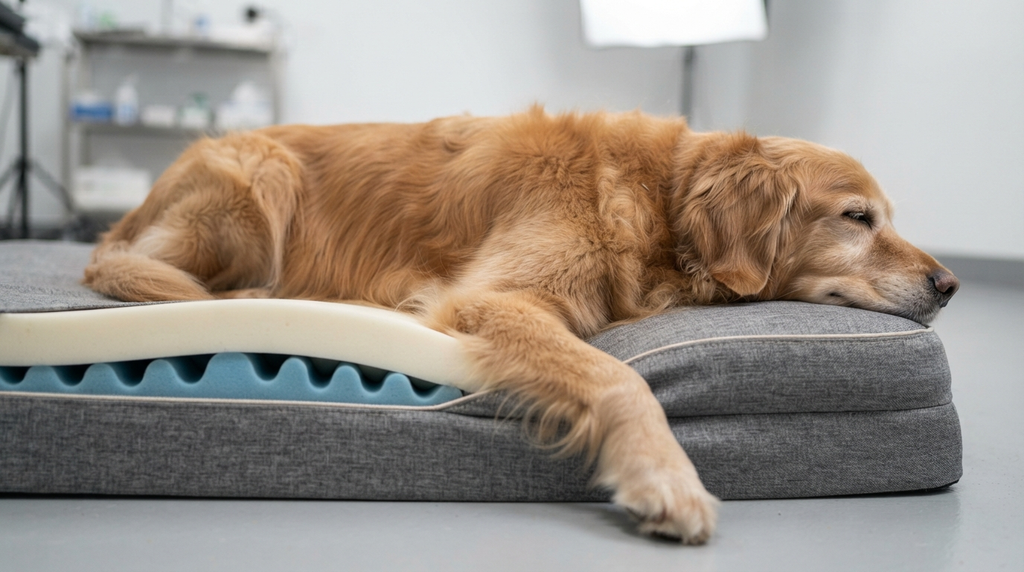
Egg-crate foam has a contoured surface of peaks and valleys. The shape can cushion the body and allow airflow around those contours, but it does not by itself show whether the foam will keep a heavier dog from sinking through to the base.
Flat foam, molded foam, layered foam, and loose-fill beds can feel quite different under the same dog. Loose filling can shift, while a foam surface may feel more uniform; compare how the bed holds your dog’s body rather than choosing by hand-feel alone.
Memory foam and orthopedic foam are not interchangeable technical terms. Memory foam describes a type of foam that responds to pressure and body heat, while orthopedic foam is often used as a broad product description. Look at the actual layers and overall construction instead of relying on either phrase as a performance guarantee.
| Construction | What to consider |
|---|---|
| Memory foam | Conforms closely and may distribute pressure, but can feel warmer. |
| Egg-crate foam | Its contoured surface can cushion and promote airflow around the raised sections; assess how it performs under your dog’s weight. |
| Flat or layered foam | Consider how evenly the surface supports your dog and whether the layers work together as a stable cushion. |
| Loose fill | Can feel softer or more adjustable, but the filling may move away from areas that need support. |
Match the bed to your dog’s body and sleeping position
Measure your dog while they are stretched out, then allow room for them to change position. A bed that feels cushioned but restricts movement can be a poor fit, particularly for a broad or long-bodied dog that needs space to lie naturally.
Side sleepers usually need enough width to extend their legs without pressing against the edges. Dogs that curl up may settle more readily in an enclosed shape, but choose for the way your dog actually sleeps rather than for the bed’s appearance.
Consider body weight and shape along with posture. A dog that sinks through the cushioning and rests against a hard base is not getting stable support from that bed, even if the top layer feels soft.
A larger sleeping surface can help a long or broad dog stretch without being crowded at the sides. Use your dog’s stretched-out measurement as a starting point, then account for how much room they need to turn, curl, or reposition.
Our size guide is linked above, and the key is to measure the dog rather than estimate from breed or weight alone. Dogs of similar weight can have different body shapes and sleeping habits, so the useful fit is the one that lets your own dog rest naturally.
Balance bolsters, entry height, and temperature
A bolster gives a dog a raised edge to lean against or rest their head on. It can suit a dog that likes to curl beside a boundary, but high sides may be awkward for a dog with limited mobility to step over.
A low, stable entry can be easier to use than a high-sided or raised design. If your dog is stiff, weak, or unsteady, prioritize an approach that lets them get in and out without a large step or a wobbling surface.
Some memory-foam surfaces may feel warm. A dog that runs hot or often moves between sleeping spots may prefer a less heat-retaining surface or a cooler place to rest.
Watch what your dog does after you place the bed in their usual resting area. Avoiding the bolster, hesitating at the edge, or moving away from the surface can all suggest that the design, height, or temperature is not a good match.
These features are trade-offs, not upgrades that suit every dog. A bolster may offer a comfortable headrest, while a flat, low-entry bed can make access simpler; your dog’s balance, habits, and comfort should guide the choice.
Assess support claims beyond the label
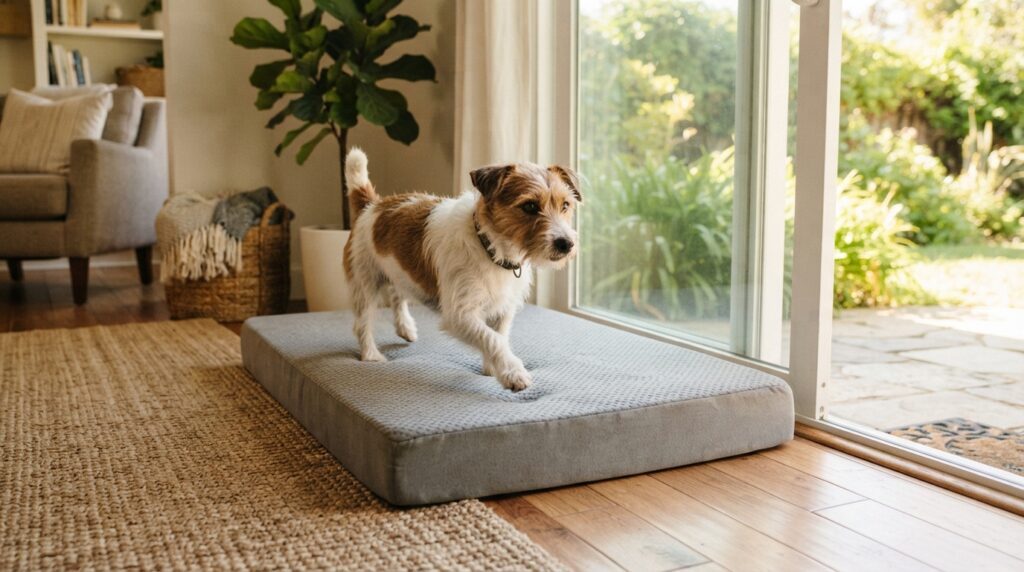
Look for a clear description of the foam layers, base, and cushioning design. Specific construction details tell you more about how a bed is built than a bare orthopedic claim does.
A material or safety certification may describe the material or the way it was tested. It does not, by itself, demonstrate pressure distribution or prove that a particular bed suits your dog’s body and sleeping position.
When your dog lies down, look at how their body settles. A stable, cushioned surface should support them without letting them sink through to the floor or a hard base.
Compare an orthopedic memory foam bed for dogs with a standard loose-fill bed or thin cushion by how evenly each one holds your dog’s weight. The softer-feeling option is not automatically the more supportive one.
There is no single best brand or construction for every dog. A useful comparison focuses on the materials and layers, the bed’s shape and access, and how your dog rests on it in everyday use.
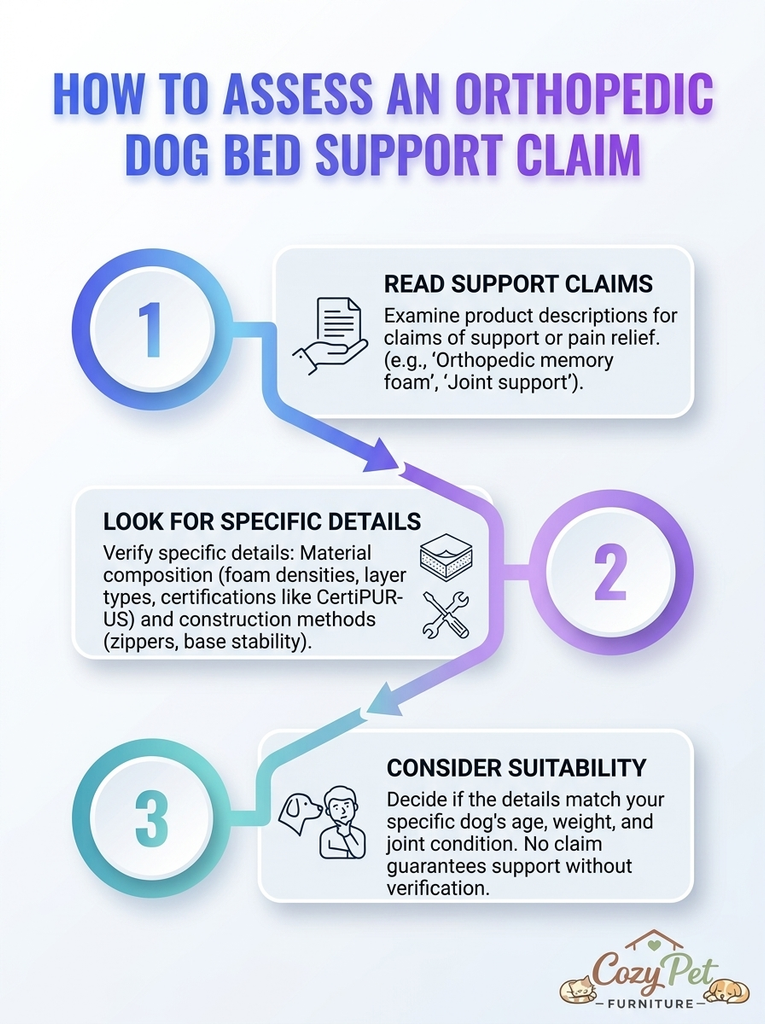
This infographic explains what orthopedic dog bed support claims may mean and what to check when assessing a bed. It highlights materials, construction, and fit.
Monitor comfort, compression, and cleanliness over time
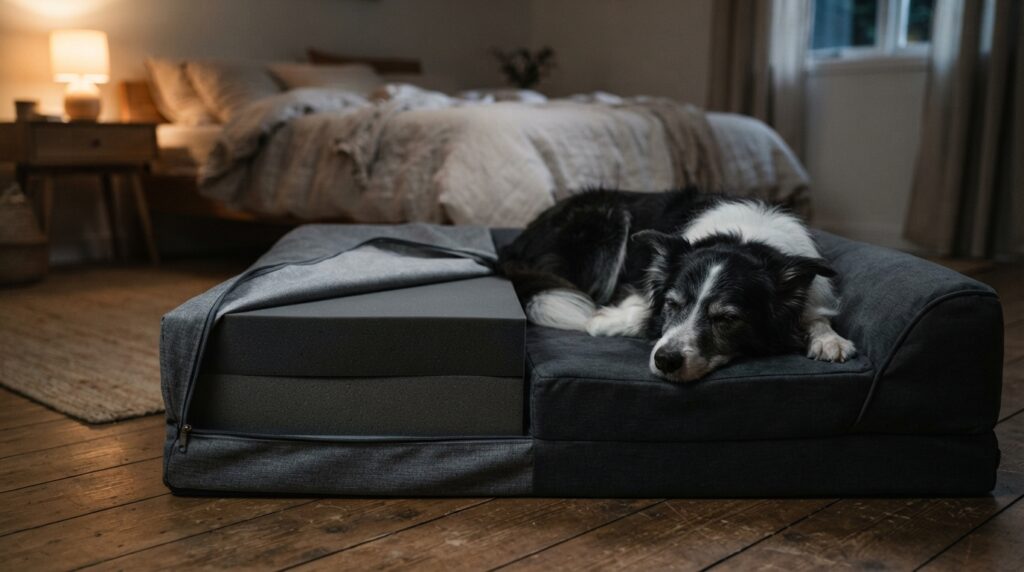
Check the bed for persistent dips, flattened areas, or foam that no longer springs back. These signs of foam compression can mean your dog is sinking through the cushion instead of resting on even support.
Changes in use can also tell you something. If your dog avoids a bed they once favored, keeps shifting position, or struggles to settle, the bed may no longer suit their comfort or mobility needs.
Choose a design that can be cleaned in a way that works for your household. A removable cover can make routine cleaning more manageable, and protecting foam from moisture helps keep the sleeping surface more hygienic.
Our guide to signs a dog bed may need replacing can help you reassess wear and comfort over time. Pay attention to the bed’s condition as well as your dog’s changing size, habits, and ability to use it.
Know when bedding is not enough
Older dogs and dogs with diagnosed joint or mobility conditions may appreciate a stable, well-cushioned resting surface. Comfort varies from dog to dog, and a bed cannot treat the underlying condition.
Persistent pain, worsening stiffness, reluctance to move, or difficulty standing calls for veterinary assessment rather than a bedding change alone. The same applies when your dog’s movement changes suddenly or repeatedly.
Repeated avoidance of movement or a new struggle to get up can signal a change in mobility. Notice what has changed and discuss persistent or worsening signs with a veterinarian.
For dog beds for older dogs or dogs with arthritis, choose between supportive foam and a standard cushion based on fit, stability, access, and observed comfort. Not every dog needs the same construction, and a simple bed that your dog can use comfortably may be the better choice.
Frequently Asked Questions
Are orthopedic dog beds suitable for puppies?
Yes, a puppy can use an orthopedic dog bed if its size and shape suit them. Because puppies grow quickly and may chew or have accidents, choose a bed that is practical to clean and reassess the fit as your puppy gets bigger.
How long does it usually take a dog to get used to a new bed?
There is no fixed adjustment period: some dogs settle in right away, while others need repeated chances to explore the new surface. Put the bed in a familiar resting area and let your dog approach it at their own pace.
Can two dogs share one orthopedic bed comfortably?
They can if both dogs have enough room to lie in their preferred positions without crowding or pushing each other off the cushion. If one dog guards the bed or either dog sleeps better undisturbed, separate resting spots may work better.
Should a dog recovering from surgery use an orthopedic bed?
Ask your veterinarian which bed setup suits the procedure and recovery plan. Some dogs need specific limits on jumping, movement, or contact with an incision, so comfort and the recovery instructions both matter.
Can I place an orthopedic dog bed on a raised frame?
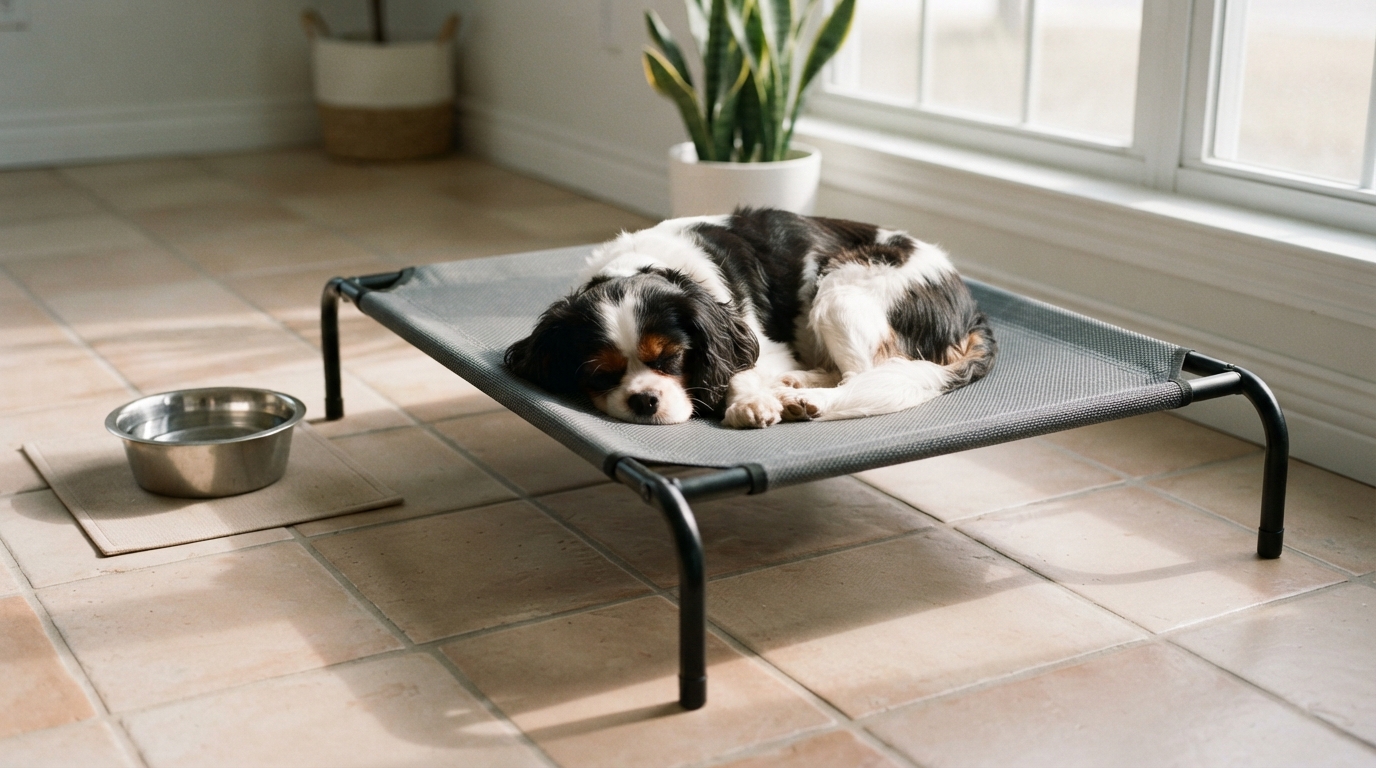
Only use a frame that stays stable under your dog’s weight and does not flex or rock as they move. A raised sleeping surface also adds a step, so consider whether your dog can climb onto it safely and comfortably.
What if my dog prefers the floor to a new foam bed?
That preference can reflect temperature, surface feel, location, or the bed’s shape rather than a need for more cushioning. Try observing where your dog chooses to rest and whether they return to the foam bed at different times of day.
Conclusion
Orthopedic Dog Beds: What Support Claims Actually Mean is best understood by looking beyond the label. Consider the foam and base, the space and entry height, how your dog’s body settles, and whether the bed stays comfortable and clean over time.
For dog beds for elderly dogs, arthritic dogs, and dogs with other mobility needs, fit and access matter as much as cushioning. Choose the bed your dog can use comfortably, and seek veterinary help for pain or persistent changes in movement.