Cooling Dog Beds: When an Elevated Bed Makes Sense depends on how your dog likes to rest, how easily they can get on and off, and whether air can actually move around the bed. A raised dog bed can make a resting spot feel less stuffy, but it is not the right fit for every dog or a substitute for shade, water, and a cool room.
Key Takeaways
| Question | What to know |
|---|---|
| Do elevated beds help dogs stay cool? | They allow airflow beneath the sleeping surface, which can make it feel less insulating. They do not actively chill a dog. |
| When does a dog cot make sense? | Consider one for a dog that likes cool spots, stretches out, and settles comfortably on a firm, slightly flexible surface. |
| What size should I choose? | Measure your dog while sprawled and compare those measurements with the usable sleeping surface. Our guide to choosing the right bed size explains how to find a comfortable fit. |
| What should I check before use? | Check the weight capacity, fabric tension, frame stability, entry height, and any gaps that could catch a paw or collar. |
| Can I use a cooling cot outdoors? | Yes, if the bed stays shaded, the ground beneath it is not hot, and the cot is protected from rain and harsh weather. |
| Is a cooling bed treatment for heat stress? | No. A cooling dog bed is a comfort option. Serious signs of overheating need prompt veterinary attention. |
| When should I replace a dog bed? | Flattened support, tears, persistent odors, or a bed your dog no longer uses can be signs it is time for a change. See our advice on when to replace a dog bed. |
How an elevated bed cools, and what it cannot do
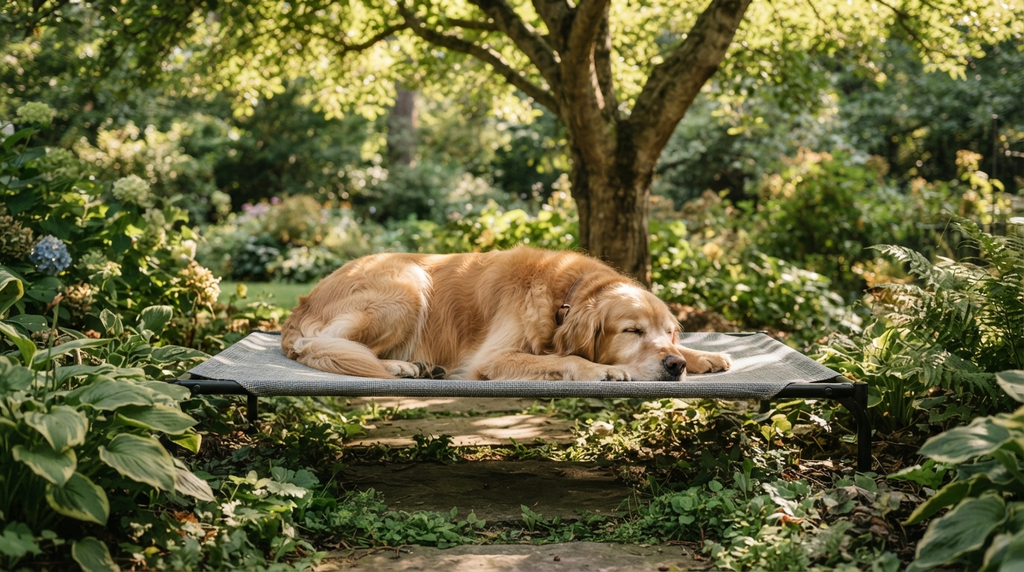
An elevated dog bed holds your dog above the floor on a frame, often with a taut, breathable mesh sleeping surface. That gap lets air move beneath the dog instead of allowing body heat to build up against a floor or thick cushion.
The benefit depends on airflow in the room. If the space beneath the cot is blocked, the bed is crowded against furniture, or the room itself is hot and stagnant, the raised design has little moving air to work with.
Do elevated beds help dogs stay cool? They can offer a less insulating place to rest, but breathable mesh does not actively lower body temperature like a chilled surface might. A cool floor also gives direct contact with a cooler surface, while a cooling mat, including gel or water-filled types, works through contact with its top surface.
| Resting option | How it feels and works | Consider it when |
|---|---|---|
| Elevated dog bed | Air can circulate beneath a firm, breathable surface. | Your dog likes to stretch out and settles comfortably on mesh. |
| Cooling mat or cooling pad | The dog rests in contact with a cooler-feeling surface; the mechanism varies by mat. | Your dog prefers a floor-level surface or seeks direct contact cooling. |
| Cool floor | Provides direct contact with tile, stone, or another cool surface. | Your dog already chooses a cool patch of floor. |
| Padded bed | Offers more cushioning, but can feel warmer against the body. | Your dog prefers a softer place to curl up or needs more padding. |
To choose between a cooling mat for dogs and a cot, watch where and how your dog rests. A dog that sprawls on tile may appreciate a breathable raised bed, while one that presses its body against a cool surface may choose a gel cooling bed or another contact-cooling option instead.
Panting is one of the most important ways dogs regulate body temperature. Today’s Veterinary Practice explains that evaporation through panting is most effective when ambient temperature reaches 89.6°F (32°C) and becomes less efficient with high ambient humidity.
Water immersion provided the most rapid cooling, even with ambient-temperature water.
Source: Animals
Airflow around a resting area may support comfort, but it is not treatment for overheating. Hot rooms, high humidity, and direct sun can limit how cool an elevated bed feels.
When a raised cot suits your dog and your home
A raised cot may suit a dog that seeks cooler resting spots, lies stretched out, and is happy to settle on a firm, slightly flexible surface. A dog that burrows under blankets or curls into plush bedding may prefer a cushioned bed instead.
Think about where the cot will sit, not just how it looks in a product photo. Leave open space beneath and around it, and avoid pushing it against a wall or squeezing it between furniture where the air is still.
Offer the cot alongside your dog’s familiar resting place and notice which one they choose at different times of day. Relaxed, voluntary use is a better sign of comfort than staying on the bed only because you asked.
Keep other comfort options available, including shade, fresh water, and a cooler floor-level place to rest. A cooling cot is one part of a pet-friendly home, not a way to make an overheated room safe.
Size the sleeping surface and assess stability together
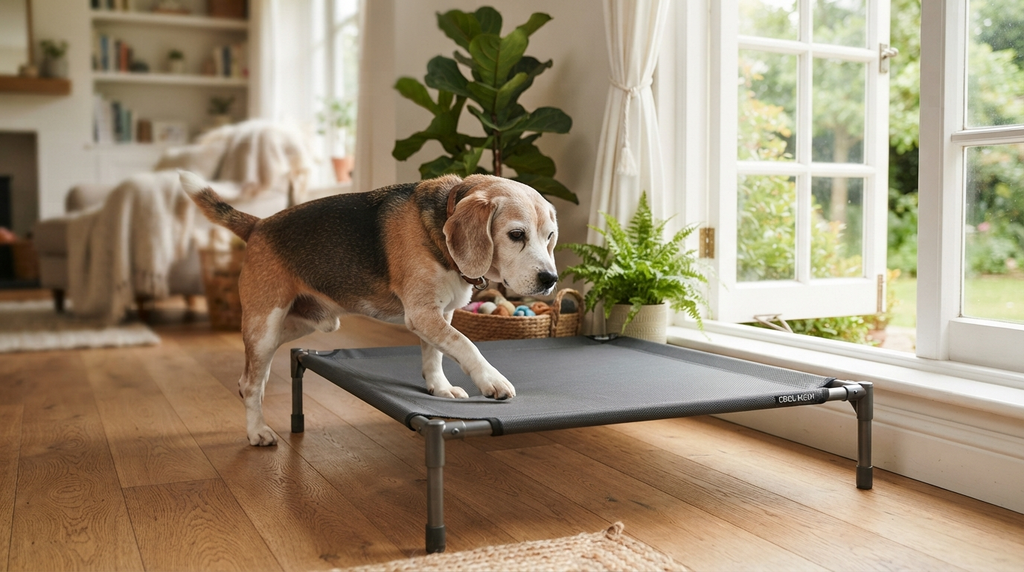
Measure your dog while they are lying in their usual sprawled position, then compare that length and width with the usable sleeping surface. The frame’s outside dimensions do not tell you how much room your dog has to stretch, turn, or shift position without edging off the bed.
For cooling mats for large dogs or a large dog cot, check the sleeping area and the frame’s stated weight capacity together. The fabric should stay evenly tensioned when your dog lies down; a sagging or undersized surface can make resting less comfortable and the bed less stable.
- Press the corners and edges before regular use. Look for rocking, shifting, or movement at the joints.
- Inspect openings around the frame and mesh where paws or collars could catch.
- Choose a level spot with enough room for your dog to approach, turn around, and step off.
- Consider entry height as well as the bed’s overall size, especially if your dog has short legs or a cautious step.
Size and stability belong in the same decision. A roomy bed is not a good fit if the frame wobbles, and a stable frame does not help if your dog has to balance on a narrow surface.
Did You Know?
In a recent canine exercise study comparing passive cooling and a chilled (39.2 °F, 4 °C) cooling mat, water immersion provided the most rapid cooling, even with ambient temperature water.
Source: Animals
Balance airflow with access, comfort, and support
For puppies, senior dogs, short-legged dogs, or dogs with weak balance, look for a low entry and a frame that does not wobble. If stepping up or down looks uncertain, a low mat or floor-level bed may be safer than a raised surface.
For a dog with arthritis or another joint concern, prioritize easy access and a stable, supportive place to rest over airflow alone. Avoid asking the dog to jump on or off the cot, and speak with your veterinarian if pain or mobility problems affect daily movement.
Taut mesh often feels firmer and less cushioned than a padded bed. Notice whether your dog settles and stays relaxed or repeatedly shifts position as if the surface is uncomfortable.
Let a reluctant dog investigate and choose freely. Stop using the cot if your dog struggles to climb, slips, or seems uncomfortable; a cooling bed only helps if the dog can rest on it safely.
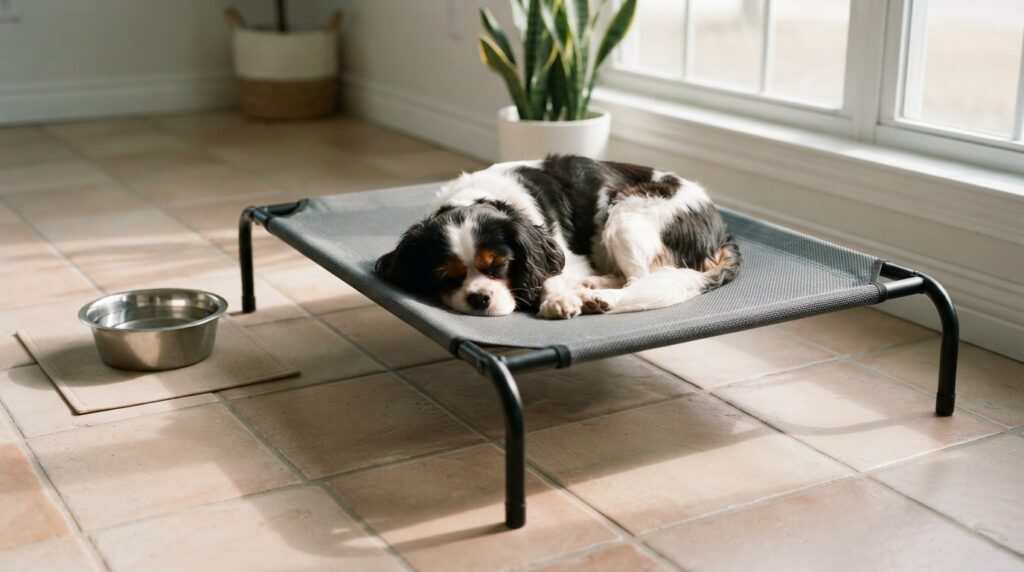
Choose materials and placement for the conditions
Breathable mesh and padded fabric offer different trade-offs. Mesh encourages airflow and has less cushioning, while padding feels softer but can hold more warmth against the body.
Pay attention to fabric tension, frame joints, and exposed edges as the bed gets used. Repair or stop using a cot with loose parts, unsafe gaps, sagging fabric, or damage from chewing.
For outdoor use, choose a spot where shade remains available as the sun moves. Check the ground beneath the frame too: direct sun can heat the mesh even when the bed is raised, and a hot surface under the cot can make the resting area uncomfortable.
Keep an outdoor cooling mat or cot protected from rain and harsh weather. If the fabric becomes hot or damp, bring the bed to a ventilated, comfortable area before your dog uses it again.
Set it up safely and let your dog choose it
Place the dog cot on a level, non-slip surface with a clear route on and off. Leave space beneath the bed so air can circulate; blocking that gap removes the main airflow advantage of an elevated design.
Start by setting the cot beside a familiar resting place. Reward calm investigation, then let your dog get on and off at their own pace rather than lifting them onto the surface or coaxing them to stay.
Watch your dog over several resting sessions. Relaxed settling and voluntary returns suggest the fit is working, while hesitation, repeated shifting, or difficulty getting down are reasons to change the setup or choose another type of bed.
Clean the cot according to the care instructions for its materials. After washing, make sure the fabric is fully dry and securely attached before letting your dog use it.
Did You Know?
Dogs who experience heat exhaustion may have a body temperature roughly between 103 and 106 degrees Fahrenheit.
Source: Texas A&M Stories
Know when panting calls for urgent action
A cooling dog bed is for comfort, not for treating heat stress. If your dog remains excessively panty, weak, confused, unsteady, is vomiting, or otherwise seems unwell, move them out of the heat and contact a veterinarian urgently.
Texas A&M Stories describes heatstroke signs in dogs as including a body temperature greater than 106 degrees Fahrenheit. Do not wait to take a temperature if serious signs appear; an elevated bed cannot prevent or treat heatstroke.
Frequently Asked Questions
Can dogs with thick or double coats benefit from an elevated cooling bed?
Yes, a dog with a thick or double coat may find a breathable cot comfortable if it likes stretching out and choosing breezy resting spots. Coat type alone does not tell you whether your dog will prefer mesh, so watch its choices in warm weather.
Can an elevated cooling bed be used inside a crate?
It can work if the cot fits securely inside the crate and leaves enough room for your dog to stand, turn, and lie down naturally. Keep the crate door and the dog’s collar clear of the frame so neither can snag during entry or exit.
Can a cooling cot help treat hot spots or other skin problems?
No, a cot does not treat the cause of a hot spot, rash, or other skin problem. Ask your veterinarian about irritated or damaged skin, especially if your dog keeps licking or scratching it.
Can two dogs share one elevated bed?
Only if both dogs can lie comfortably without crowding and the bed’s capacity accounts for their combined weight. Also consider whether either dog guards resting places; separate beds give each dog a clear space to settle.
Can I put a cooling mat on top of an elevated dog bed?
Only use the combination if the mat lies flat and stays secure without making the surface unstable. A mat covering breathable mesh also reduces airflow through the cot, so the pairing may change how the raised bed feels.
Conclusion
Cooling Dog Beds: When an Elevated Bed Makes Sense comes down to your dog’s resting habits, access needs, and the air and shade available where the bed will sit. A stable, correctly sized cot can offer a breathable place to rest, while a cooling mat, padded bed, or cool floor may suit a dog that prefers direct contact or more cushioning.
Offer the options without pressure and pay attention to how your dog uses them. Keep water, shade, and a comfortable indoor alternative available, and treat signs of overheating as a veterinary concern rather than a bedding problem.