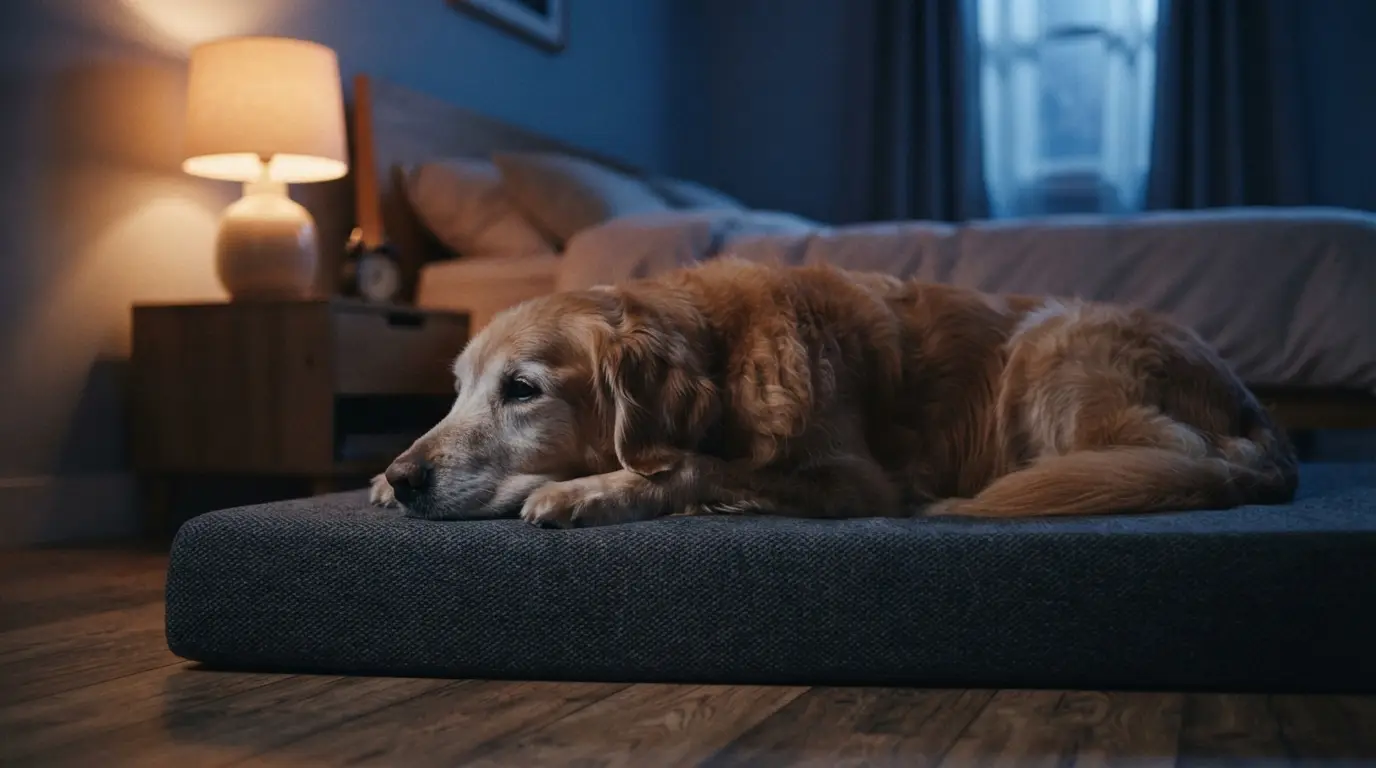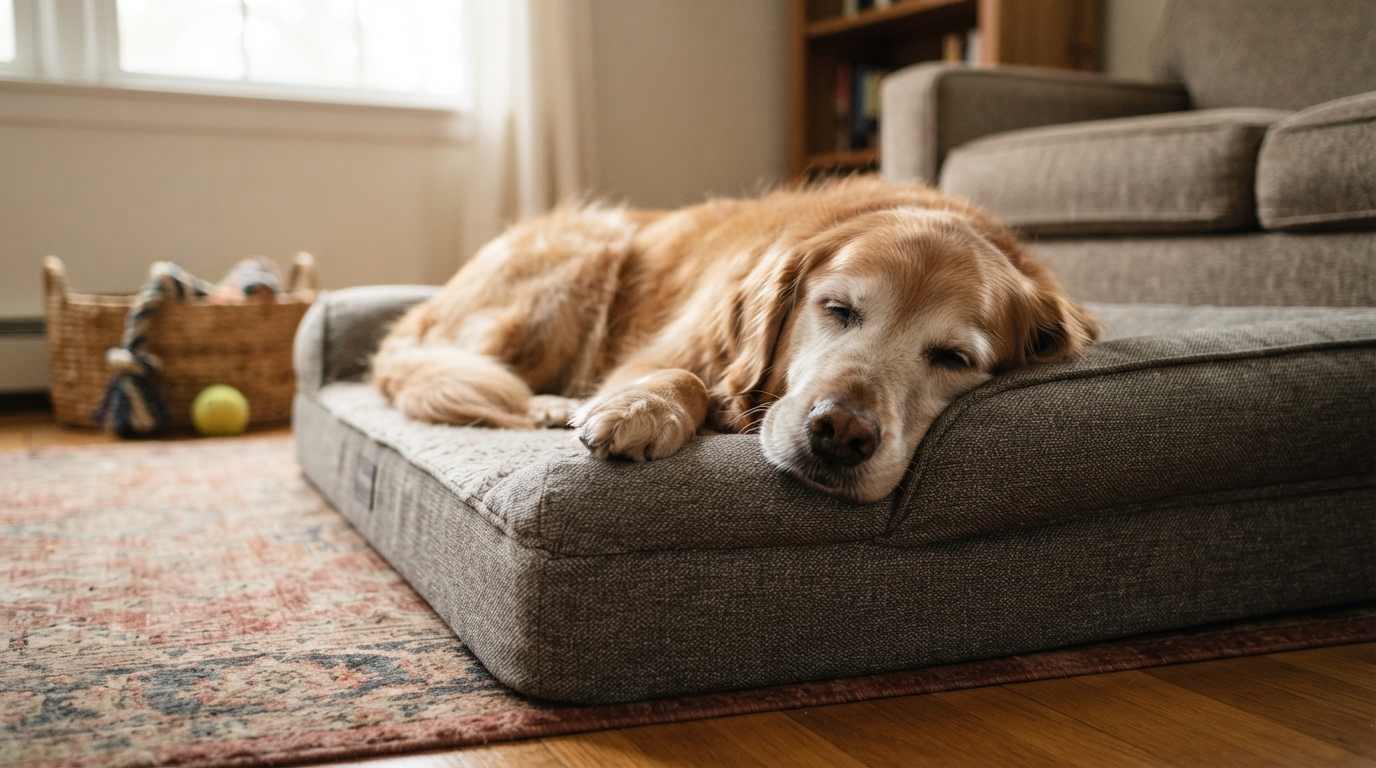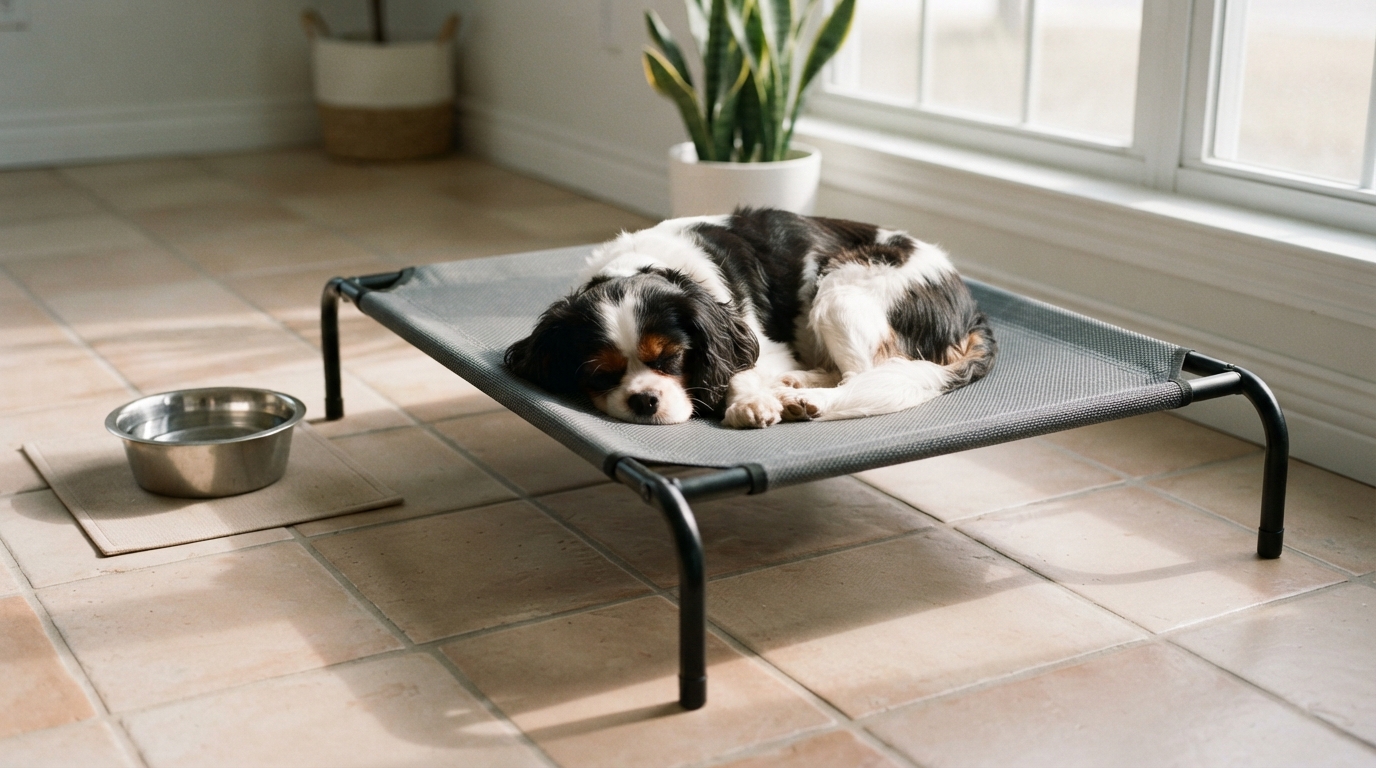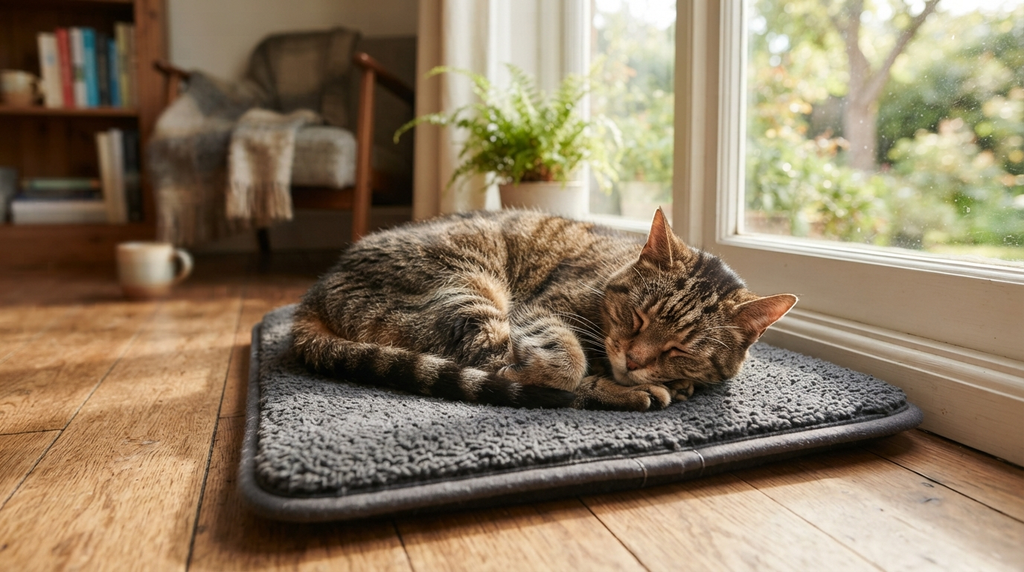
Choosing a heated cat bed means balancing warmth with safety, a comfortable fit, and the way your cat actually likes to sleep. The best heated cat bed for your home may be electric or self-warming, open or enclosed, depending on your cat’s health, habits, and favorite resting spot.
Key Takeaways
| What to consider | A practical starting point |
|---|---|
| Heat source | Choose an electric pet bed for powered warmth or a self-warming bed when insulation is enough. |
| Electrical safety | Look for independent safety certification, protect the cord, and use the bed only as designed. |
| Size and sleep style | Compare your cat’s stretched-out body with the usable heated surface, not just the bed’s outer dimensions. |
| Mobility and comfort | Choose a stable, easy-entry bed that lets your cat move away from warmth without effort. |
| Placement | Start with a quiet, familiar spot away from drafts, busy walkways, and cord hazards. |
| Helping your cat adjust | Let your cat explore at their own pace and keep their usual sleeping place available. |
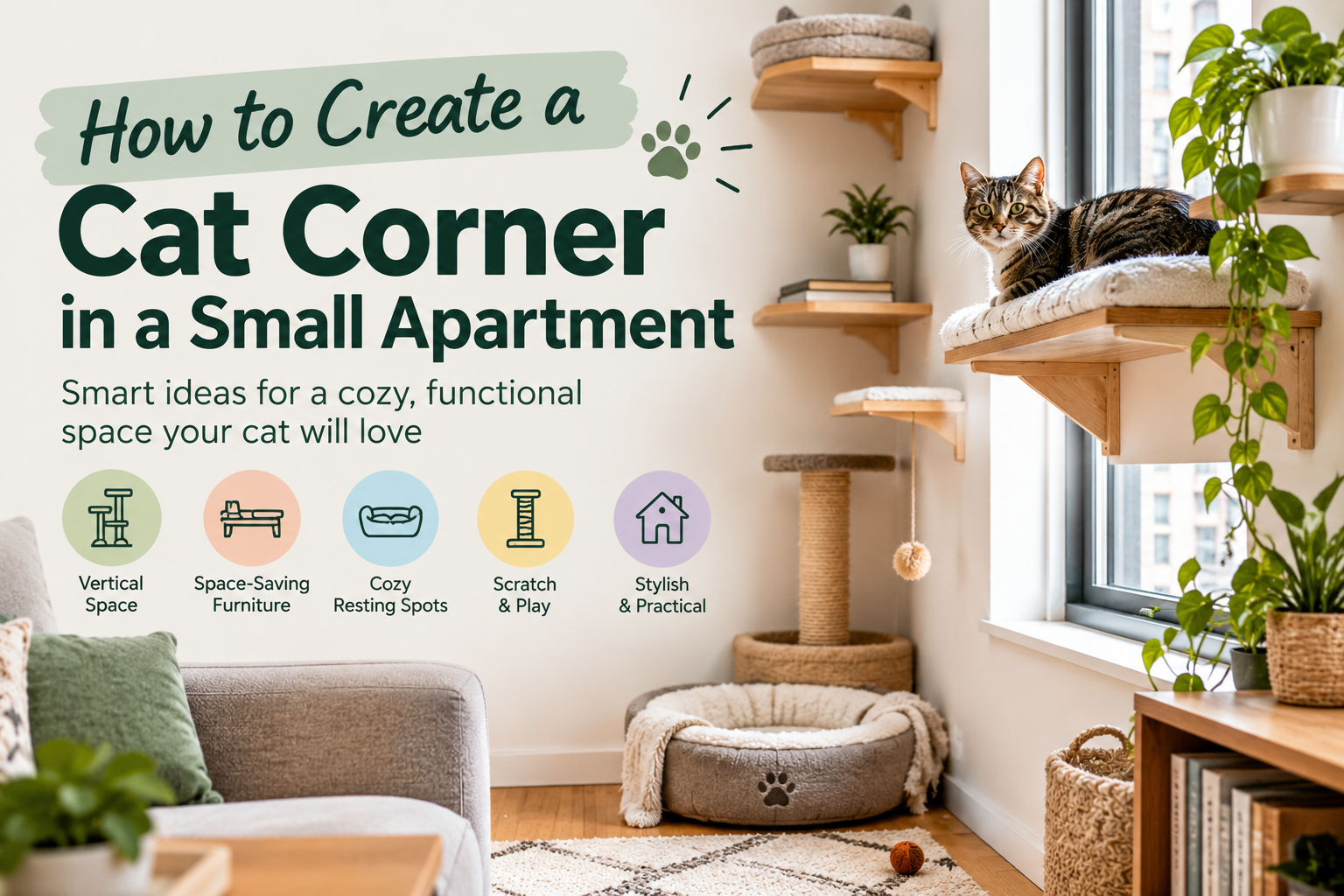
Making a comfortable resting area work in a small home can be simple too. Our guide to creating a cat corner in a small apartment has ideas for fitting a dedicated cat space into a compact room.
Choose between electric and self-warming beds
An electric heated bed uses a powered heating element to provide warmth, often with a thermostat to regulate its temperature. Choose a bed made specifically for pets rather than assuming a human heating pad or electric blanket is suitable for a cat to use unsupervised.
A self-warming bed uses insulating materials to reflect some of your cat’s own body heat. It needs no electricity, so it’s a simpler choice when your cat wants a cozier surface but doesn’t need a powered heat source.
| Bed type | How it provides warmth | What to consider |
|---|---|---|
| Electric bed or heated cat mat | A powered heating element warms the bed. | Electrical safety, cord placement, and the maker’s use instructions. |
| Self-warming bed | Insulation reflects some of your cat’s body heat. | It needs no power, but may provide less warmth than an electric bed. |
| Rechargeable bed | A battery powers the heating function. | Charging, battery use, and safe operation according to the maker’s instructions. |
Rechargeable beds are still powered products, so consider how often they need charging and follow their instructions for use. Whatever the heat source, look for a design that gives your cat a cooler part of the bed or another easy place to move to.
There isn’t one best heated cat bed for every cat. The right choice depends on the kind of warmth your cat needs and whether the bed’s shape, surface, and safety features fit your home.
Prioritize electrical safety and easy escape
Choose an electric pet bed with a safety certification from a recognized independent testing organization. Use the power supply as designed, and check that the certification mark applies to the product rather than relying on a general claim that it is safe.
Keep cords out of reach of chewing and avoid trapping them under furniture or rugs. A chew-resistant cord can help reduce damage, but it still needs careful placement; stop using the bed if you find damage to a cord, plug, seam, or heating element.
Use the bed only in the locations and arrangements allowed by its maker, and keep electrical parts away from moisture. Cats and electric blankets are not a reason to improvise with a household heating pad or blanket: a pet-specific product is designed for its intended use.
Potential risks include damaged wiring, moisture near electrical parts, and prolonged contact with warmth when a cat cannot move away. Make sure your cat can leave the heated area easily, especially if they have limited mobility, reduced awareness, or difficulty changing position.
Heating pads and electric blankets cause almost 500 fires each year.
Source: Electrical Safety Foundation International
If you’re looking at heated cat houses for outdoor cats or an outdoor heating pad for cats, choose equipment specifically intended for outdoor conditions. An indoor electric bed or mat isn’t a substitute for a weather-appropriate setup.
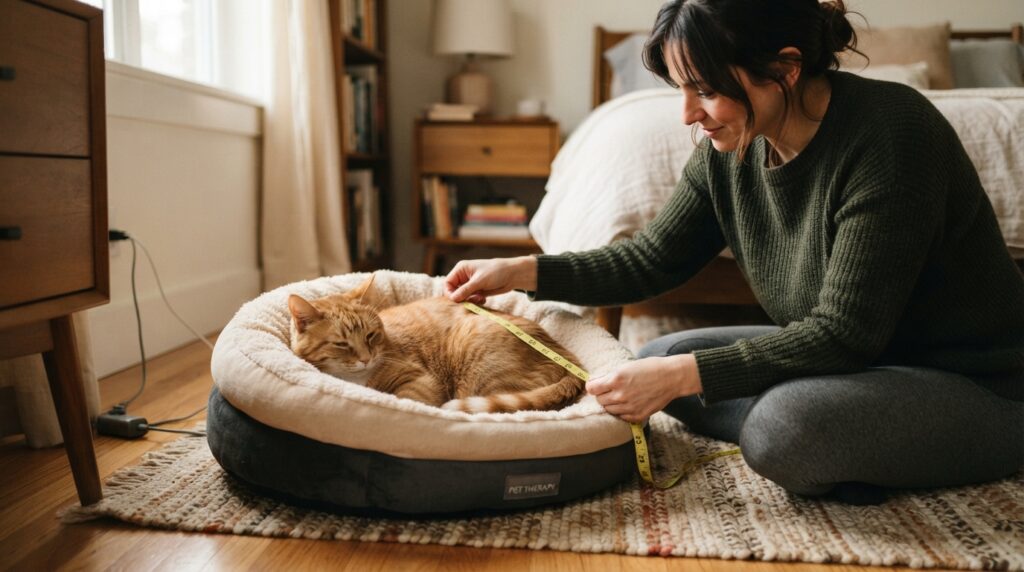
Match the bed’s shape and usable surface to sleep style
Pay attention to where your cat already likes to sleep. A cat that curls up may enjoy a round bed with raised sides, while a cat that sprawls usually needs a more open surface with enough heated space for their body.
For a simple fit check, measure your cat while they’re stretched out, then compare that length with the usable heated surface inside the bed. Leave room to turn around and settle; bolsters, walls, and covers can make the sleeping area smaller than the bed’s outer dimensions suggest.
An enclosed cave bed can suit a cat that likes to hide or burrow, while an open heated cat mat gives a cat that prefers an unobstructed view easy access in and out. Our [Cat Cave vs Donut Bed: Which One Will Your Cat Prefer?] feature points readers toward styles that suit different sleeping preferences, and our cat cave and donut bed comparison explains how those shapes support different habits.
If your cats share a bed, make sure there’s usable room for each to lie down without crowding. If they prefer space, separate beds give each cat a place to settle on their own terms.
Did You Know?
For cats, the thermoneutral zone is believed to be between 86 to 101 degrees Fahrenheit.
Source: American Veterinary Society of Animal Behavior
Account for age, joint comfort, and mobility
For a cat with stiff joints or limited mobility, look for a low entry and a stable surface. An easy step in and out takes less effort than climbing over a tall bolster or balancing on a soft, shifting bed.
Choose cushioning that supports your cat without letting them sink so deeply that standing becomes difficult. A cat with joint pain may appreciate even cushioning, but a high-sided or restrictive shape can make access harder.
A cat that has trouble sensing warmth or moving away from it needs an especially clear route to an unheated resting area. If a health condition affects your cat’s heat tolerance or mobility, ask your veterinarian for guidance rather than using bed choice as a substitute for care.
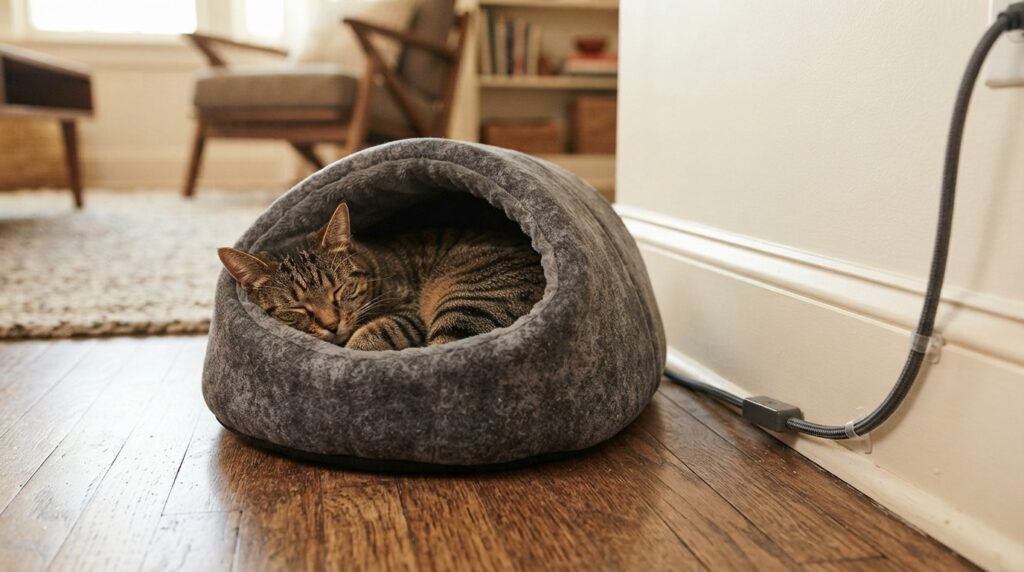
Consider fabric, cushioning, and cleaning
Choose a soft, durable sleeping surface and cushioning that suits your cat’s usual posture. A removable, washable cover can make routine cleaning easier, and a tight weave may be simpler to brush or vacuum than a loose, looped texture.
Wash only the parts designed to be washed. Remove the heater only if the bed is specifically designed for that, and never submerge or wash electrical components.
Let washed parts dry fully before reassembling or reconnecting the bed. Moisture near electrical components can create a hazard, so don’t rush the drying step.
Inspect the seams, sleeping surface, and cord regularly for wear. It’s also important to remember that no fabric is completely pet-proof; retire the bed if damage exposes wiring or compromises the heating element.
Put the bed in a calm, suitable spot
Choose a quiet, familiar location away from drafts and heavy foot traffic. Your cat can rest more comfortably when they aren’t repeatedly disturbed by people passing through or nearby noise.
Set the bed on a stable surface with a clear route in and out, especially if your cat moves less easily than they used to. Think about whether your cat prefers a view or a bit of elevation, while keeping any electric bed away from cords that could be chewed, trapped, or exposed to moisture.
For more help deciding between a window, quiet corner, or other familiar resting place, see Where Should You Put a Cat Bed?. The guide covers how noise, privacy, access, and your cat’s preferences can shape the choice.
Did You Know?
The National Research Council suggests that the thermoneutral zone for cats is 30O-38OC.
Source: Veterinary Ireland Journal
Introduce the new bed gradually
Put the new bed near an existing favorite sleeping spot so the location already feels familiar. If the bed’s instructions allow it, add a blanket with a familiar smell to make the surface less new.
Let your cat approach, sniff, and leave whenever they choose. Praise or a treat can reward voluntary exploration, and keeping their usual sleeping option available avoids turning the new bed into a forced change.
If your cat ignores the bed, try a quieter or more familiar location before switching its shape or heat source. A cat’s sleeping preference can be particular, so give them time to decide whether the new spot suits them.
Frequently Asked Questions
Can a heated cat bed be used during a power outage?
An electric heated cat bed stops providing powered warmth during an outage, while a self-warming bed continues to insulate using your cat’s body heat. Don’t connect an electric bed to an improvised power source.
Do heated cat beds noticeably increase electricity use?
To estimate electricity use, multiply the bed’s rated wattage by the hours it runs, then divide by 1,000 to get kilowatt-hours. A thermostat may cycle the heater rather than keep it running continuously, so actual use depends on the bed’s operation.
Can kittens use heated cat beds safely?
Kittens need a sleeping area suited to their age and condition, and very young or unwell kittens may need specific temperature guidance. Ask a veterinarian how to provide warmth for an orphaned kitten or one that isn’t thriving.
Is a heated cat bed useful during warm weather?
Your cat may use it less when the room and sleeping surface already feel comfortable. Keep their other resting options available so they can choose a cooler place instead.
Is it safe to leave a heated cat bed on all the time?
Leave an electric bed on continuously only when its maker permits that use. A thermostat doesn’t make a damaged bed safe, so check its condition as part of regular use.
What should I do if my cat seems uncomfortable on a heated bed?
Let your cat leave the warm area and settle somewhere cooler, then observe whether the behavior happens again. If you notice a change in comfort, movement, or general health, contact your veterinarian.
What are the potential risks of using a heated cat bed?
The main risks are electrical damage, moisture near electrical parts, and a cat being unable to leave the warm area.
Conclusion
How to Choose a Heated Cat Bed: Safety, Size, and Sleeping Preferences comes down to matching the heat source and bed shape to your cat, then checking that the sleeping surface is roomy, easy to leave, and simple to maintain. Look for a safe heated cat bed that fits your cat’s health and habits, and place it where they already feel comfortable resting.