When you compare a memory foam or bolster dog bed, what changes at bedtime is how the surface cushions your dog and how the bed’s shape supports its usual resting position. The right fit depends on whether your dog needs pressure relief, room to stretch, a raised edge to lean on, or easier access.
Key Takeaways
- Memory foam is a cushioning material; a bolster is a raised edge. They can be used together, so the choice is not always one or the other.
- Start with your dog’s resting habits. A dog that leans or rests its head on a raised side may enjoy a bolster, while a sprawler needs plenty of uninterrupted sleeping surface.
- Prioritize stable support for joint comfort. Our guide to what orthopedic dog-bed support claims mean explains how cushioning and support differ.
- Compare the usable surface, not just the outer dimensions. These tips for choosing the right bed size help you account for raised sides and stretching room.
- Balance warmth with airflow. A covered, cozy bed may suit a dog that seeks warmth, while a more open surface can feel better to a dog that overheats. Read our guide to when an elevated cooling bed makes sense.
- Watch how the bed performs over time. Persistent flattened areas and changes in your dog’s willingness to settle can signal that support has faded. Learn more about when to replace a dog bed.
What changes when your dog settles in
Memory foam describes a cushioning material. It responds to body heat and pressure, then conforms around the body to spread pressure over a wider area. A memory foam dog bed can have a flat surface, raised sides, or both.
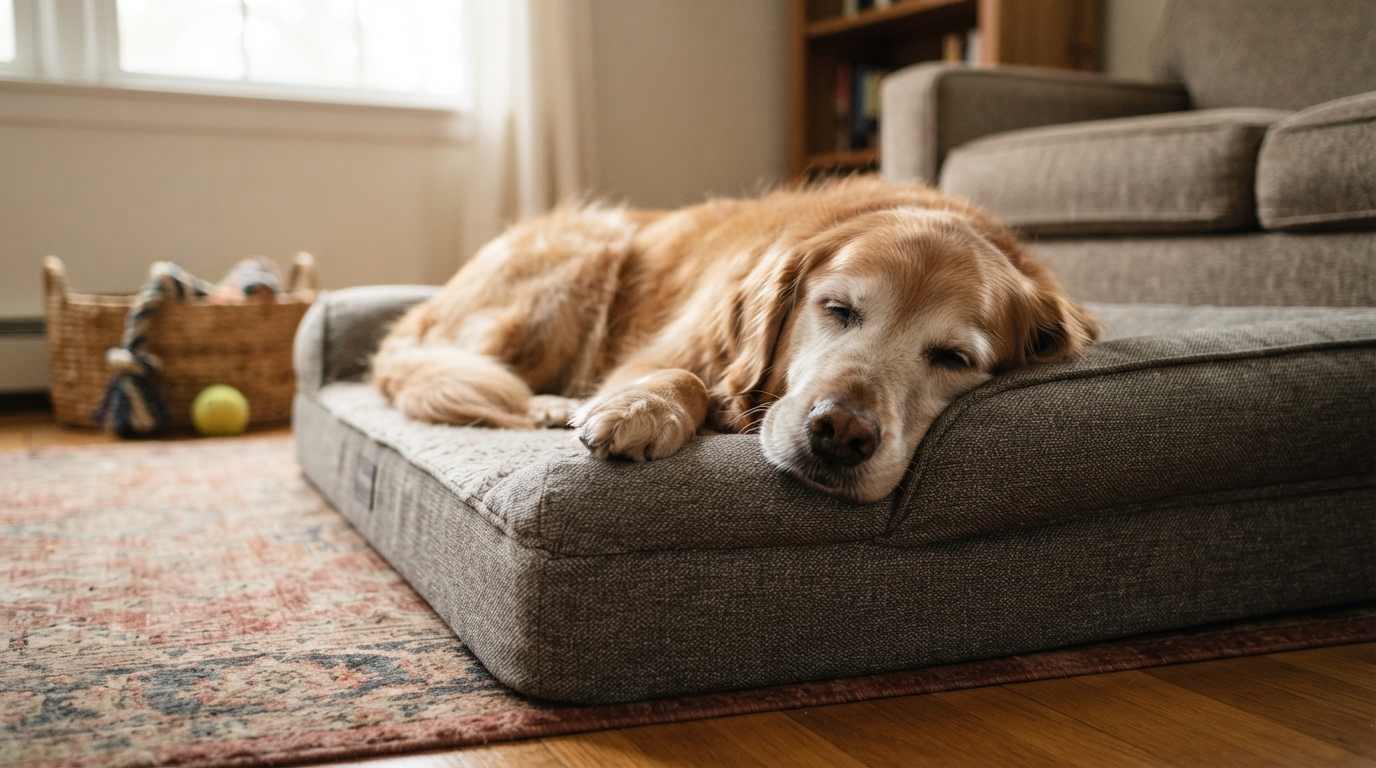
A bolster describes the bed’s shape, not its foam type. Its raised edge gives a dog somewhere to rest its head or lean against, while the central sleeping surface may use a different filling.
That difference matters when you compare an orthopedic dog bed with a bolster dog bed. Orthopedic describes a support function; memory foam describes a cushioning material. They are not competing categories. A bed may use memory foam for cushioning and bolsters for head and neck support.
Dogs sleep between 12 to 18 hours a day, depending on age.
Dogs sleep between 12 to 18 hours a day, depending on age.
Source: American Kennel Club
Because rest takes up so much of a dog’s routine, choose a comfortable, supportive surface that suits how your dog actually settles. A soft top can feel pleasant at first touch, but it does not guarantee that the bed will support your dog evenly.
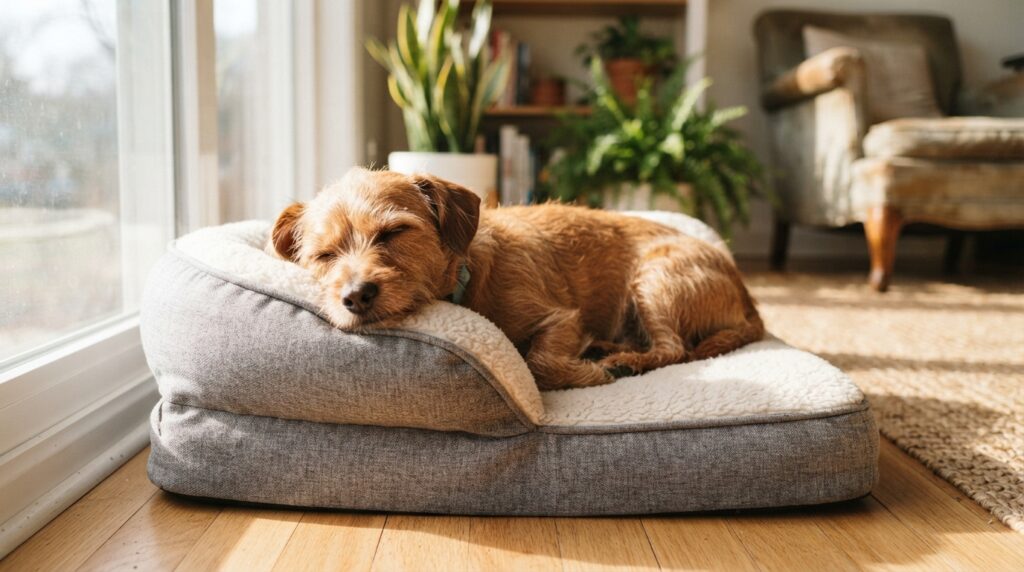
Match the shape to your dog’s sleeping position
Do dogs prefer bolster beds? Some do, especially dogs that repeatedly lean against an edge or rest their head on one. Others settle on an open surface and rarely use the raised sides, so observe your dog rather than choosing by appearance alone.
| Sleeping habit | What to look for | Why it matters |
|---|---|---|
| Leaning or resting the head on an edge | A bolster with a comfortable edge and enough central space | It offers a familiar boundary and a place to settle the head. |
| Stretching out across the bed | A wide, open sleeping surface | Raised sides take up room, so the usable area can be smaller than the outside dimensions suggest. |
| Changing positions during rest | A bed with room for both a curled posture and a full stretch | Your dog can reposition without being pushed onto an edge or running out of space. |
A curled sleeper may appreciate the boundary of a bolster, but curling alone does not prove that the dog wants one. Dogs change positions, so notice whether yours also leans, stretches, or shifts during rest.
Burrowing is another habit to observe. A dog that noses into blankets may prefer a soft, sheltered-feeling area, but the bed should still leave enough room to change position without getting wedged between raised sides.
When your dog changes sleeping positions often, size the bed for its longest usual stretch as well as its curled posture. A flat memory foam surface may suit a dog that sprawls, while a combination of a supportive center and bolstered edges can work for a dog that stretches and leans.
Separate joint support from a preference for bolsters
For a dog with joint discomfort or reduced mobility, prioritize an evenly supportive surface that does not compress until the dog sinks through to the floor. Softness alone does not equal support. The surface needs to cushion the body while holding its shape under your dog’s weight.
A bolster may help a dog that likes to lean or rest its head, but it does not replace support beneath the body. A bed can combine raised sides with a supportive foam surface, allowing the edge and center to serve different comfort needs.
Pay attention to how easy the bed is to enter. A high or firm raised edge can be difficult for a dog with limited mobility to step over, even if the dog likes resting against it once inside.
Senior pets may need both a supportive sleep surface and an easy entry. If your dog has started hesitating before lying down or seems less comfortable getting up, reassess the bed’s support and access instead of assuming that a softer surface will solve the problem.
Choose the bed for the body first and the edge second. A bolster can add a useful resting place, but the central surface still needs to support your dog.
Size the sleeping surface, not just the whole bed
Measure your dog while it is stretched out in its usual sleeping posture, then allow room to shift. Measure nose to the base of the tail along the body, and use that as a starting point for judging the central sleep area.
Compare your dog’s full resting length with the usable flat surface, not just the bed’s outside dimensions. Raised sides occupy space, and a generous-looking bolster dog bed can leave less room in the middle than a flat bed of similar exterior size.
If your dog likes bolsters, make sure the remaining flat area supports its body without forcing it to sleep partly on the edge. Avoid picking a smaller bed just because your dog often curls up; its sleeping position may change from one night to the next.
- Check that your dog can stretch out without pressing against both ends.
- Leave space for a turn or a position change.
- For a bed with raised sides, judge the open center separately from the full outline.
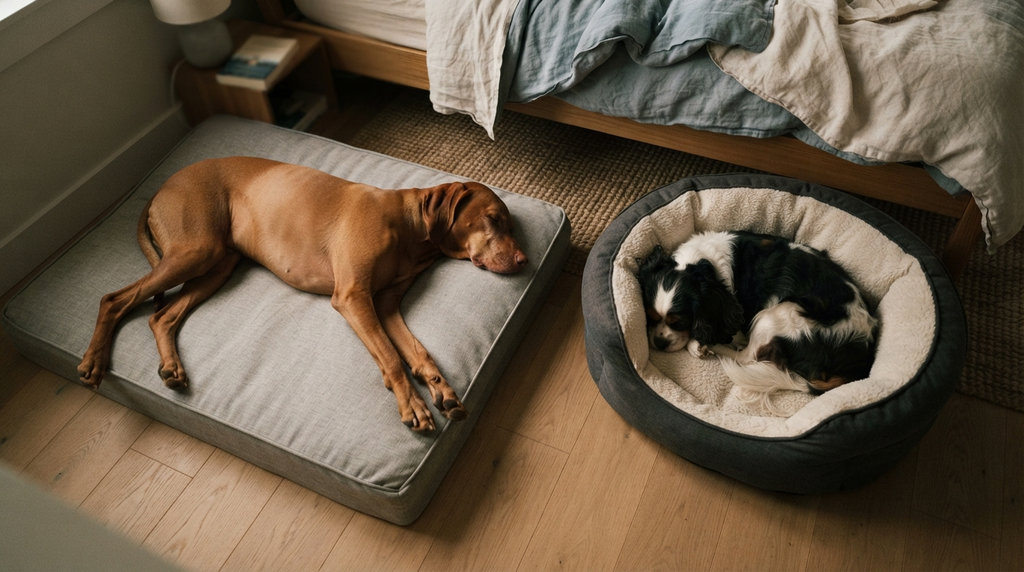
Balance washable protection with temperature comfort
A removable, washable cover makes routine cleaning easier. Wash and dry it according to its care directions so your dog can return to a dry, comfortable surface.
A moisture-resistant or waterproof liner can help protect a foam core from accidents. Less breathable layers may also hold more warmth against the sleeping surface, so consider your dog’s temperature habits as well as the liner’s protective role.
A deep, enclosed-feeling bolster can suit a dog that seeks warmth and likes a defined resting place. A dog that tends to overheat may settle more comfortably on a less enclosing, better-ventilated surface.
Do not soak a foam core or put it back into use while damp. Moisture can linger inside cushioning, leaving the sleeping area uncomfortable and harder to keep clean.
For a warmer room or a dog that seeks cool surfaces, prioritize airflow and an open shape over a deeply enclosed bed. For a dog that gets chilly and curls tightly, raised sides may feel more comfortable, provided the central surface still leaves enough room to rest.
Test the fit and watch for support loss
Introduce the new bed where your dog normally rests and observe its bedtime habits over several nights. Whether your dog settles, repositions, or avoids the bed tells you more than a single first impression.
To tell whether your dog prefers an edge, look for repeated leaning or head-resting against the raised side. Curling up by itself does not show that your dog needs a bolster.
Check the sleeping surface for persistent dents, flattened areas, or foam that no longer recovers its shape after your dog gets up. These changes can mean the bed has lost support, even if the cover still looks tidy.
If your dog becomes reluctant to use a familiar bed or seems less comfortable getting settled, reassess the cushioning, usable surface area, and ease of entry. A change in bedtime behavior can point to a bed that no longer fits your dog’s body or habits.
Keep simple notes on where your dog settles, which position it chooses, and whether it moves to another resting spot. That pattern can help you distinguish a dislike of the bed’s shape from discomfort with its surface.
Frequently Asked Questions
Which is better for dogs: memory foam or egg-crate foam?
Memory foam conforms more closely to the body, while egg-crate foam has a ridged surface with peaks and valleys that can allow more air to move around the dog. The better choice depends on whether close contouring or a less enveloping feel suits your dog’s comfort and temperature needs.
What is the best type of bed for a dog to sleep on?
The best dog bed is one that fits the dog’s body, sleeping habits, and home setup. For a dog that sleeps in a crate, measure the crate’s usable floor area as well as the dog, so the bed fits without bunching or blocking the door.
Can a memory foam dog bed be used outdoors?
A memory foam dog bed is best kept indoors or in a sheltered, dry area because ordinary foam and fabric can absorb moisture and take time to dry. For outdoor resting, choose a bed designed for those conditions and bring it under cover when rain or damp weather is expected.
How often should a memory foam dog bed be replaced?
There is no single replacement schedule for every memory foam dog bed because wear depends on the foam, your dog’s size, and how often the bed is used. Judge its condition rather than replacing it solely by age, and consider whether the cushioning still feels consistent under your dog’s body.
Can two dogs share one memory foam dog bed?
They can share a bed if the usable surface gives both dogs room to lie down and change position without crowding. If one dog regularly pushes the other off the bed or they choose different firmness or warmth, separate sleeping spaces may suit them better.
Should a puppy use a memory foam dog bed?
A puppy can use a memory foam dog bed if it fits the puppy’s current size and provides a stable surface. As the puppy grows, reassess the sleeping area so it still has room to stretch and turn comfortably.
Conclusion
Memory Foam or Bolster Dog Bed: What Changes at Bedtime? The answer is the balance between cushioning, open sleeping space, and the comfort of a raised edge. Memory foam describes how the surface cushions the body; a bolster describes where your dog can lean or rest its head.
Watch how your dog settles, stretches, and repositions, then choose a bed with enough supportive surface and an entry your dog can manage. Our recommendations should support practical, well-researched decisions, not sales pitches, because the best choice is the one that suits your dog’s real bedtime habits.