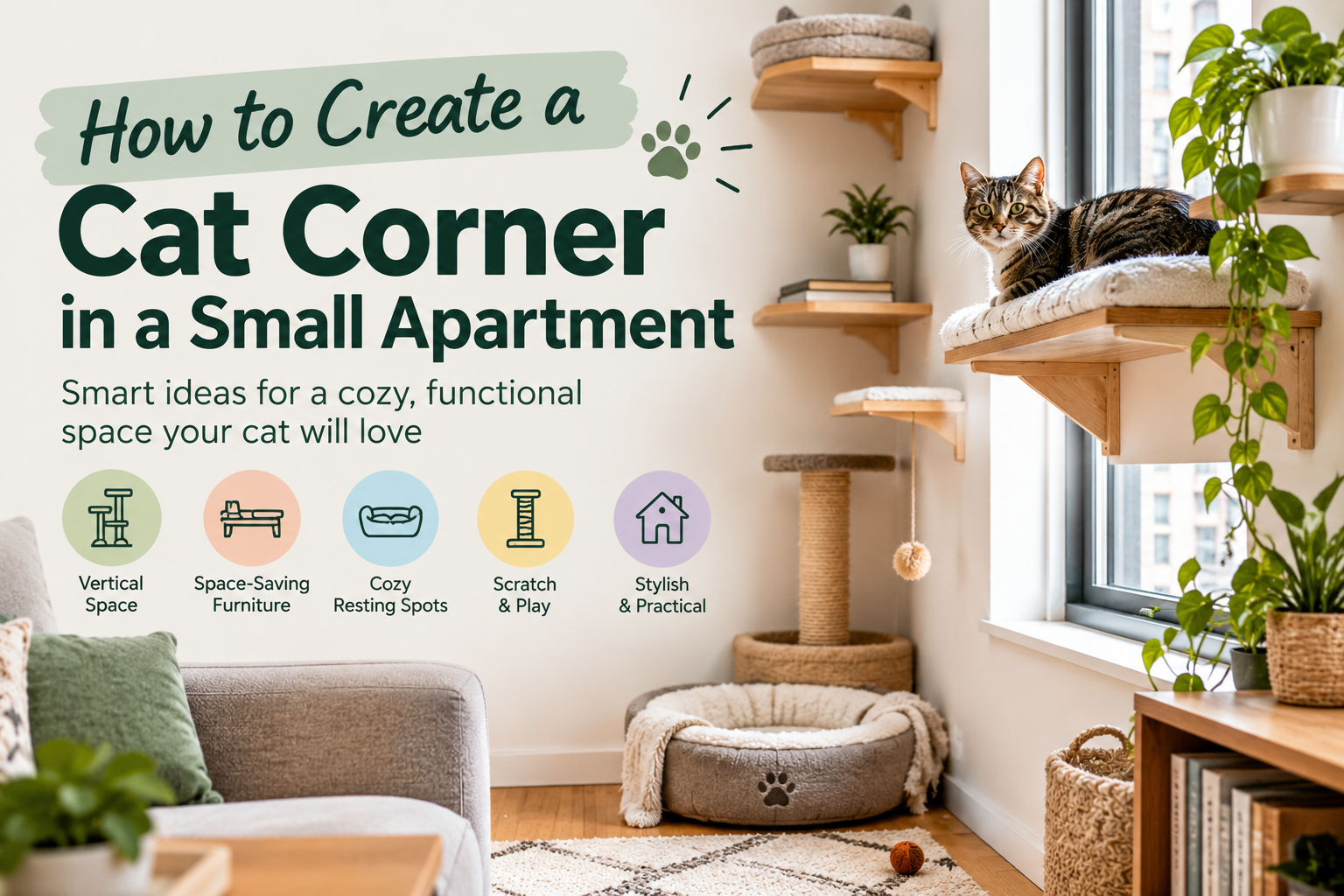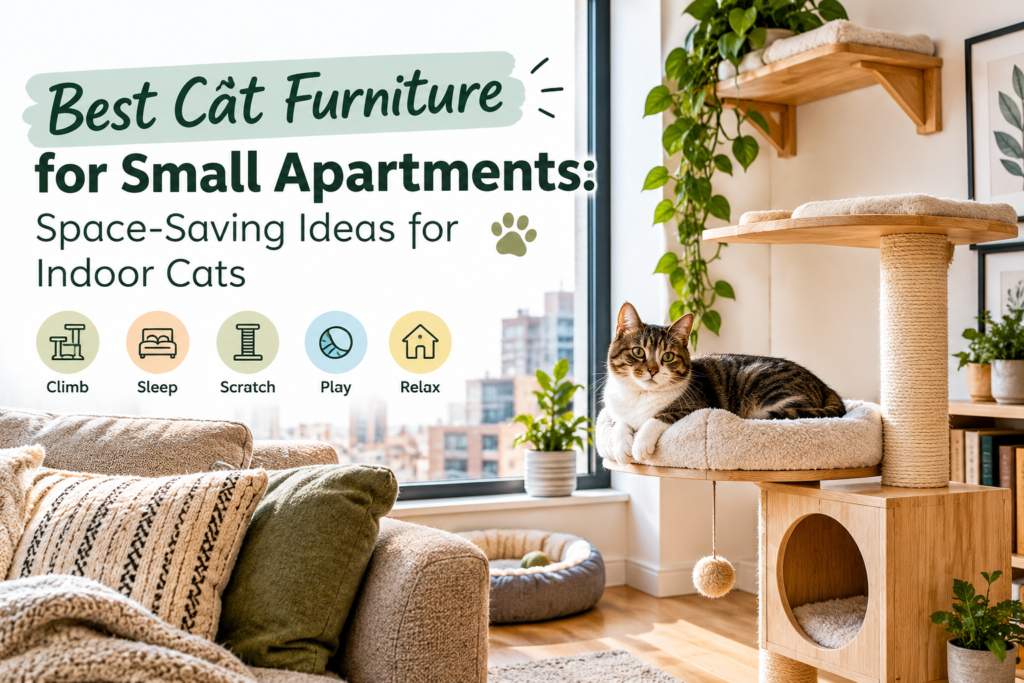
Finding room for pet furniture in an apartment or compact home can feel like a compromise between your cat’s happiness and your living room’s layout. However, cats don’t care about square footage—they care about vertical territory.
By taking advantage of unused vertical space, you can give your cat a high-perch view without cluttering your floor. This guide highlights the top space-saving cat trees designed specifically for compact living, along with the exact specs to look for before buying.
If you are setting up a home for an apartment cat, explore our overarching guide to cat furniture for small apartments for complete layout ideas.
Quick Comparison: Top Space-Saving Cat Trees
| Model Style | Base Footprint | Height | Best For | Key Advantage |
| Floor-to-Ceiling Tension Pole | 11″ x 16″ | 90″ – 108″ | Ultra-small apartments | Maximizes height with minimal footprint |
| Corner-Fit Cat Tree | 18″ x 18″ | 58″ | Unused living room corners | Tucks flush into walls; zero wasted space |
| Over-the-Door Climbing Tower | 0″ (Hanging) | 68″ | Rented studios / Tight hallways | Uses no floor space at all |
| Side-Table Cat Condominium | 16″ x 16″ | 24″ | Dual-purpose living areas | Blends in as functional human furniture |
What to Look for in a Small-Space Cat Tree
When floor space is limited, standard cat trees with wide, spreading bases quickly make a room feel cramped. Focus on three critical design factors:
1. Base Footprint Under 18 x 18 Inches
A standard cat tree can have a footprint as large as 30 x 24 inches. For a small apartment, target a base under 18 x 18 inches. If your cat is heavy or energetic, choose a tree with a weighted base or wall-anchoring hardware to prevent tipping.
2. Vertical-to-Horizontal Ratio
Prioritize designs that stack perches vertically directly above the base rather than staggering them outward. Floor-to-ceiling tension trees excel here, utilizing less than 2 square feet of floor space while providing 8 to 9 feet of climbing height.
3. Dual-Purpose Functionality
In tiny homes, every piece of furniture should ideally serve two purposes. Look for cat trees that integrate into side tables, storage ottomans, or bookshelf ends.
Top Space-Saving Designs Explained
1. Floor-to-Ceiling Tension Towers
Tension towers use a spring-loaded top pole that presses against your ceiling, providing stability without requiring a wide base on the floor.
- Pros: Unmatched height-to-footprint ratio; easy to assemble; non-permanent for renters.
- Cons: Requires a flat, sturdy ceiling (not suitable for suspended or highly sloped ceilings).
- Best Placement: Directly next to a window or in an unused corner.
2. Over-the-Door Modular Climbers
These systems hang over standard interior doors using padded brackets. They feature rigid canvas or wood tiers that fold flat when necessary.
- Pros: Zero floor footprint; highly portable; ideal for rented apartments.
- Cons: Can limit door usage if placed on frequently accessed closets or bathrooms.
- Best Placement: Bedroom doors, home office doors, or spare room doors.
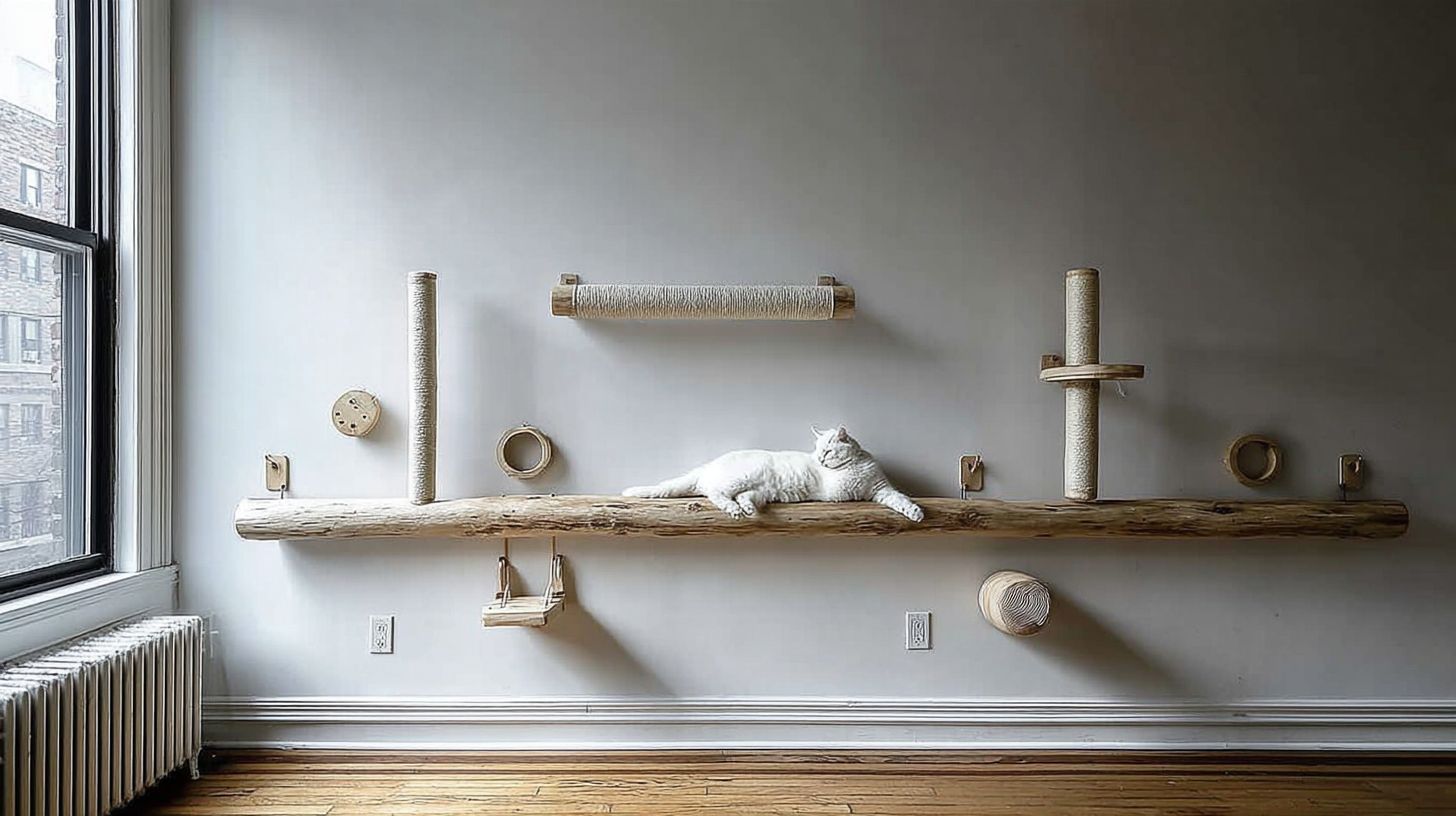
3. Wall-Mounted Cat Shelves & Steps
While technically not standalone trees, wall-mounted systems completely free up floor space. You can build a custom climbing path using modular perches.
- Pros: Fully customizable layout; seamless integration with modern home decor.
- Cons: Requires drilling into wall studs; harder to modify in rental properties.
- Complementary Guide: Learn how to install these safely in our step-by-step guide on DIY cat shelves for small spaces.
3 Placement Hacks for Small Apartments
- The Window Flank: Place a narrow tension tree adjacent to a window frame. This gives your cat a view outdoors (“cat TV”) without blocking natural light from entering your living area.
- The Couch Corner: Utilize the dead space between the side of your sofa and the wall. A corner-fitting tree fits neatly here and doubles as an armrest-level interaction spot.
- The Vertical Bridge: Link a tall, slim cat tree directly to the top of an existing bookshelf using a soft bridge or step, expanding your cat’s territory without adding more furniture.
Maintenance & Fabric Considerations
Living in close quarters means pet furniture requires regular maintenance to stay odor-free and visually clean.
- Choose Removable Coverings: Look for cat trees with machine-washable cushion pads attached via velcro rather than glued-down carpet.
- Durable Materials: Prefer natural sisal rope or woven felt over plush faux fur, which traps loose hair and is difficult to vacuum thoroughly.
- Fabric Protection: If your cat tree is placed right next to your couch, review our recommendations on the best sofa fabrics for homes with cats to prevent accidental scratching spillovers.
Frequently Asked Questions
Are tension-pole cat trees safe for large or heavy cats?
Yes, but only if they feature a wide top tension plate, heavy-duty metal adjustment screws, and solid wood or thick-walled cardboard posts. For cats over 12 lbs, choose a model that includes a safety wall strap anchor.
How do I encourage my cat to use a small cat tree?
Place the tree in a high-traffic family area rather than an isolated corner. Rub a small amount of catnip or apply a catnip spray onto the scratching posts, and reward your cat with treats whenever they climb onto a perch.
How do I save space if I have multiple cats?
Instead of buying a larger cat tree, expand vertically. Combine one narrow floor-to-ceiling tree with wall-mounted perches. This provides multiple elevated spots for your cats to lounge without taking up additional floor area.