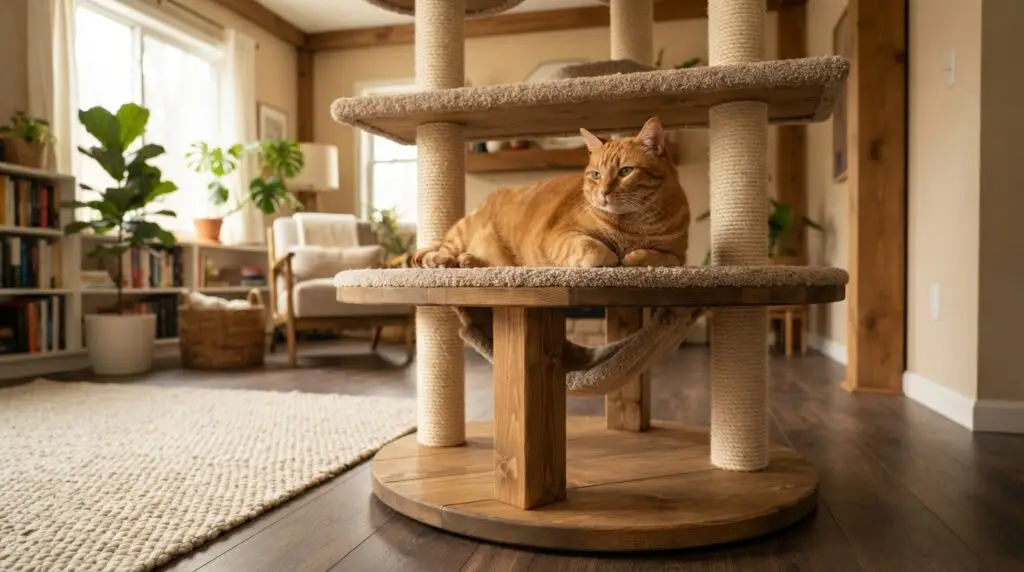
Cat Trees for Large Cats: Where Platforms Often Fall Short is a practical fit problem: overall height and a large-size label say little about whether each perch lets a big cat rest, land, and move comfortably. For a large cat, the best tree is one with clear, roomy resting surfaces at the levels your cat will use, a stable assembled base, and an easy route up and down—not simply the tallest tree or one carrying a large-size label. Check those features on the actual model before choosing.
Key Takeaways
| What to check | Why it matters |
|---|---|
| Usable platform area | Posts, rims, and sloped edges can make a perch much smaller than its outside dimensions. |
| Fit in your cat’s resting posture | Your cat should be able to turn, settle, and stretch without pressing against the edges. |
| Perch capacity and whole-tree stability | A weight limit does not show whether the assembled cat tower will resist shifting during a jump. |
| Access and landing | Broad steps, good grip, and open platforms make climbing and getting down easier. |
| Room layout | For compact homes, our guide to compact and vertical cat-tree layouts offers ideas for using height without overlooking floor space. |
| Ongoing condition | Loose fasteners, worn coverings, and new wobble can change how safely a tree works over time. |
Why a tall tree can still be a poor fit
A tall cat tree can still have cramped resting spots. Judge each platform separately because posts, raised rims, and sloped edges take up space that the cat cannot use to lie down.
Compare the platform’s clear, flat dimensions with your cat’s natural resting posture. A suitable perch gives the cat room to turn, settle, and stretch without being pressed against the edges.
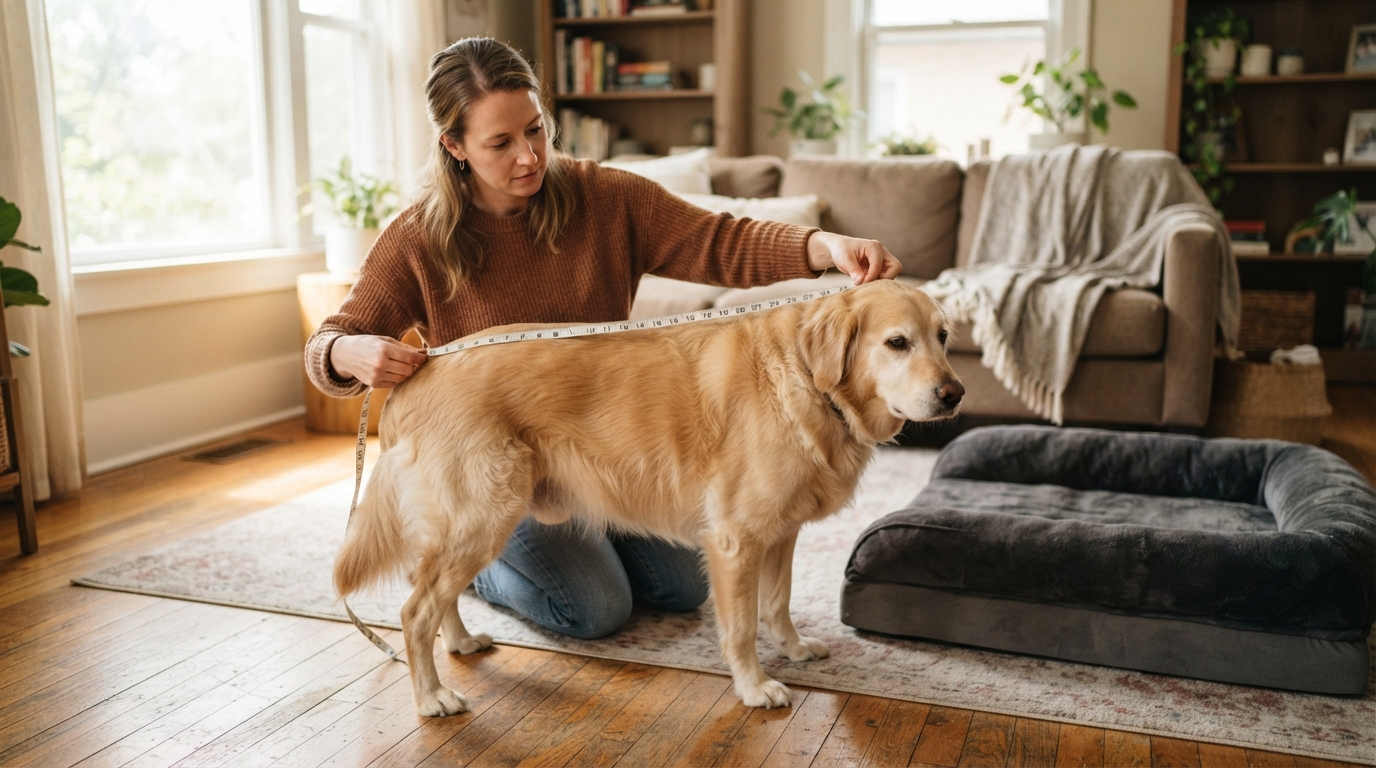
Try a simple fit test: cut cardboard to match the platform’s usable surface, then compare that template with your cat lying down. This gives you a more useful picture than a product label such as large or extra-large.
When comparing listings, treat a platform’s outer measurement as a starting point, not its resting area: posts, raised lips, rounded corners, or a hammock’s sag can reduce the space available. If you can inspect the tree, measure the flat area between obstructions, then compare it with the template and your cat’s curled and stretched posture. If only overall dimensions are provided, ask for clear perch dimensions rather than guessing from the tree’s height.
Think of height as a climbing choice, not a comfort measurement. A shorter cat tree with roomy perches may serve a large cat better than a tall cat tower with cramped platforms.
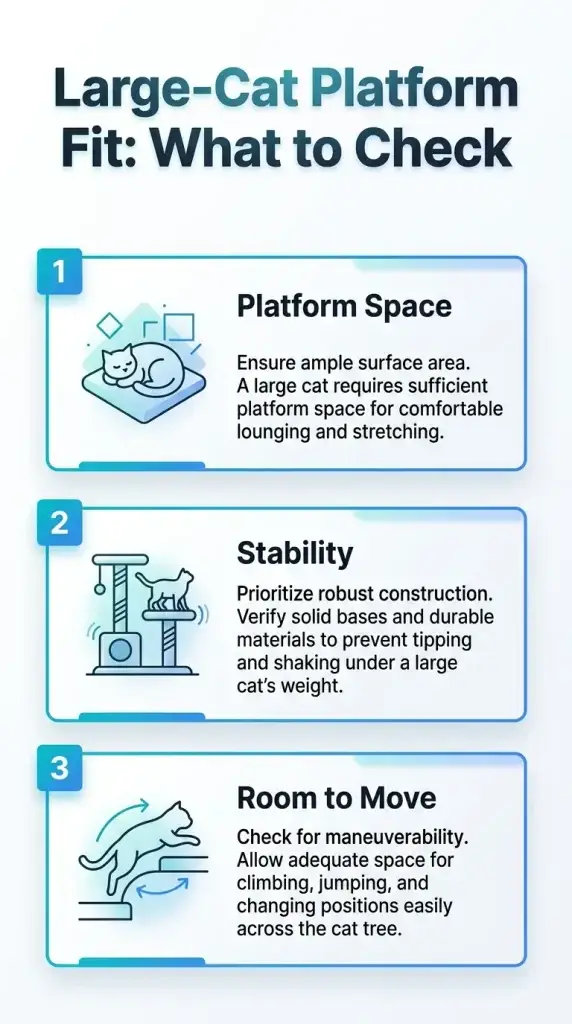
This infographic highlights key platform-fit checks to consider when choosing a cat tree for a large cat. Use it to spot features that may affect comfort and support.
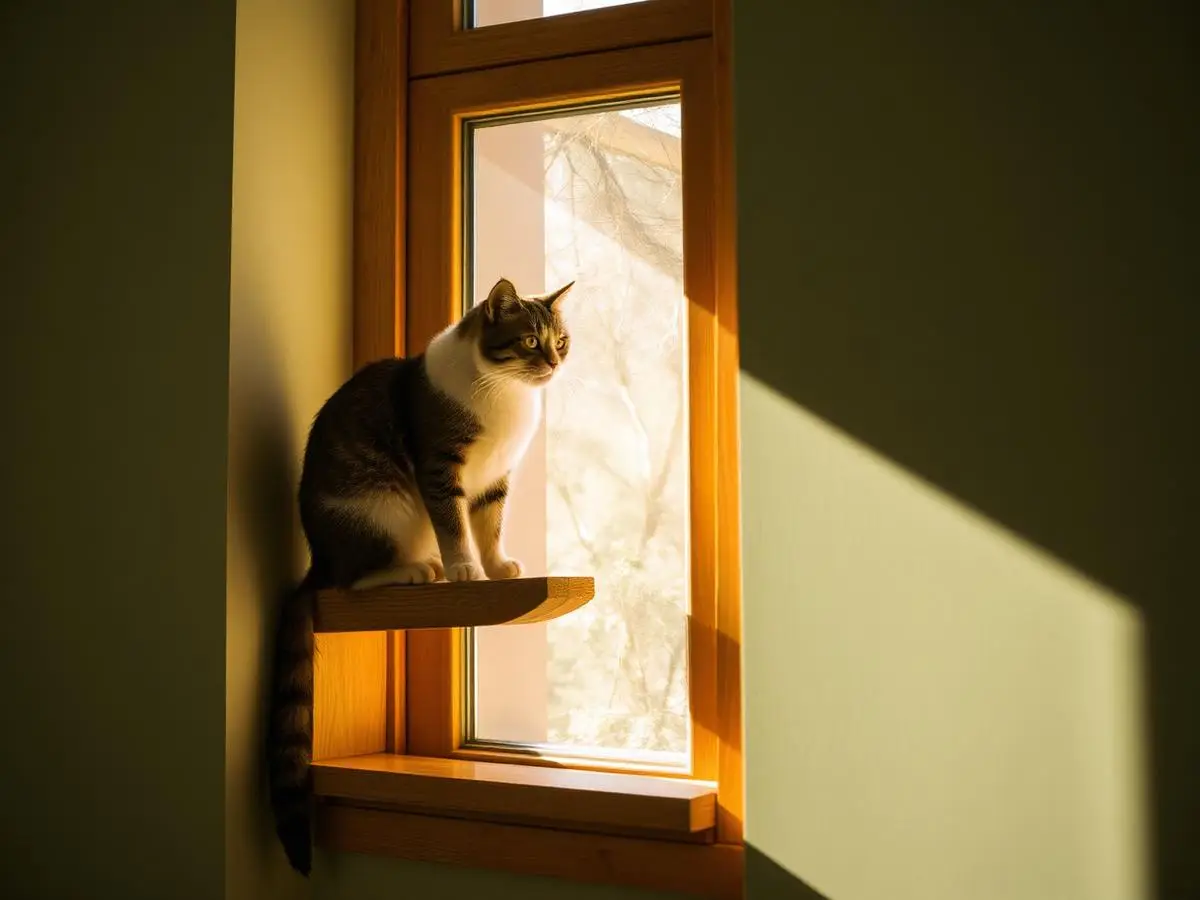
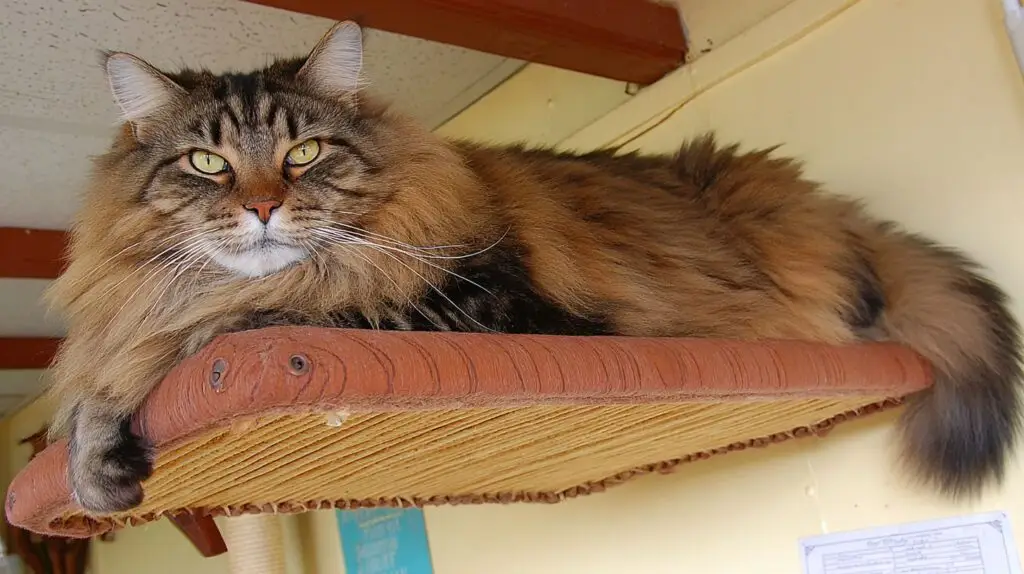
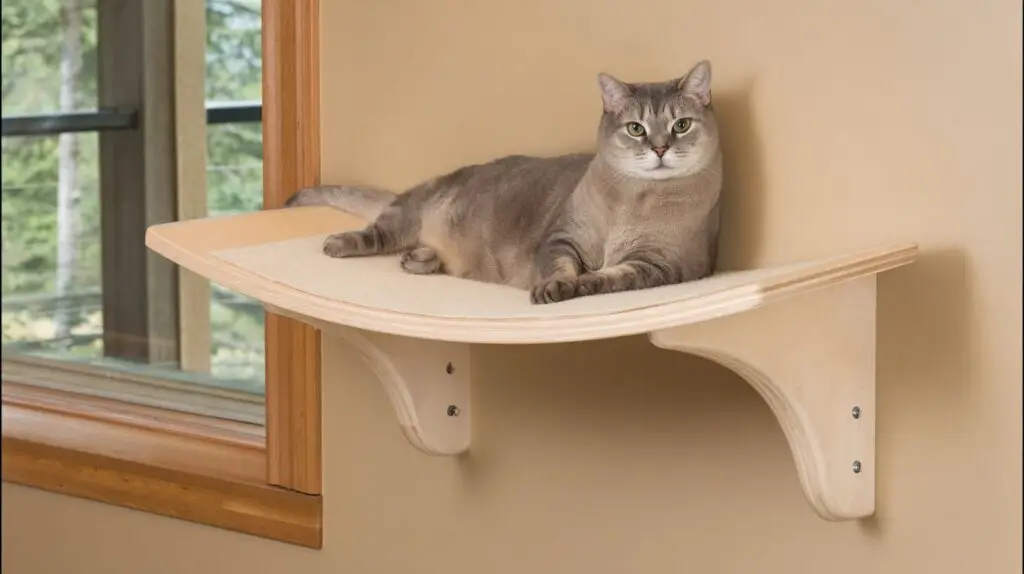
These examples show how different perches can be in shape and scale. Check the actual resting surface; raised spots do not all offer the same usable room.
Separate perch support from whole-tree stability
Read a listed weight capacity for an individual perch separately from any capacity for the entire cat tree. Neither number alone shows whether the assembled structure will stay steady when a cat jumps, lands, or changes direction.
Look for a broad, substantial base and sturdy connections, especially on a tall or top-heavy cat tower. Height increases leverage when a cat climbs or lands, so a narrow base can make the whole structure more prone to shifting.
Set the tree on a level floor, and secure a tall structure to a wall with an anchor suited to the wall and installation. Anchoring helps protect against tipping, but it cannot make an undersized platform comfortable or suitable.
After assembly, press gently on different levels and watch for rocking, shifting, loose fasteners, or flex. Recheck the connections as the tree gets regular use, since repeated movement can loosen joints.
Check the route up, the landing, and the way down
A large cat needs a usable route between levels, not just a roomy top perch. Look for broad, well-spaced steps or platforms that allow the cat to climb without depending on one long leap.
Landing surfaces need grip as well as space. Slick or worn coverings make it harder for a cat to land securely, turn around, or push off again.
Platform shape and edge design affect how easily a cat can enter and leave a perch. A broad, open surface gives more room to land and move than a narrow perch with a high rim that restricts movement.
For a cat with limited mobility, choose lower steps and gradual transitions. Avoid layouts that require a difficult jump to reach a resting place, food, or the route down.
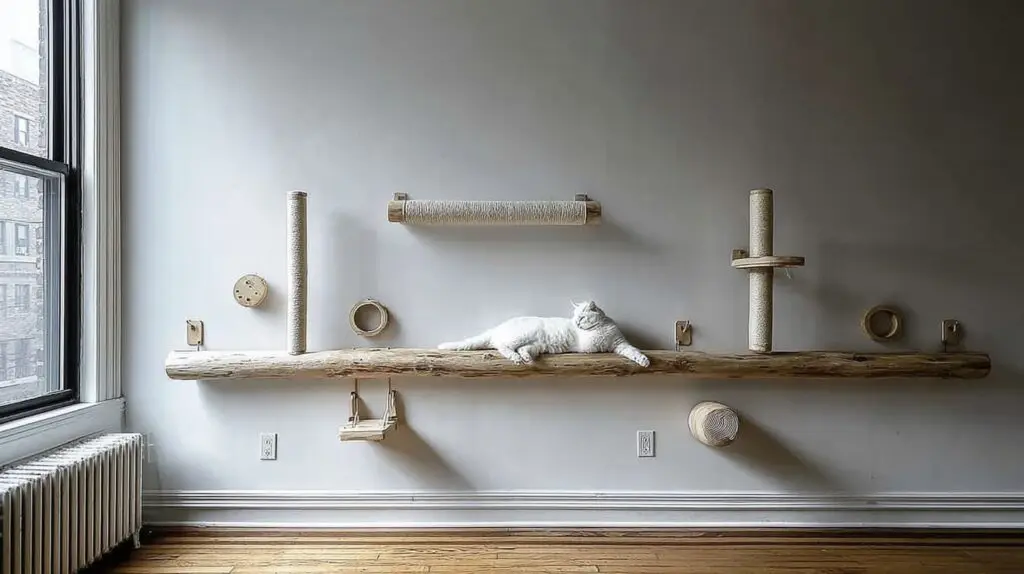
Wall-mounted platforms can form a climbing path, as these examples show, but each landing still needs enough clear area for the cat using it. Consider the spacing between levels and whether the cat has room to turn before moving on.
Compare surfaces, posts, and construction
Choose surfaces that give a cat secure footing. Carpet and other textured coverings add grip, while smooth finishes offer less traction during a quick turn or landing.
Sisal rope and sisal fabric both provide scratching surfaces. Check that the material sits firmly on the post and that the post is tall enough for your cat to stretch its body while scratching.
Inspect the frame and joints as well as the covering. Sturdy panels and secure connections withstand repeated climbing better, while worn fabric or fraying sisal can reduce grip and expose the structure underneath.
Plan for basic upkeep: vacuum or spot-clean coverings as needed, and repair or replace worn scratching surfaces before loose material or damaged connections become a hazard. Regular care helps keep a cat tree for heavy cats usable between more thorough checks.
Choose a layout for your room and household
A floor-standing cat tree can provide several levels, but prioritize a broad base and roomy platforms over height alone. A corner location can save floor space, yet a narrow base does not become stable just because it sits against two walls.
Our Best Cat Trees for Small Spaces: Compact & Vertical Solutions is a guide to finding room for cat furniture in an apartment or compact home, with compact and vertical solutions. It suits shoppers planning how to use limited floor space while still considering where a large cat can rest.
For a corner-focused layout, the Corner-Fit Cat Tree measures 18″ x 18″ at the base and 58″ high, and is intended to tuck into unused living room corners. Those measurements help assess whether the footprint fits your room, but they do not show the usable perch area or prove that it fits a large cat.
Treat the stated measurements as footprint and overall height only; they do not establish the clear resting area of any perch or a load rating. Use this as a room-planning example, not proof of fit: compare actual flat perch dimensions with the cardboard template, and verify the stated capacity and what part of the tree it covers before deciding.
Wall-mounted steps create a climbing route with flexible spacing, but their safety depends on secure attachment to suitable wall structure and adequate usable area on every perch. In a multi-cat household, provide more than one comfortable resting place and avoid a layout where one cat can block the only route up or down.
In a small room, use vertical space thoughtfully while preserving wide resting surfaces and a clear landing area. Do not trade usable platform area for a compact footprint when choosing big cat furniture.
These room layouts illustrate ways to plan around corners and vertical routes. Keep the cat’s landing space and movement path in view as you decide where furniture will fit.
Inspect the tree after setup and over time
Before allowing energetic climbing, check the assembled tree for wobble and shifting, then make sure its connections are snug. A stable-feeling structure at setup gives you a useful baseline for later checks.
Recheck screws, joints, and any wall attachment periodically, especially after moving the tree or after unusually active use. A small change in a connection can affect how securely the structure handles movement.
Look for loose coverings, frayed scratching material, compressed padding, cracked panels, and platforms that have started to flex. Repair or replace damaged parts rather than ignoring a change in how the tree feels under pressure.
If the tree rocks during a jump or your cat avoids a perch, reassess its placement, connections, and platform fit. A large cat needs a stable, comfortable surface.
Frequently Asked Questions
How tall should a cat tree be for a big cat?
There is no single required height for a big cat; choose a level that matches where your cat likes to perch and how confidently it climbs. Leave enough clearance above the top platform for your cat to sit upright and turn without meeting a ceiling or light fixture.
Can a large cat use a tree with a hammock?
Yes, if the hammock has enough surface area for the cat’s resting posture and its fabric and attachments support a settled, balanced position. A deep fabric sling may suit a cat that curls up, while a cat that sprawls may prefer a flat platform.
Can you replace an undersized platform on an existing cat tree?
Sometimes, if a replacement can attach securely to the existing frame and the frame can support the new surface. A wider board alone is not a safe fix if it leaves the connection points weak or unbalanced.
Does a large cat need a thicker scratching post?
A thicker post can give a large cat more surface to brace against while scratching, but height and attachment strength matter too. Choose a post that lets the cat grip comfortably and stretch without making the tree unstable.
How can I help a large cat accept a new cat tree?
Place familiar bedding or a favorite toy on a lower level, then reward voluntary exploration with treats or calm play. Let the cat investigate at its own pace instead of placing it on a high perch before it feels comfortable.
What is the best cat tree for large cats?
There is no best tree by height or size label alone. Choose a model whose flat, usable perch area fits your cat’s normal resting posture and whose listing makes clear what each capacity figure covers. Then assess the assembled base, joints, grip, step spacing, and landing room; a spacious top perch does not make up for cramped intermediate platforms or a route that requires difficult jumps. If the listing omits usable perch dimensions or leaves a rating ambiguous, get those details before treating the tree as a match.
Conclusion
When comparing Cat Trees for Large Cats: Where Platforms Often Fall Short, focus on usable space at every level, not height or a size label. Match the platforms to your cat’s resting posture, check perch support separately from whole-tree stability, and choose a layout with secure footing, accessible routes, and room to land.
After setup, keep checking connections and surfaces as the tree gets used. A well-fitting cat tree for large cats gives your cat comfortable places to rest and scratch, with a structure and route it can use confidently.