Sisal Cat Scratching Posts: How to Compare Height, Base Stability, and Wear comes down to three practical checks: does the surface suit your cat, can they stretch comfortably, and does the whole post stay steady as they scratch? Look at construction and wear as well as the listed height, because a tall scratcher is only useful if your cat can use it safely. There is no single best post for every cat: match the usable surface to your cat’s reach and preferences, then check that the assembled base stays planted on your floor.
Key Takeaways
- Choose between sisal rope, woven sisal, and other scratching surfaces by watching which textures and orientations your cat already uses.
- Measure your cat’s natural reach. Compare it with the usable scratching area, not only the scratcher’s total height.
- Assess base stability alongside post height, weight, floor grip, and the tightness of the joints.
- Replace or repair a surface when it loses grip, but stop using the post if the frame, fasteners, or base become unsafe.
- In a compact home, preserve a clear approach to the scratcher and enough room for a full-body stretch. Our guide to the best cat trees for small spaces offers more ideas for using vertical territory.
- A cat that scratches horizontally may need a different option from a cat that reaches up a vertical post. Some cats use both.
Compare sisal rope, woven sisal, and other scratching surfaces
Sisal rope and woven sisal provide different kinds of contact. The rope forms raised ridges that give claws a textured grip, while woven sisal fabric has a flatter, more continuous surface for cats that prefer broader contact.
Inspect sisal rope for windings that sit tightly together. Loose gaps can snag claws and give the rope an easier place to unravel, while a secure weave helps woven sisal withstand repeated scratching.
Jute is another natural plant fibre, but it is usually softer and less coarse than sisal. The better choice is the texture your cat actually scratches, not a general assumption that one plant fibre feels like another.
Carpet loops can catch claws, while corrugated cardboard gives cats a different, shreddable texture. These surfaces are not interchangeable: watch what your cat chooses before settling on a sisal scratching post for cats.
Surface wear is not just about whether a material still looks neat. A little fraying can help maintain a rough grip, but a smooth patch may no longer provide the contact your cat wants.
Match the post height to a full-body stretch
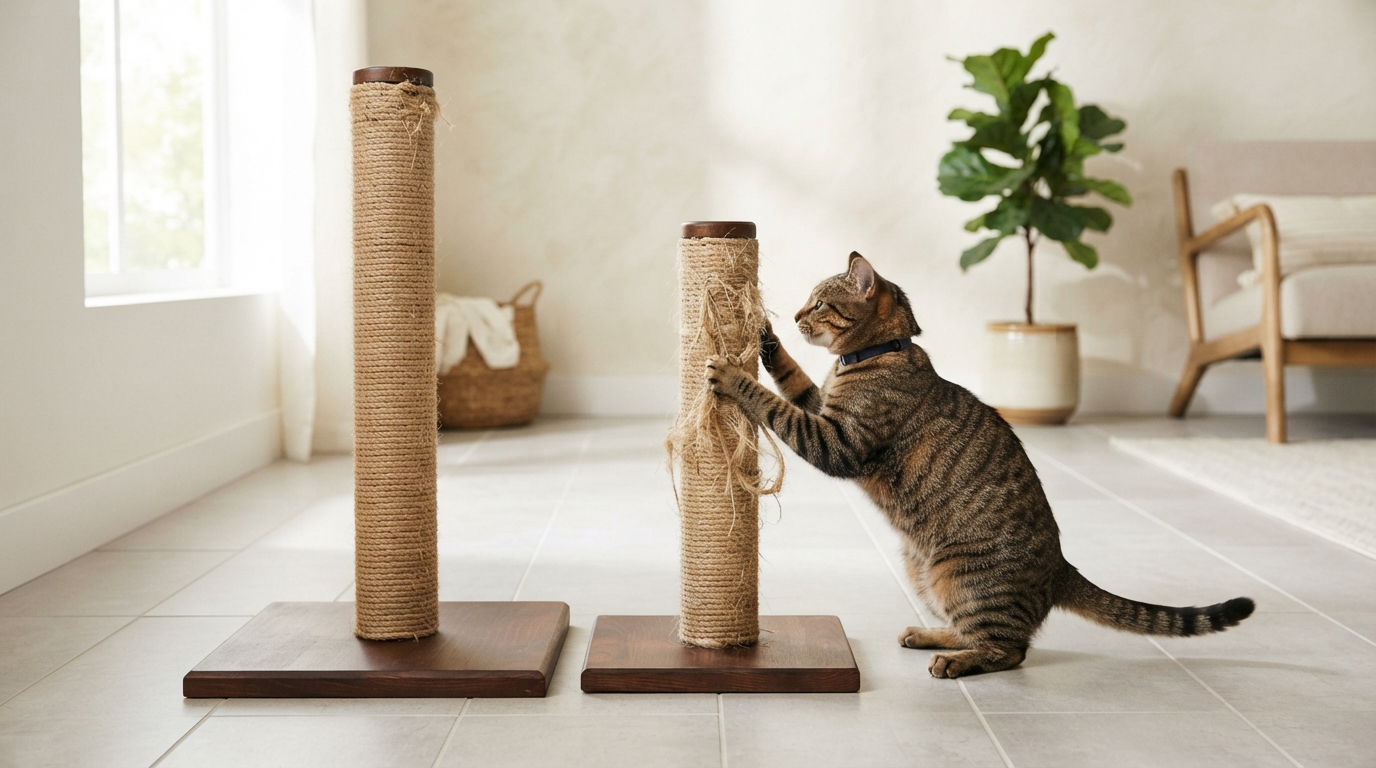
What is the ideal height for a cat scratching post? Choose one with a usable scratching area at least as long as your cat’s natural stretch, measured from the paws to the fully extended forelegs. The overall height can be misleading if the scratchable section ends well below that reach.
Watch your cat stretch against a wall, sofa, or existing scratcher before you choose. A cat should be able to extend both forelegs without crouching or stepping onto an unstable top, and larger cats often need a longer, uninterrupted scratching surface.
The linked PubMed Central (PMC) report notes that cats scratched the preferred substrate more often with a simple upright post or a cat tree with two or more levels and at least 3 ft high. Treat this as a preference observation, not a rule for every cat or a standard for choosing a safe post; your cat’s reach and the assembled post’s stability still matter.
Kittens and cats with limited mobility still need a comfortable stretch, but the surface should be reachable without a difficult jump. If you share your home with a large cat, compare the clear length of the scratchable area as carefully as you compare the post’s overall height.
Assess base stability as a whole
Test the assembled scratcher by pressing the post gently from several directions. Watch for rocking at the base and movement at the joints, since a post that shifts during a simple test may also move during vigorous scratching.
Base stability depends on the post and the floor as well as the base itself. Taller posts create more leverage, so a narrow or lightweight base needs especially secure construction; even a broad base can slide if it does not grip a smooth floor.
Check that the base sits flat and that the post-to-base connection stays firm. If the floor is slick, a non-slip pad beneath the base can help limit sliding, provided it does not make the scratcher rock.
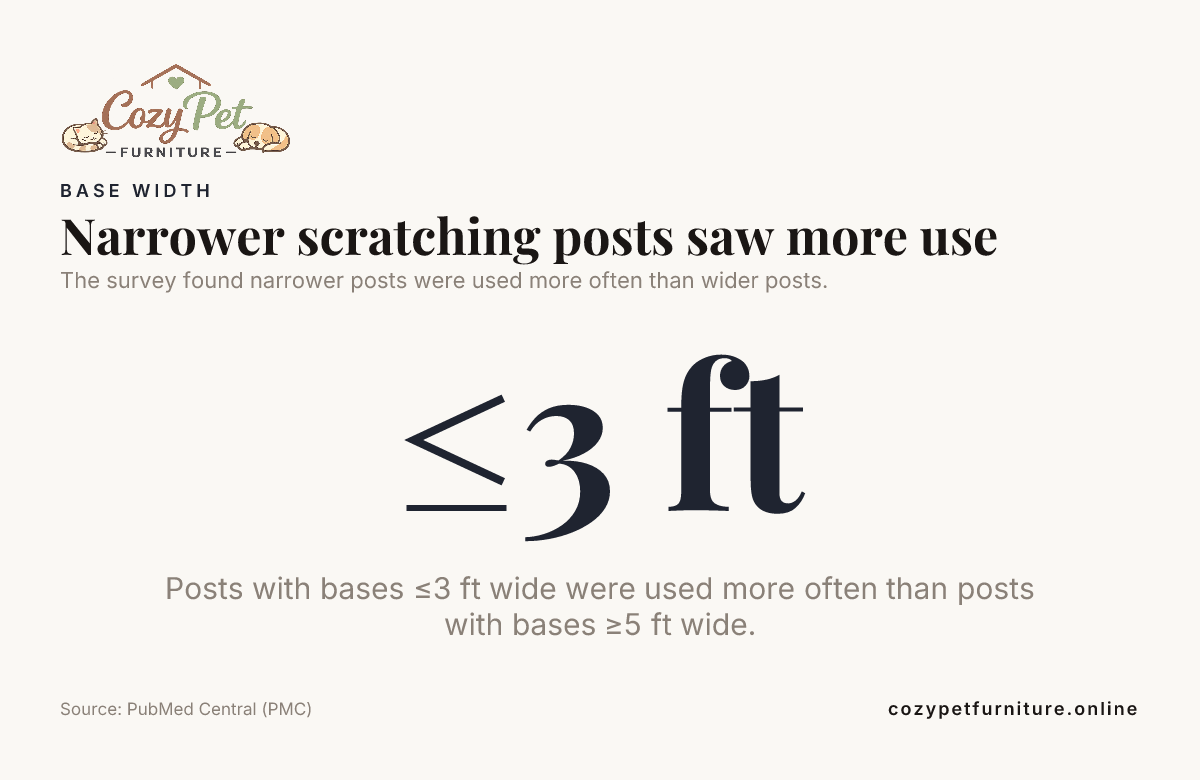
Narrower posts with a base width of ⩽3 ft were used more often than wider posts with a base width of ⩾5 ft.
Source: PubMed Central (PMC)
That finding concerns post use, not whether a particular post is stable. The width figures in the card describe study categories, not recommended base dimensions or stability cutoffs. Don’t choose a base by width alone: consider its weight, how firmly it joins the post, and whether it remains planted on your floor.
For a practical pass-or-fail check, assemble the post on the floor where it will stay and gently press near the top from different directions. If the base edge lifts, the post rocks at its joint, or the base slides, choose a sturdier design; a grip pad may help with sliding on a slick floor, but cannot fix a loose joint. There is no universal base-weight cutoff, so judge the base against the post’s height and your cat’s use of it.
Choose the orientation and placement your cat will use
A vertical scratcher suits a cat that reaches up furniture or walls, while a horizontal scratcher may better match a cat that scratches rugs or floors. Some cats use both, so orientation matters as much as whether the surface is sisal.
Place a new post near a spot your cat already scratches or stretches after waking. A scratcher tucked out of sight may be overlooked, even when its surface and height seem like a good fit.
If you are unsure what your cat prefers, offer more than one texture or orientation for a while and keep the options they use. A sisal rope for a cat tree, a flat woven surface, and a horizontal scratcher give different experiences; let your cat show you which ones work.
Introduce the post beside an established scratching location and reward investigation or use with a treat or calm praise. Don’t force your cat’s paws onto the surface, since an unpleasant introduction can make them wary of the new scratcher.
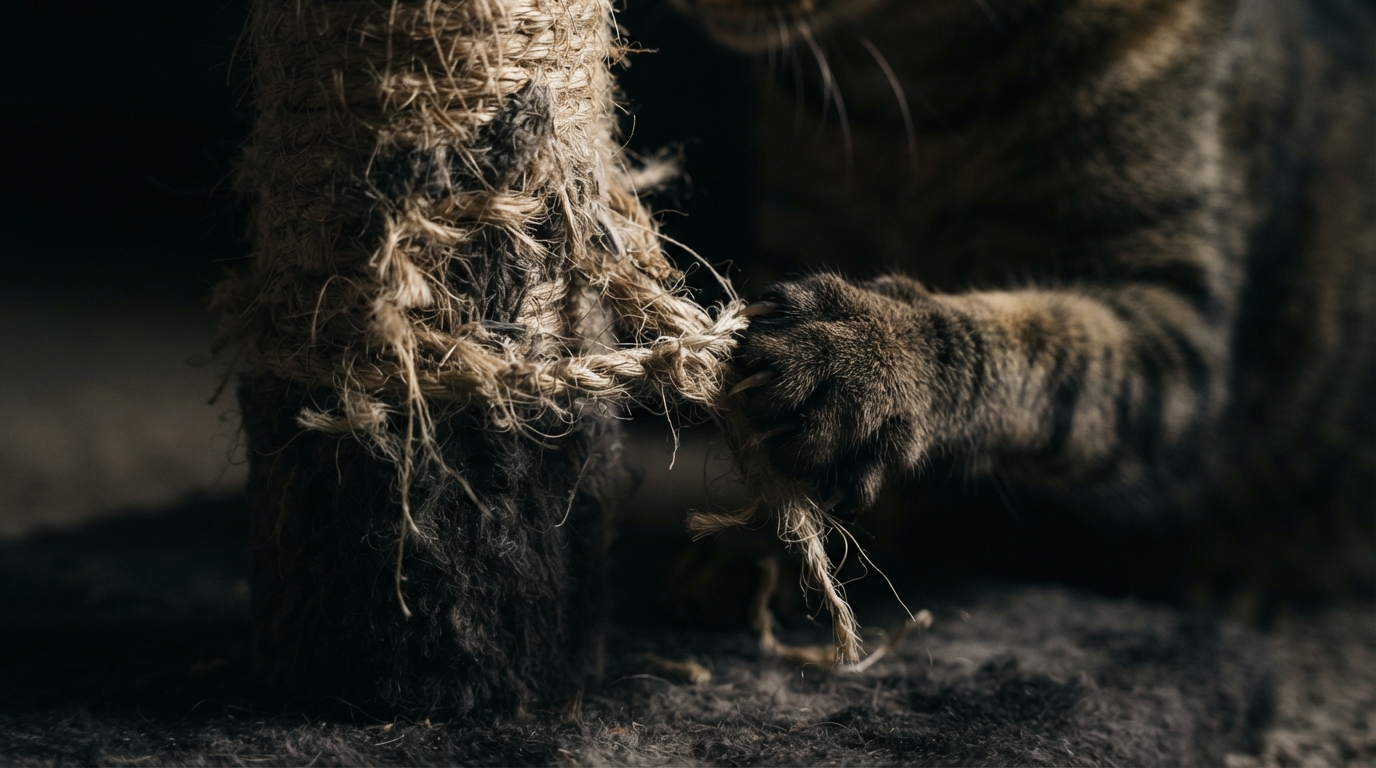
Tell normal fraying from damage that needs attention
Some sisal fuzzing and fraying is normal. Renew or replace the surface when it becomes too smooth to provide grip, develops large bare patches, or no longer holds your cat’s claws comfortably.
Look beyond the sisal as it wears. A loose post, exposed screw or staple, cracked component, or unstable base is a structural problem, not ordinary surface fraying.
Trim or secure loose strands before they catch a claw, and stop using the scratcher if damaged material or exposed hardware creates a snag or injury risk. Check the fasteners and joints after moving the post, too, since shifting it can loosen a connection.
A replaceable sisal sleeve or wrap should fit the post firmly and attach without loosening its joints. If renewing the sisal rope for a cat tree would weaken the structure, replace the whole scratcher instead; a cat tree rope replacement is useful only when the underlying post remains secure.
When deciding whether to repair or replace, focus on function and safety rather than appearance alone. A worn-looking surface can still offer useful grip, while a tidy-looking post can be unsafe if its base or joints have loosened.
Fit a scratcher into a compact, cat-friendly home
For cat furniture for small apartments and cat furniture for small spaces, look for a stable vertical scratcher that leaves walking routes clear. Saving floor area should not mean choosing a post too short for a full-body stretch or placing it where your cat cannot approach comfortably.
Use small apartment pet furniture ideas, including our guide to creating a cat corner, as layout prompts: place the scratcher near a resting or play area, while keeping its approach and scratching space unobstructed. A cat corner can include vertical territory without blocking a doorway or the path between everyday furniture.
When comparing the best cat trees for small spaces, separate a tree’s overall footprint from its usable sisal area and stability. A compact tree may fit neatly into a room, but the scratching section still needs to suit your cat’s reach and habits.
The Corner-Fit Cat Tree measures 18″ x 18″ at the base and 58″ high, and is intended to tuck into unused living room corners. It is a candidate for a tall, corner-oriented layout, but those dimensions alone do not establish that its scratching surface suits your cat: check the material and usable length, then assess the assembled tree for rocking or sliding.
In a shared pet zone, give scratching and resting distinct spaces. Keep the route to the scratcher open, with enough room for your cat to approach and stretch comfortably.
Keep the area around the scratcher easy to clean and clear of loose strands, which can catch on nearby upholstery.
Conclusion
Sisal Cat Scratching Posts: How to Compare Height, Base Stability, and Wear is easier when you begin with your cat’s habits. Match the texture and orientation to the way they scratch, compare the usable surface with their full-body stretch, and test the base, joints, and floor contact together.
Some fraying is expected, but loose hardware, an unstable base, or strands that can snag a claw need attention. The right sisal scratcher is the one your cat can reach and use comfortably, and that stays secure in the space you have.
Frequently Asked Questions
Is it safe if a cat chews or swallows sisal fibres?
Chewing at a post is different from swallowing strands, which can cause choking or digestive problems. Contact your veterinarian if your cat swallows a substantial amount or develops vomiting, appetite changes, or trouble passing stool.
Can you clean a sisal scratching post, and how should you do it?
Remove loose fur and dust with a vacuum’s brush attachment or a dry brush. If you spot-clean a small area, use a lightly damp cloth and let it dry fully before your cat uses it again, since soaked fibres can take longer to dry and may loosen from the post.
Does a new sisal post need to be treated with catnip to attract a cat?
No, catnip is optional, and some cats do not respond to it. If your cat enjoys catnip, sprinkle a small amount near the base rather than packing it into the sisal.
Can a sisal scratching post be used outdoors or on a balcony?
Sisal is a plant fibre that can deteriorate when it stays damp, so an exposed outdoor spot can shorten its useful life. Keep an outdoor scratcher under cover and bring it inside if it becomes wet.
Does scratching help a cat shed its claw sheaths?
Yes, scratching helps loosen and remove the outer layers of the claws as they grow. It does not replace routine nail checks, especially for senior cats or cats that scratch less.
How often should I inspect a sisal scratching post?
A quick weekly check helps you notice a loosening joint or strand before it becomes a bigger problem. Inspect it again after moving the scratcher or if it suddenly starts rocking during use.