Dog Beds for Older Dogs: Support That Fits Their Sleep starts with a practical question: can your dog lie down, settle, and get up without struggling? The right senior dog bed balances cushioning, sleeping style, easy entry, and care needs, but it can’t replace veterinary help for pain or mobility changes.
Key Takeaways
- Judge support by how the bed holds your dog’s weight, not by thickness or an orthopedic label.
- Match the shape to your dog’s usual position, and consider whether they stretch or shift during the night.
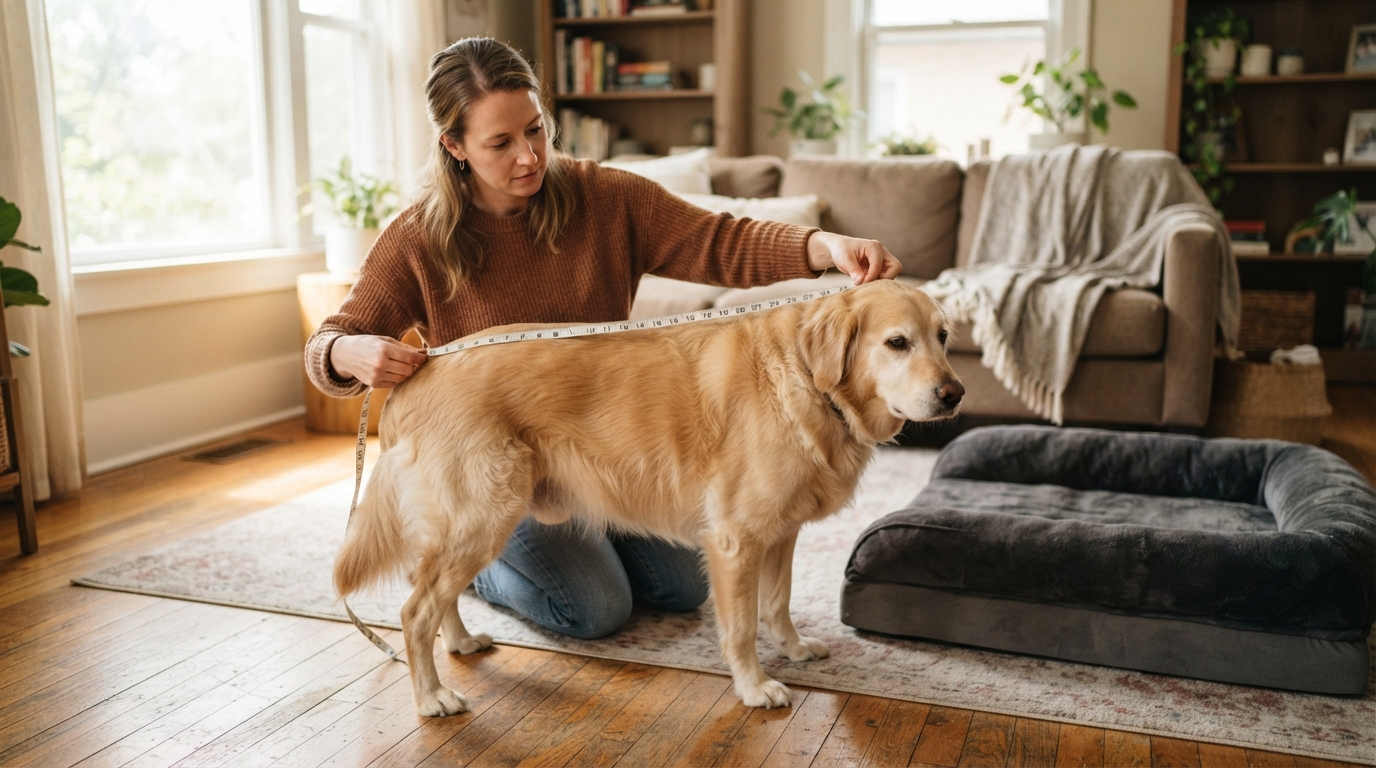
- Measure your dog lying down and compare those measurements with the bed’s usable sleeping surface.
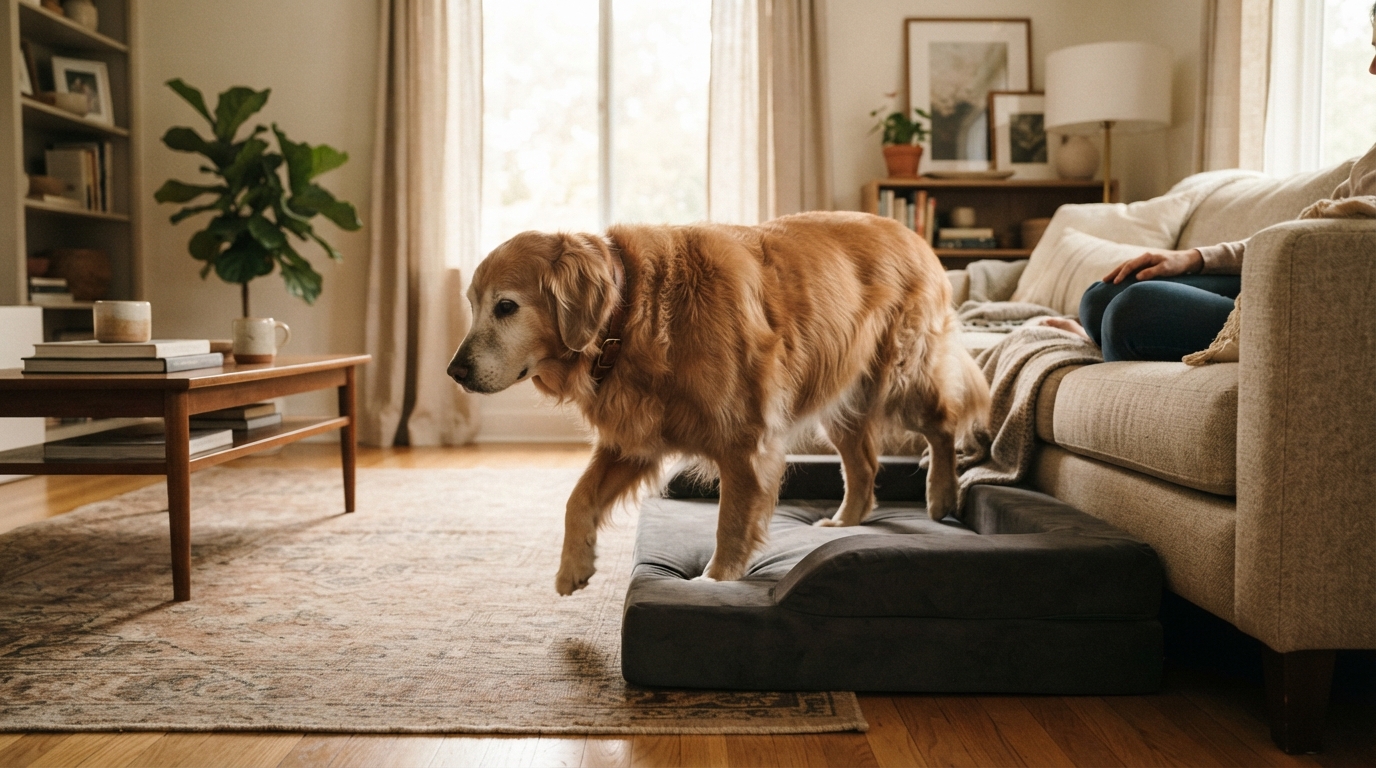
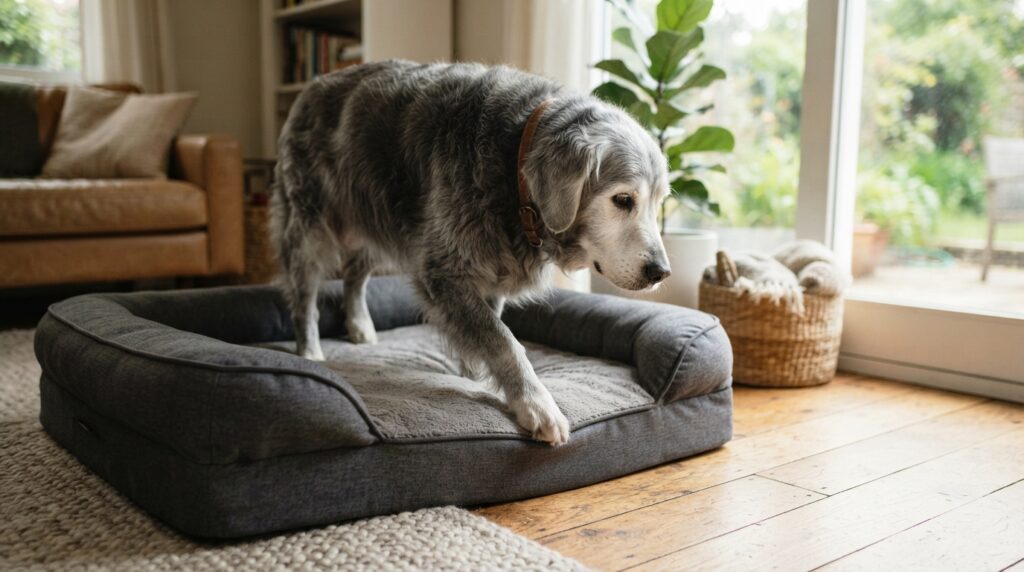
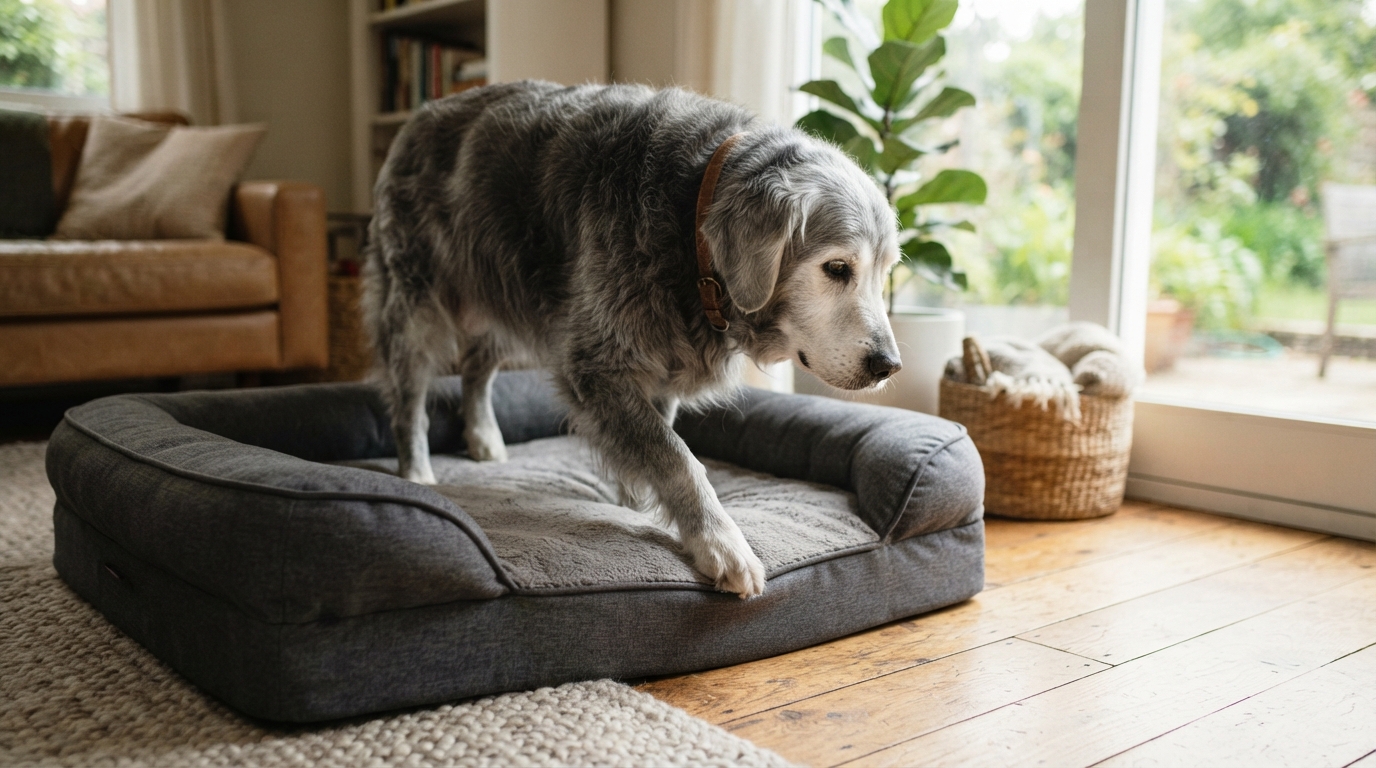
- Choose a low, stable entrance if stepping over an edge is difficult.
- A removable, washable cover and a separately cleanable waterproof liner can simplify accident cleanup.
- Set the bed on a level, stable spot with a clear path in and out.
What a supportive bed can—and cannot—do
A supportive bed cushions bony areas and spreads your dog’s weight across the sleep surface. The cushion should compress under your dog without letting their hips or shoulders sink through to the floor; a bed that looks thick can still lack useful support.
Memory foam conforms around the body under heat and pressure, which can help reduce concentrated pressure. More resilient foam tends to spring back sooner, but the bed’s firmness, layers, and base matter as much as the name of its fill.
An orthopedic label alone doesn’t tell you how a bed will feel or perform. In our guide to what orthopedic support claims actually mean, we explain why construction and fit are more useful to assess than a label.
For the best dog bed for senior dogs, start with your dog’s size, sleeping position, and ability to rise. A bed may make rest more comfortable, but it doesn’t treat arthritis or unexplained pain; ask your veterinarian about new limping, difficulty standing, or disrupted sleep.

For anyone weighing the best dog bed for senior dogs, osteoarthritis prevalence is reported at 20% in North America.
Source: Frontiers in Veterinary Science
To assess support at home, watch how your dog settles and rises. A surface that stays level under their weight and doesn’t leave them pushing out of a deep dip is usually more useful than extra softness alone.
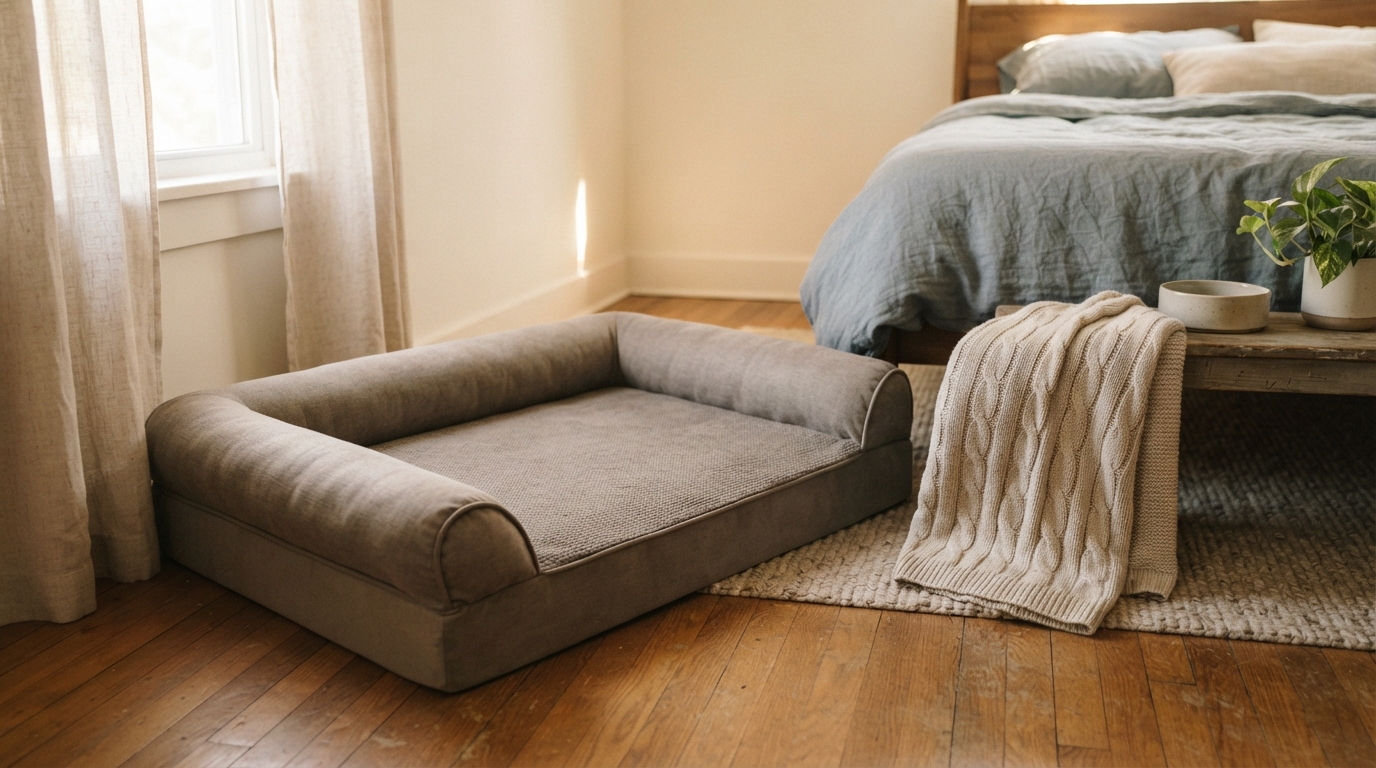
Match the shape to how your dog sleeps
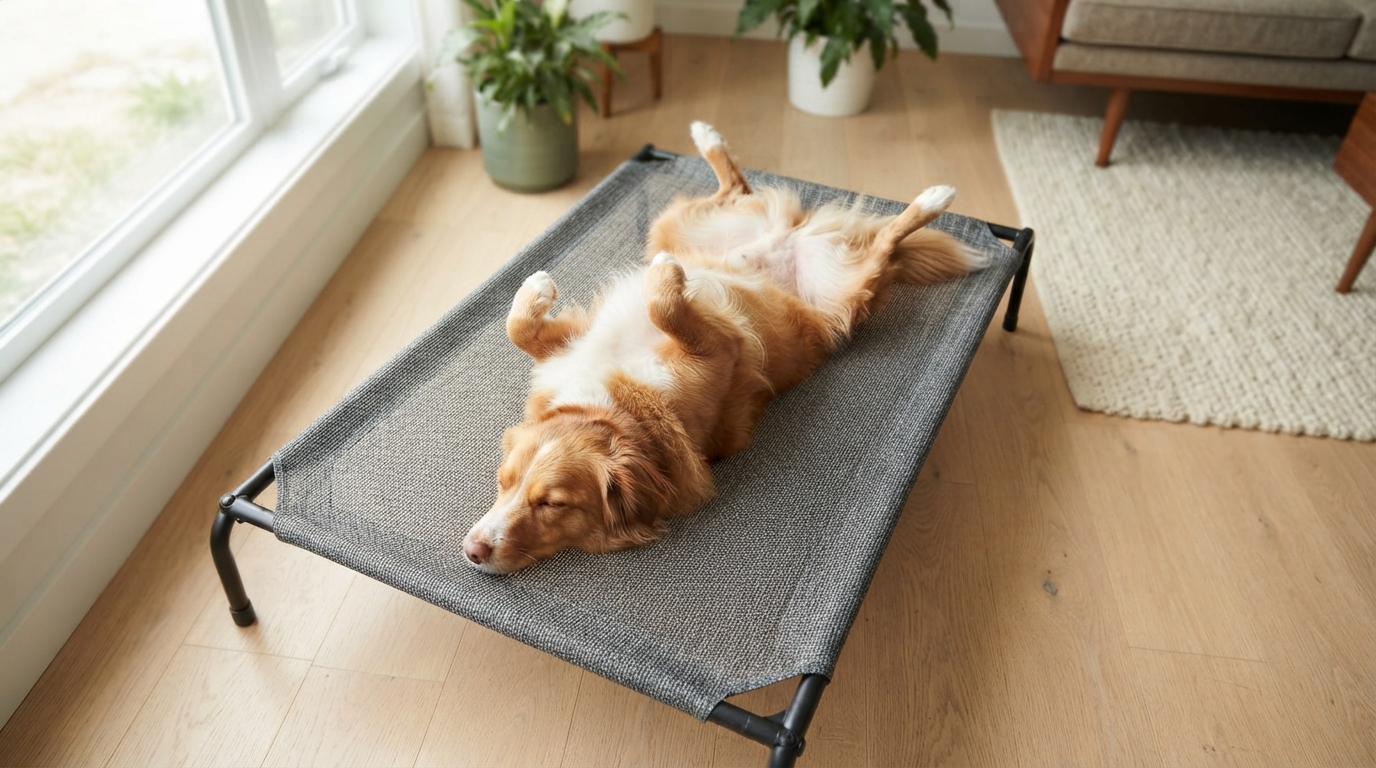
A dog that stretches out needs a roomy, open surface. A flat or platform bed leaves the whole sleeping area available, so measure your dog in their usual stretched position and allow room for their legs.
Dogs that curl up may like a bolster or wraparound edge that offers a headrest and a more enclosed feel. But raised sides aren’t right for every older dog, especially one that has trouble stepping over them.
Think about nighttime movement, too. A dog that alternates between curling and stretching may lose useful space to an all-around bolster, while a low, stable edge can make getting in and out easier.
Our comparison of memory foam and bolster dog beds separates the cushioning material from the bed’s shape. For another look at how raised sides affect the sleeping surface, see dog sofa beds versus flat beds.
Consider what your dog already chooses: a cushion, the open floor, or a spot with a wall or sofa edge beside it. Those habits can help you choose a bed style that feels familiar without making access harder.

Measure for the dog, not just the breed
Measure your dog from nose to tail base while they’re lying in their typical sleep position. If they stretch or shift during the night, leave extra room so their legs and body aren’t pressed against the edge.
Compare those measurements with the bed’s usable sleeping surface, not only its outside dimensions. Bolsters take up room inside a bed, which can make its actual flat area smaller than it first appears.
Breed and weight can’t tell you the whole fit. Dogs of similar weight may have different body lengths and different sleeping habits, so choose for the individual dog rather than relying on a size label alone.
If your dog usually curls but sometimes stretches out, choose a size that accommodates the longer position when space allows. Our guide to measuring for the right dog bed size offers more help comparing body measurements and bed dimensions.
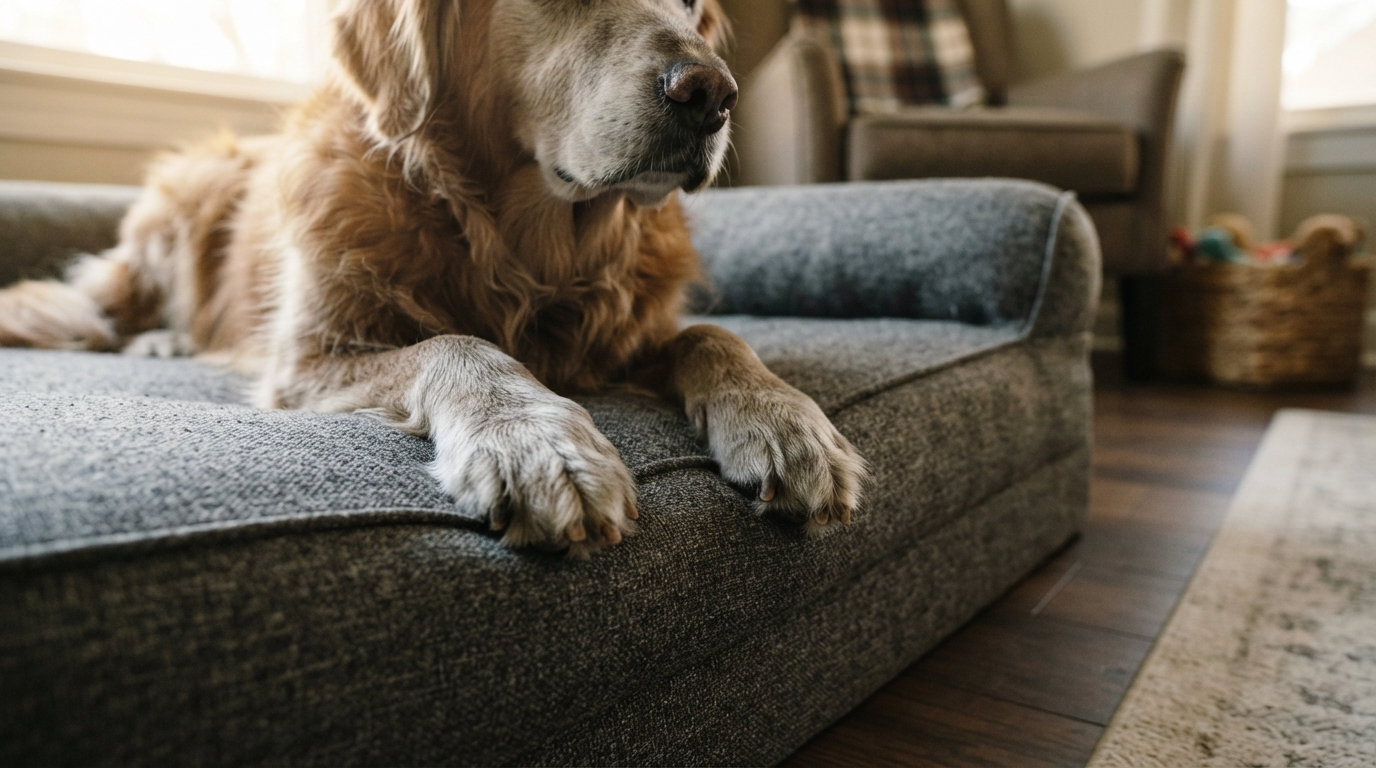
Balance support, warmth, and easy cleaning
Memory foam can contour closely, but it may retain more warmth than a more open, breathable surface. If your dog seeks cool places or often seems warm, weigh that trade-off alongside the support the foam provides.
Compare the whole construction: foam resilience, the stability of the base, and whether the fill stays evenly in place. A bed that loses its shape or shifts under your dog can be harder to use, even if its material sounds supportive.
A removable, washable cover makes routine cleaning more manageable. For incontinence or frequent accidents, a separately cleanable waterproof liner can help protect the inner fill, though less breathable layers may hold more warmth.
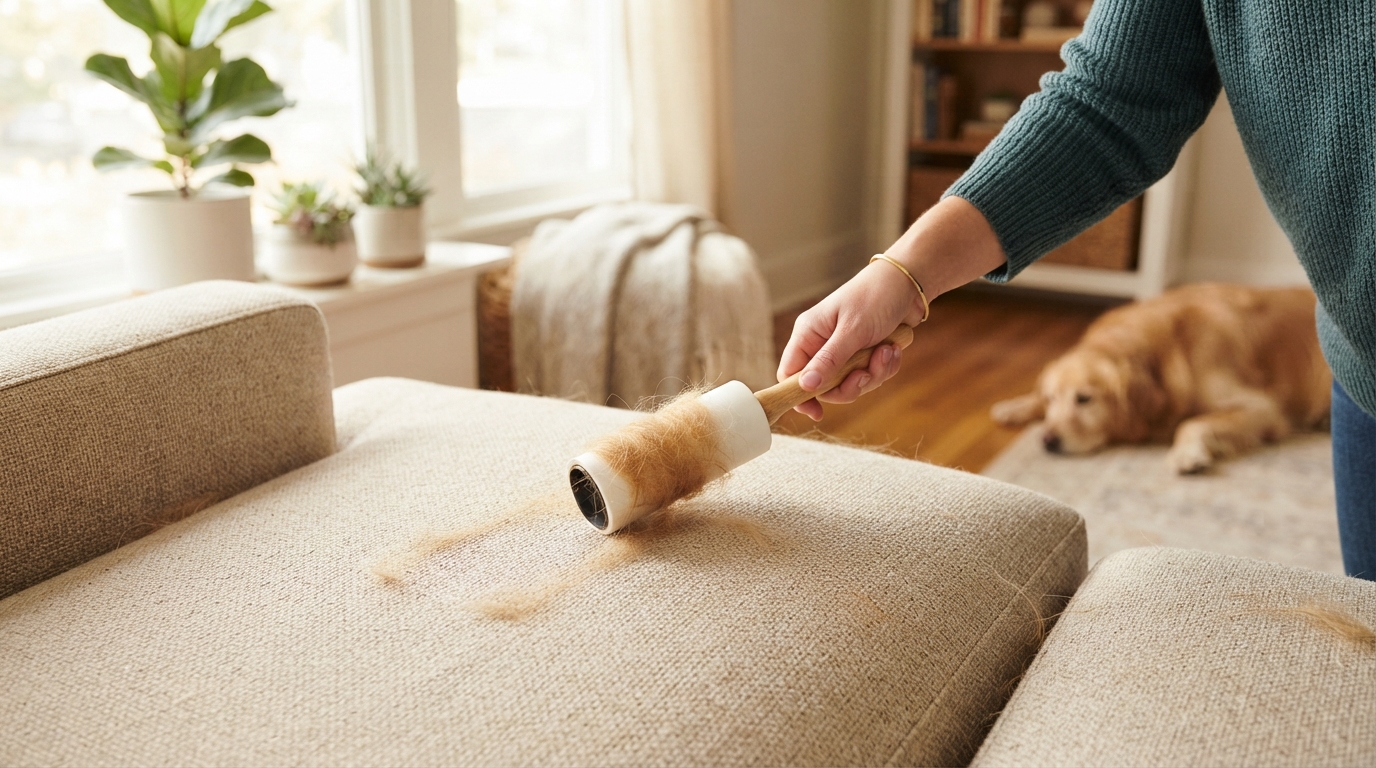
Choose a cover you can remove without struggling to lift or reshape a heavy bed, and follow its care instructions to help maintain its fit and fabric. As a bed wears, replacing and caring for a dog bed explains what to watch for.
An elevated surface allows air to move underneath, which may suit a dog that prefers a cooler resting place. Access and stability still come first for an older dog; When an elevated cooling bed makes sense covers what to weigh before choosing one.
Make getting in, standing up, and settling down easier
Place the bed on a level spot with a clear approach, away from stairs and tight corners. Your dog should be able to enter and leave without squeezing between furniture or twisting around an obstacle.
On hard floors, a non-slip base or stable rug underneath can reduce sliding as your dog steps in or pushes up to stand. Check that the bed remains in place when your dog moves across it.
The surface should hold your dog steadily enough to stand. A cushion that sinks deeply or shifts underfoot can make rising harder, even if it feels soft when you press it with your hand.
In a compact home, keep the route to the bed open when choosing small apartment pet furniture ideas or dog furniture for small spaces. You can browse our dog comfort and furniture guides for more ideas, but leave your dog’s entry path clear.
Frequently Asked Questions
How can I tell if my older dog is comfortable on a new bed?
Notice whether your dog chooses to rest there over several days and whether they can settle without repeatedly getting up. A single nap doesn’t tell you everything, so look for a consistent pattern across different times of day.
How often should I replace an older dog’s bed?
There isn’t one fixed replacement schedule; the condition of the cover and inner cushion matters more than the bed’s age alone. If a cover still works but the inner cushion no longer stays dry or holds together, replacing only the cover won’t restore the bed.
Should an older dog’s bed be placed in the bedroom or a quieter room?
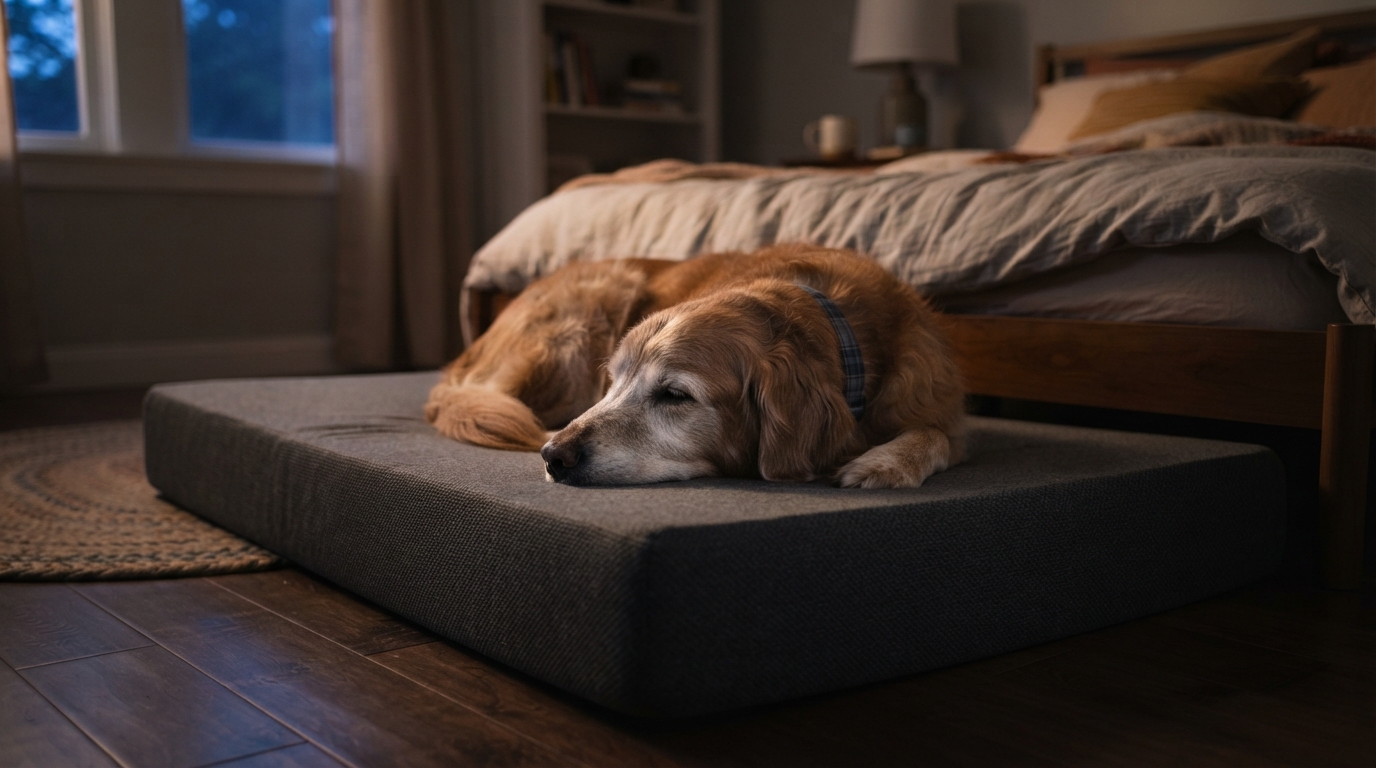
Choose the spot where your dog can rest without being disturbed and where you can keep their routine comfortable. Some dogs settle near their people, while others rest better away from late-night movement.
Can my older dog use a heated bed safely?
A pet-specific heated bed with controlled, low heat is a safer choice than an improvised heating pad. Ask your veterinarian first if your dog has reduced sensation or a condition that affects temperature regulation, and make sure they can move away from the warm area.
Can two older dogs share one bed?
They can share if both dogs can lie down and change positions without pushing each other off the comfortable area. Give each dog a separate resting option if one guards the bed or either dog needs a different height or level of support.
Is a memory foam bed always the best orthopedic bed for an older dog?
No single fill suits every dog, and memory foam’s close contour may feel too warm or too yielding for some sleepers. Choose based on how your dog rests and rises, not on the material name alone.
What can help my senior dog sleep through the night?
A supportive bed that fits your dog’s sleeping position and is easy to get in and out of can help them rest more comfortably. Keep the sleep area calm and accessible, and ask your veterinarian about new pain, mobility changes, or disrupted sleep.
What is the most comfortable bed for older dogs?
The most comfortable bed depends on your dog’s size, sleeping position, warmth preferences, and ability to rise. Look for a stable surface that cushions their weight without letting them sink through, with a shape and entrance that are easy for them to use.
What is the best orthopedic bed for senior dogs?
There is no single best orthopedic bed for every senior dog, and an orthopedic label alone does not guarantee support. Choose a bed that holds your dog’s weight evenly, fits their sleeping style, and makes getting in and out easy.
Conclusion
Dog Beds for Older Dogs: Support That Fits Their Sleep should make it easier for your dog to rest, move into position, and get back up. Match the bed’s support, shape, size, temperature, and care features to the dog in front of you, and ask your veterinarian about new pain or mobility changes.